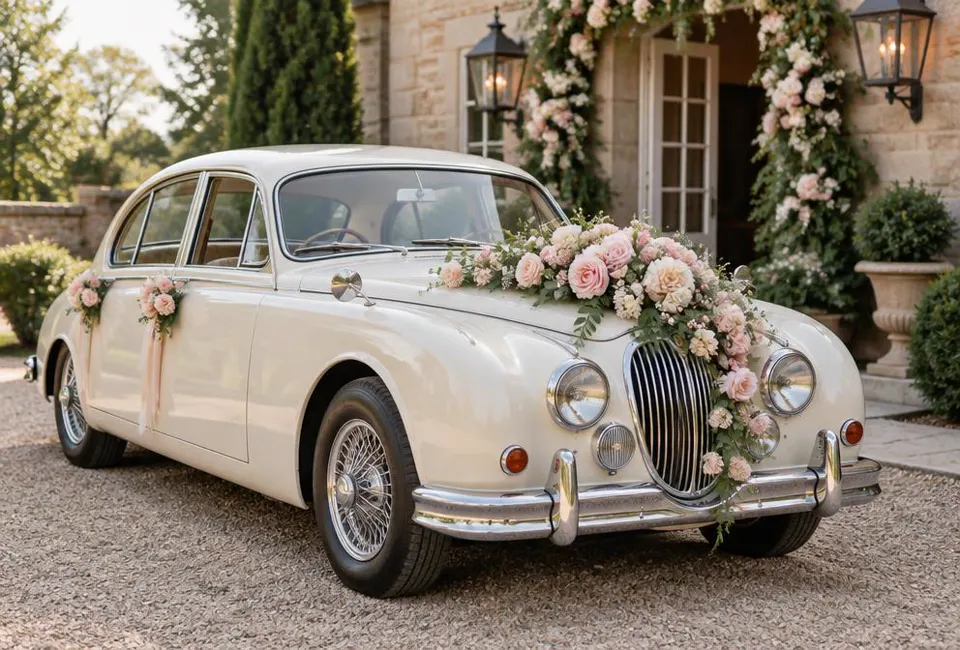
The Logistics Audit: Defining Your Transport Needs
Crafting a wedding transportation plan begins with a meticulous audit of your guest list to determine exactly who requires assistance moving between venues. By categorizing your attendees into tiered priority levels, you can allocate resources effectively and prevent expensive logistical overlaps.
The first step in your wedding transportation plan is defining the scope of movement. Couples often overestimate how many people will use provided transport, leading to half empty coaches and wasted funds. Start by mapping every transition from the hotel to the ceremony, and then to the reception site. Consider the accessibility of each location. If your ceremony is in a remote vineyard but your reception is in a city center, the logistics change significantly compared to a single site venue. Use a clear framework to identify which groups are non negotiable versus those who might prefer to self drive.
The Tiered Priority List: Categorizing Your Guests
Organizing your guest list into tiers helps you decide which transport mode fits each group. Tier One includes the wedding party and immediate family who must arrive together for photography. Tier Two consists of out of town guests who lack local transport or are unfamiliar with the area. Tier Three includes local guests who likely have their own vehicles. By focusing your budget on Tiers One and Two, you ensure the most vulnerable logistical links are covered. This structure prevents the common mistake of trying to provide door to door service for every single attendee, which is rarely cost effective.
| Priority Tier | Guest Group | Transport Requirement | Timing Criticality |
|---|---|---|---|
| Tier 1 | Wedding Party | Private van or luxury coach | High: Pre-ceremony photos |
| Tier 1 | Immediate Family | Dedicated shuttles or cars | High: Processional lineup |
| Tier 2 | Out of Town Guests | Centralized shuttle system | Medium: Arrival 20 mins early |
| Tier 3 | Local Residents | Optional/Late night shuttle | Low: Self-driven arrival |
| Tier 4 | Vendors/Staff | Self-managed movement | High: Setup deadlines |
Consider the scenario of Sarah and Mark, a couple who faced the challenge of moving 150 guests across a sprawling rural estate. Initially, they planned to hire ten individual luxury cars to ferry small groups, but this created a bottleneck at the narrow venue entrance. Instead, they transitioned to a hub and spoke shuttle model. By designating two central hotels as hubs and using two 50 seater coaches, they streamlined the flow and saved 15% on their total transport costs. This model reduced the number of individual vehicle arrivals, which also eased the burden on the venue parking staff and minimized congestion.
Logistics audits must also account for the global context of wedding spending. According to The Knot Real Weddings Study 2025, the US average wedding cost is about $33,000. In the UK, Bridebook 2024 reports about £20,600, while Which? 2024 cites £23,000. Australia sees averages around A$35,315 (Easy Weddings 2025) and Canada approximately C$30,000 (RBC). Regardless of your location, transportation typically consumes 2% to 5% of these totals. Auditing your needs early ensures that this percentage is used for maximum impact rather than being drained by inefficient routing or unnecessary vehicle idling time.
Logistics Audit Essential Questions
- How many guests are staying at the primary room block hotel?
- Are there narrow roads that large coaches cannot navigate?
- Does the ceremony site have a strict arrival window for the wedding party?
- Will elderly guests require vehicles with low step entry?
- Is there a secondary location for late night drop offs?
- Have you accounted for the photographer and videographer moving between sites?
- Is there sufficient lighting at the pickup points for evening departures?
- Do you have a final headcount for children requiring car seats?
Finally, remember that the logistics audit is a living document. As RSVPs arrive, move names between your tiers to refine the vehicle sizes required. A common mistake is booking large buses six months in advance without a clause to scale down. Ensure your plan remains flexible enough to swap a full sized coach for a minibus if your out of town guest count drops. This proactive management keeps your wedding transportation plan lean and efficient, allowing more room in the budget for other high impact guest experiences.
Budgeting for Movement: Formulas and Global Benchmarks
Establishing a realistic wedding transportation plan begins with aligning your transit expectations with your overall budget ceiling. By leveraging global benchmarks and specific calculation formulas, couples can secure reliable vehicles without compromising their financial health.
To determine a baseline for your wedding transportation plan, look at your total wedding investment. Industry standards suggest allocating 2% to 4% of your total budget for guest and bridal party movement. For example, if you align with the US average of $33,000 as reported by The Knot Real Weddings Study 2025, your transport fund should be approximately $990. In Canada, where the RBC reports a C$30,000 average, a 3% allocation equals C$900. These figures provide a starting point for couples like Sarah and Liam, who used the 3% rule to decide between a vintage car for two or a shuttle for thirty.
Global Benchmarks and The 3% Rule
Regional costs vary significantly, which impacts how far your 3% allocation will stretch. In the UK, with averages ranging from £20,600 per Bridebook 2024 to £23,000 according to Which? 2024, a couple might find that £600 covers a luxury sedan for four hours. In Australia, where Easy Weddings 2025 cites an average of A$35,315, a 3% fund of roughly A$1,060 might accommodate a larger minibus. When building your wedding transportation plan, always calculate your specific percentage before viewing fleet options to avoid falling in love with a vehicle that exhausts 10% of your total liquid funds.
| Region | Total Average Budget | 3% Transport Fund | Source |
|---|---|---|---|
| United States | $33,000 | $990 | The Knot 2025 |
| Australia | A$35,315 | A$1,060 | Easy Weddings 2025 |
| United Kingdom | £20,600 | £618 | Bridebook 2024 |
| Canada | C$30,000 | C$900 | RBC |
| United Kingdom (High) | £23,000 | £690 | Which? 2024 |
Understanding the pricing structure of transport providers is essential for accurate forecasting. Most companies operate on either flat rates or hourly minimums. A flat rate is common for simple point to point transfers, such as moving the bride from a hotel to the ceremony site. Conversely, hourly minimums, often three to five hours, are standard for shuttles that must remain on standby. If your wedding transportation plan involves guest loops throughout the night, you must account for these minimums even if the vehicle sits idle during the ceremony. This ensures the driver remains available for the return leg.
Calculations for Operational Expenses
Beyond the base rental price, couples must factor in hidden operational costs that can inflate the wedding transportation plan by 20%. These include driver gratuities, which are typically 15% to 20% of the base fee, and fuel surcharges if the venue is remote. For a couple like Chloe and Mateo, failing to account for a 20% service fee on a $1,000 coach rental meant a $200 surprise on their final invoice. Always ask for an all inclusive quote that details cleaning fees, tolls, and overtime rates. Overtime is often billed in 30 minute increments at a premium price point.
Transportation Budgeting Checklist
- Calculate 3% of your total budget as a primary limit.
- Verify if the quote includes a 15% to 20% driver gratuity.
- Check for a 3 to 5 hour minimum booking requirement.
- Identify potential fuel surcharges for venues over 50km away.
- Allocate a $150 buffer for potential overtime fees.
- Confirm if VAT or local sales tax is included in the quote.
- Compare point to point flat rates versus total hourly blocks.
- Factor in parking fees for the shuttle at the venue.
- Review the cancellation and refund schedule in the contract.
A common mistake is neglecting the travel time for the vehicle to reach your pickup location, known as deadhead time. Some companies charge for the journey from their garage to your first stop. To optimize your wedding transportation plan, source vendors located near your primary hotel or venue. This minimizes travel fees and reduces the risk of traffic delays. By prioritizing local providers and adhering to the 3% rule, you create a sustainable logistics model that ensures guest comfort without draining the funds reserved for catering or photography.
Routing Logic: The Shuttle Schedule Framework
Developing a wedding transportation plan requires a shift from optimistic estimates to logistical realism to ensure guests arrive refreshed rather than rushed. This section provides a mathematical framework for calculating trip times and managing high-capacity vehicle flow.
The foundation of a reliable wedding transportation plan is the calculation of a realistic cycle time for each vehicle. Couples often make the mistake of using the raw driving time provided by GPS applications as their primary scheduling metric. This fails to account for the physical reality of moving large groups of people in formal wear. To build a resilient timeline, you must apply the Buffer Rule: take the Google Maps estimate for the specific time of day of your event and add exactly 20 percent to that duration. This extra time accounts for the slower acceleration of heavy coaches, narrow roads, and the inevitable boarding delays that occur when guests stop to chat or find their seats.
The Step by Step Calculation Method
Consider a scenario with Sarah and Mateo, who are hosting their reception at a rural estate twenty minutes away from the guest hotel. According to GPS, the drive takes 20 minutes. Following the Buffer Rule, the adjusted driving time becomes 24 minutes. However, the cycle time also includes the Load and Unload phase. For a 50 passenger coach, allow ten minutes for boarding at the hotel and five minutes for disembarkation at the venue. Therefore, one complete trip for Sarah and Mateo is not 20 minutes, but 39 minutes. This calculation prevents the common error of scheduling return trips too close together, which causes a cascading delay across the entire guest list.
| Vehicle ID | Hotel Departure | Venue Arrival | Status |
|---|---|---|---|
| Coach Alpha | 15:30 | 16:09 | VIPs and Early Birds |
| Coach Beta | 15:45 | 16:24 | General Guest Pool |
| Coach Gamma | 16:00 | 16:39 | Final Boarding |
| Coach Alpha (Trip 2) | 16:45 | 17:24 | Emergency Overflow |
When managing a 150 person guest list with three 50 passenger coaches, synchronization is vital. While it is tempting to have all three buses depart simultaneously, staggering them by 15 minute intervals creates a smoother arrival experience. This prevents a bottleneck at the venue entrance where 150 people would otherwise attempt to check coats or grab welcome drinks at the exact same moment. For a ceremony starting at 17:00, the final bus should ideally arrive no later than 16:40. This ensures that even with a minor traffic delay, the wedding transportation plan remains intact and the ceremony starts on schedule without empty rows.
Routing and Timing Essentials
- Verify if the route includes low bridges or weight restricted roads for coaches.
- Confirm the specific pickup bay number at the hotel to avoid guest confusion.
- Add 20 percent padding to all GPS driving estimates for heavy vehicles.
- Allocate ten minutes for loading and five minutes for unloading per trip.
- Ensure the final shuttle arrives twenty minutes before the ceremony start.
- Identify a designated turnaround point for large buses at the venue entrance.
- Factor in time for the driver to perform a safety sweep between loops.
- Check for local festivals or roadworks scheduled for your wedding date.
- Print physical route maps for drivers to use as a backup for GPS failure.
Effective routing also demands a strategy for the end of the night. While arrivals are concentrated, departures are often staggered. A successful wedding transportation plan accounts for the early departure of elderly guests or families. In the case of Sarah and Mateo, they might schedule one coach to depart at 21:00, while the remaining two vehicles wait until the final reception conclusion at midnight. This flexibility prevents the frustration of guests feeling trapped at the venue. Always communicate these specific departure times clearly via signage at the venue exit to ensure guests can plan their evening and avoid missing the final transport home.
Contractual Security: Vetting Transport Providers
Securing a professional wedding transportation plan requires moving beyond aesthetic appeal to verify the operational resilience of your chosen provider. A robust contract serves as your primary defense against logistical failures that could stall your celebration.
When vetting a transport provider, the most critical element is the verification of their commercial insurance and operating licenses. General liability insurance is not sufficient. You must confirm the company holds specific commercial vehicle coverage that protects passengers during transit. For couples like Sarah and Liam, who are coordinating a multi-stop route, seeing a physical copy of the insurance certificate ensures the company is legally compliant. This document validates that the fleet meets regional safety standards and that the business assumes liability for any incidents occurring between the pickup and drop-off locations.
Ensuring Operational Redundancy
A reliable wedding transportation plan must account for mechanical failure. Smaller boutique firms may only own one vintage car, leaving you stranded if an engine fails on the wedding morning. Inquire specifically about their backup vehicle protocol. Does the company maintain a secondary fleet, or do they have a reciprocal agreement with a local partner to provide a replacement within sixty minutes? For a destination wedding in rural areas, this response time is vital. Always ask for the direct mobile number of the dispatch manager who will be on duty during your event to bridge the communication gap between the driver and your coordinator.
The Provider Interview Checklist
- Request the specific make, model, and year of the assigned vehicles.
- Verify the driver’s familiarity with your specific venue entrance and parking restrictions.
- Confirm the availability of a dedicated dispatcher on the day of the event.
- Ask for the company policy on driver overtime should the reception run late.
- Request proof of recent vehicle maintenance logs or safety inspections.
- Evaluate the protocol for vehicle air conditioning or heating efficiency.
- Verify the company’s contingency plan for road closures or inclement weather.
- Check for valid commercial registration and passenger transport permits.
Hidden costs often lurk in the fine print of transport contracts, particularly regarding travel time. Many companies apply a garage to garage policy, meaning your billable hours begin the moment the vehicle leaves the depot, not when it arrives at your door. If the depot is an hour away, you could lose two hours of service to transit alone. For example, if you are working within a wedding budget similar to the US average of $33,000 (The Knot Real Weddings Study 2025), an unexpected 20 percent increase in transport costs due to travel fees can force cuts elsewhere in your planning.
Driver communication is the final pillar of your contractual security. Ensure the contract stipulates that drivers must have access to a shared digital map or a printed copy of your wedding transportation plan. Relying solely on a driver's personal GPS can lead to errors if signals drop in remote areas. Establishing these requirements early ensures the team behind the wheel is as prepared as the team at the venue. Clear communication protocols prevent the frustration of guests waiting at a curb while a driver circles a block looking for an unmarked loading zone.
| Fee Type | Typical Calculation | Impact on Budget |
|---|---|---|
| Garage to Garage | Depot departure to return | High: Adds 1 to 2 hours |
| Portal to Portal | First pickup to last drop | Moderate: Predictable cost |
| Fuel Surcharge | Percentage of total hire | Variable: 5 to 15 percent |
| Driver Gratuity | Fixed or percentage | Standard: 15 to 20 percent |
| Overtime Rate | Per 30 or 60 minutes | High: Usually 1.5x rate |
Directing the Flow: Guest Communication Scripts
Clear communication is the bridge between a logistical wedding transportation plan and a stress free guest experience. Precise wording ensures that no guest is left behind at a remote venue or confused by complex shuttle rotations.
Effective communication begins on the wedding website to set expectations months in advance. Sarah and David, hosting a destination wedding in rural Tuscany, used their 'Travel' page to outline the exact walking distance from the hotel lobby to the shuttle stop. By providing a Google Maps pin link and a photo of the specific white minibus, they eliminated the risk of guests waiting at the wrong entrance. The goal is to provide enough detail so that even a guest who has never visited the region can navigate the journey without calling the bridal party for directions on the morning of the ceremony.
Scripting Your Invitation Inserts and Digital Updates
Invitation inserts must be concise but firm regarding departure times. Use phrasing such as: 'Complimentary transport will depart from the Grand Plaza Hotel at exactly 3:30 PM. Please arrive ten minutes early as the shuttle cannot wait for late arrivals.' This language establishes the schedule as a fixed event rather than a suggestion. For the return journey, focus on the 'Last Bus' concept. A script like 'Return shuttles will run every thirty minutes starting at 10:00 PM, with the final departure strictly at midnight' prevents guests from being stranded at a venue where ride share services are unavailable.
| Scenario | Website Wording Example | Signage Wording Example |
|---|---|---|
| Single Shuttle Run | One bus departs the hotel at 4:00 PM sharp for the ceremony. | Boarding now for the 4:00 PM Wedding Shuttle. |
| Continuous Loop | A shuttle will run between the venue and hotel every 20 minutes. | Next shuttle departs in approximately 15 minutes. |
| Remote Parking | Please park at the Town Square: a van will ferry you to the cliffside. | Shuttle Stop: Wait here for transport to the Ceremony. |
| Late Night Return | The final shuttle leaves the venue at 1:00 AM. Please plan accordingly. | Last Bus Warning: Final departure at 1:00 AM. |
| Limited Ride Shares | Note: Uber and Lyft are not available in this area after 9:00 PM. | Local Taxi Numbers: [List numbers] or use the shuttle. |
For couples managing budgets globally, such as the UK average of £20,600 according to Bridebook 2024 or Australia's A$35,315 per Easy Weddings 2025, every transport seat counts. Use a digital RSVP tool to ask guests specifically if they intend to use the provided transport. This allows you to scale your vehicle size down or up based on real data. If 40% of guests choose to drive their own cars, you can reallocate those funds to an extra late night van for the remaining party goers. Clear scripts here should say: 'To ensure we have a seat for you, please indicate your transport preference by June 1st.'
Managing the end of the night requires a proactive approach to prevent stragglers. Entrust a bridesmaid or a professional coordinator to make a 'Last Call for Transport' announcement ten minutes before the final vehicle departs. This verbal script should be polite but urgent: 'Ladies and gentlemen, the final shuttle of the evening is now boarding at the main gates. This is the last scheduled trip to the city center.' By combining these verbal cues with printed signage near the exit and clear website instructions, your wedding transportation plan becomes a self sustaining system that protects your guests.
Guest Communication Touchpoints
- Include a 'Transportation' tab on the wedding website with a map.
- Print a physical schedule card to place in guest welcome bags.
- Send a final SMS or email blast 24 hours before the wedding.
- Post a 'Shuttle Schedule' sign near the bar or venue exit.
- Provide local taxi contact numbers for those who miss the bus.
- Define the exact pickup location with a photo or digital pin.
- Clearly state that the shuttle will not wait for latecomers.
- Assign a point of contact who is not the bride or groom.
- Verify that the venue coordinator knows the shuttle schedule.
The Backup Plan: Managing Delays and Breakdowns
Even the most meticulous wedding transportation plan must account for external variables like mechanical failure or unexpected road closures. This section outlines how to build a resilient response system that protects the couple from logistical stress on their wedding day.
The primary goal of a backup plan is to ensure that no single point of failure can derail the ceremony start time. Real world scenarios often involve unpredictable events such as a vintage car overheating in summer heat or a sudden police blockade due to a local festival. For example, consider Sarah and Matteo, who planned a coastal wedding where the only access road was blocked by a minor landslide. Because they had identified an alternative route and a secondary shuttle service on standby, they redirected their guests within twenty minutes. Without this foresight, the ceremony would have been delayed by two hours.
The Emergency Transport Contact Role
A critical mistake many couples make is listing their own phone numbers as the primary contact for drivers. On the wedding day, the couple should be insulated from logistical friction. Instead, designate a specific Emergency Transport Contact. This individual is responsible for handling all driver calls, monitoring GPS trackers, and making real time executive decisions. This person should not be in the wedding party, as bridesmaids and groomsmen are often occupied with photos. A trusted cousin or a professional day of coordinator is ideal for this role, ensuring the couple remains undisturbed during their preparations.
| Scenario | Immediate Action | Communication Trigger |
|---|---|---|
| Vehicle Breakdown | Contact backup fleet or local taxi dispatch | Notify Emergency Contact only |
| Major Road Closure | Activate pre-mapped secondary route | Update driver and venue coordinator |
| Guest Medical Issue | Driver stops immediately and calls emergency services | Notify Emergency Contact and Venue |
| Extreme Weather | Implement the 'Slow Speed' schedule buffer | Text all guests via automated app |
| Driver No-Show | Dispatch pre-arranged rideshare codes | Initiate contract refund protocol |
Buffer time is the most effective tool in your wedding transportation plan. When calculating your timeline, add a twenty percent margin to every trip duration. If Google Maps suggests a fifteen minute drive, allocate eighteen to twenty minutes. This accounts for the time it takes for guests to actually board a bus, which is often longer than the drive itself. In high density cities like London or New York, this buffer should increase to thirty percent. This extra time serves as a silent insurance policy against minor delays like heavy rain or slow moving traffic, preventing a cascade of late arrivals.
Communication scripts are vital for the Emergency Transport Contact to use when things go wrong. If a shuttle is delayed, the contact should use a calm script: The shuttle is experiencing a brief delay due to traffic and will arrive in ten minutes. Please remain in the lobby. By providing a specific timeframe, you reduce guest anxiety. If a total vehicle failure occurs, the contact should have the authority to spend up to a pre-approved amount on emergency rideshare services without needing to ask the couple. This empowerment ensures that problems are solved instantly rather than lingering while waiting for permission.
Essential Backup Preparedness Steps
- Confirm the Emergency Transport Contact has a physical printed copy of all driver phone numbers.
- Verify that the designated contact has a fully charged portable battery pack for their phone.
- Create a 'Rideshare Code' for guests to use as a last resort if a shuttle fails.
- Provide the venue coordinator with the Emergency Transport Contact's name and number.
- Identify at least two alternative routes for every major leg of the journey.
- Ensure all drivers have the direct mobile number of the Emergency Transport Contact.
- Pre-authorize a specific emergency budget for last minute transport needs.
- Check for local public events or marathons that may cause road closures on the wedding date.
The Grand Arrival: Timing the Wedding Party
The final thirty minutes of your wedding transportation plan dictate the atmosphere of the entire ceremony. Mastering the technical sequence of arrivals ensures that the transition from transit to altar is both seamless and visually impactful.
Precise timing in the final half hour requires a reverse engineered schedule that accounts for guest behavior. Most attendees arrive fifteen to twenty minutes before the stated start time, meaning the venue entrance becomes a high traffic zone during this window. To maintain the prestige of the event, the wedding transportation plan must transition from mass movement to discrete arrivals. This period is not just about physical transit but about managing the line of sight. If the wedding party arrives simultaneously with the bulk of the guests, the sense of anticipation is diminished and logistical bottlenecks occur at the venue doors.
The Staggered Entrance Framework
A staggered arrival strategy involves separating the wedding party into distinct vehicles with specific drop off windows. For instance, Elena and David utilized a staggered arrival to ensure the wedding party remained hidden from early arriving guests. They scheduled the groom and groomsmen to arrive forty minutes prior to the ceremony, allowing them to enter a private holding room before any guests stepped onto the property. Elena and the bridesmaids arrived exactly ten minutes before the processional, using a secondary service entrance. This separation prevented accidental sightings and allowed the couple to stay relaxed and focused on the moment rather than dodging crowds.
| Time Increment | Action Item | Personnel Involved | Location Goal |
|---|---|---|---|
| T-30 Minutes | Last Guest Shuttle Drop | All General Guests | Ceremony Seating Area |
| T-20 Minutes | Immediate Family Arrival | Parents and Grandparents | Reserved Front Rows |
| T-15 Minutes | Groom Party Lockdown | Groom and Groomsmen | Off-stage Holding Room |
| T-10 Minutes | Bridal Vehicle Arrival | Bride and Attendants | Private Entry Point |
| T-05 Minutes | Final Usher Sweep | Ushers and Venue Staff | Doors Closed |
Communication during these final minutes should shift from drivers to a designated onsite coordinator. The driver of the lead wedding party vehicle must remain in contact with the coordinator via text to confirm that all guests are seated before the vehicle pulls into view. If the ceremony is running behind or guests are still lingering in the foyer, the wedding party vehicle should circle the block or wait at a prearranged holding point three minutes away. This prevents the awkward scenario of the bride sitting in a stationary car while latecomers walk past her window.
Managing the departure from the transport vehicle is the final technical hurdle. The wedding party should have a clear protocol for exiting quickly and moving into the venue. This includes having a designated person, such as a maid of honor or a site manager, ready to fluff the dress and organize bouquets the moment the door opens. By treating the final thirty minutes as a choreographed sequence rather than a simple commute, couples can ensure their wedding transportation plan concludes with the dignity and excitement the occasion deserves.
Final Arrival Readiness Tasks
- Confirm driver has the direct mobile number for the onsite coordinator.
- Verify the secondary or service entrance is unlocked and clear of debris.
- Assign one usher to clear the lobby of guests five minutes before bridal arrival.
- Ensure all bouquets and boutonnieres are inside the vehicles before departure.
- Check that the bridal vehicle has tinted windows for maximum privacy.
- Coordinate with the photographer to be in position for the vehicle exit.
- Define a specific parking spot for the lead vehicle that avoids guest traffic.
- Brief the driver on the exact holding location if the ceremony is delayed.
- Confirm the arrival sequence matches the processional order to save time.