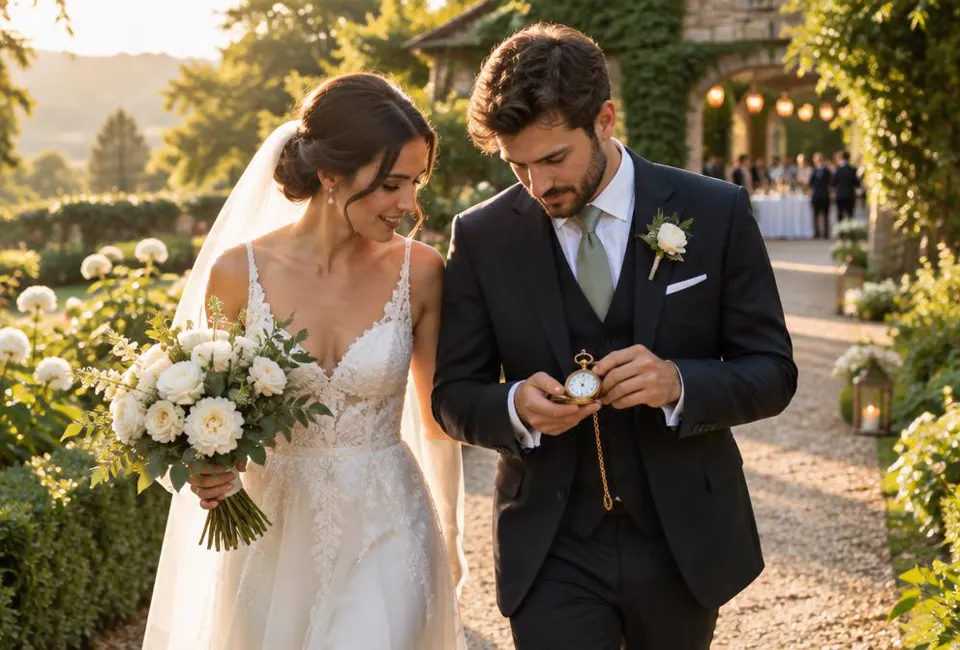
The Foundations of a Realistic Wedding Schedule
Before you can assign times to specific tasks, you must understand the fixed anchors of your day. Every wedding day timeline revolves around the ceremony start time and the sunset or venue curfew. These non-negotiable points dictate how much time you have for preparation and how long the party can last.
The most common mistake couples make is working forward from the morning. Instead, work backward from your main events. If your ceremony is at 3:00 PM, you do not start your timeline at 9:00 AM. You start by determining when you need to be at the altar and subtract the time required for travel, photography, and dressing. This reverse engineering ensures you never run out of time at the most critical moments.
Identifying Your Anchor Points
Your first anchor is the ceremony. This is often dictated by religious requirements or venue availability. The second anchor is your meal service. Hungry guests are unhappy guests, so the interval between the ceremony and the meal is crucial. The third anchor is natural light. If you desire outdoor portraits, you must check the sunset time for your specific date and location. A wedding in Stockholm in June will have vastly different light constraints than a wedding in Cape Town in December.
The Ten Percent Buffer Rule
Always add 10 to 15 percent more time than you think you need for every transition. If Google Maps says a drive takes 20 minutes, allot 30 minutes. If a hair stylist says it takes 45 minutes per person, budget 55. These small increments act as a shock absorber for the day. If a bridesmaid loses her shoes or the florist gets stuck in traffic, your 10 percent buffers will keep the entire schedule from collapsing.
Morning Preparation and Vendor Arrivals
The morning sets the tone for the day. A rushed morning leads to high stress levels before the vows are even exchanged. Organizing your preparation space and vendor arrivals is key to a calm start.
Calculating Hair and Makeup Duration
Beauty services are the most frequent cause of timeline delays. A standard formula is 45 minutes per person for hair and 45 minutes for makeup, with the bride or groom requiring 60 to 90 minutes for each. If you have a large wedding party, ensure you have enough stylists to finish at least one hour before you need to leave for the ceremony. This final hour is for dressing, detail photos, and a moment of peace.
Coordinating Vendor Load-In Times
Your vendors need time to set up without tripping over guests. Florists usually require 2 to 4 hours for installation, depending on the complexity. Musicians and DJs need at least 60 to 90 minutes for sound checks. Ensure your venue manager provides clear load-in windows. If you are hiring heavy equipment or lighting rigs, these may need to be installed the day before.
| Activity | Estimated Time | Participants |
|---|---|---|
| Individual Hair | 45-60 mins | Each attendant |
| Individual Makeup | 45-60 mins | Each attendant |
| Lead Subject Beauty | 120-180 mins | Bride/Groom |
| Getting Dressed | 30 mins | Couple/Attendants |
| Detail Photos | 45 mins | Photographer alone |
| Travel Buffer | 20-30 mins | Entire party |
Morning Readiness Checklist
- Lay out all accessories: rings, shoes, invitations, and jewelry for detail shots.
- Designate a specific room for trash and bags to keep photo backgrounds clean.
- Confirm that steam-cleaning of garments was completed the night before.
- Arrange for a light lunch and hydration to be delivered to the prep suite.
- Designate one person to be the point of contact for vendor phone calls.
Photography and Videography Timings
Visual documentation is a priority for many, but it is also the most time-consuming part of the wedding day timeline. Balancing photo sessions with guest interaction requires careful planning.
The First Look vs. Traditional Reveals
A First Look is a private moment where the couple sees each other before the ceremony. From a scheduling perspective, this is a major time-saver. It allows for most portraits to be taken early, freeing you to attend your own cocktail hour. If you choose the traditional route of seeing each other at the altar, you must account for 60 to 90 minutes of photography immediately following the ceremony, which can leave guests waiting.
Streamlining Family Portraits
Family photos can easily spiral out of control. To keep these to 30 minutes, provide your photographer with a specific list of names and groupings in advance. Assign a 'wrangler' from each side of the family who knows the faces and can gather people quickly. Avoid trying to take every possible combination: focus on immediate family to keep the momentum going.
The Ceremony: Regional and Cultural Timing
Ceremony lengths vary wildly based on tradition, law, and religion. A secular civil ceremony might last 15 minutes, while a traditional Hindu wedding or a Catholic Nuptial Mass can span several hours.
In the United Kingdom, a civil ceremony at a registry office is often strictly timed to 20 or 30 minutes. According to Bridebook (UK Average Cost 2024), couples often spend significant portions of their budget on venue hire, making it vital to adhere to these slots to avoid overtime fees. In contrast, an Indian wedding involves multiple rituals like the Varmala and Pheras, which can take 1.5 to 3 hours. Your timeline must reflect these cultural realities.
Accounting for Legal Formalities
Do not forget the time required for signing the register or marriage license. In many jurisdictions, this happens during the ceremony and takes 5 to 10 minutes. In others, it is a separate process after the ceremony. Ensure you have budgeted time for the officiant to explain the next steps to your guests before they depart for the reception.
The Receiving Line Factor
If you choose to have a formal receiving line where you greet every guest as they leave the ceremony, you must budget 20 to 30 seconds per guest. For a 150-guest wedding, this adds nearly an hour to your timeline. Many modern couples opt to visit tables during dinner instead to save time during the transition to the reception.
Reception Flow and Guest Experience
The reception is where the timeline often feels the most organic, but it requires the most behind-the-scenes coordination between the kitchen and the entertainment.
The Cocktail Hour Transition
The cocktail hour serves as a buffer between the ceremony and dinner. It allows the catering team to finalize the dining room and gives the couple a moment to breathe. A standard cocktail hour is 60 minutes. If you are serving complex appetizers or have a high guest count, extending to 90 minutes is acceptable, provided there is ample seating and refreshment.
Dinner Service and Speeches
A seated three-course meal typically takes 1.5 to 2 hours. A buffet can be faster but depends on the number of stations. To keep guests engaged, intersperse speeches between courses. For example, have the welcome toast after the first course and the main speeches after the entrée. This prevents a long 45-minute block of talking, which can cause the energy in the room to dip.
| Event | Standard Duration | Purpose |
|---|---|---|
| Grand Entrance | 5-10 mins | Introduces the wedding party |
| First Dance | 3-4 mins | Opens the dance floor |
| Plated Dinner | 90-120 mins | Full meal service |
| Speeches | 15-20 mins total | Tributes (limit to 5 mins each) |
| Cake Cutting | 5-10 mins | Signal that dessert is served |
| Dance Floor Open | 2-4 hours | General celebration |
Cost Implications of Your Timeline
Time is literally money in the wedding industry. Overstaying your venue contract or requiring vendors to stay longer than their booked hours will lead to significant surcharges.
In Australia, the Easy Weddings 2025 Industry Insights report indicates that venue hire and catering remain the largest expenses. If your timeline runs over, you may face hourly labor charges for waitstaff and security. Similarly, in Canada, RBC Royal Bank suggests that budgeting for marriage should include a 5 to 10 percent contingency fund for unexpected costs like transport delays or overtime fees.
Understanding Overtime Clauses
Most vendor contracts (photographers, DJs, venues) are for a specific number of hours. In the United States, according to The Knot Real Weddings Study (2023), the average wedding lasts about 6 hours for the ceremony and reception combined. If you book an 8-hour photography package but your timeline stretches to 10 hours, you could be looking at an additional $200 to $500 per hour depending on the market. Always clarify these rates before the day starts.
The Vendor Meal Window
Your timeline must include a slot for vendors to eat. This usually happens when the guests are eating their main course, as this is the only time no 'action' is happening that needs to be photographed or recorded. Ensure the caterer knows to feed the vendors at the same time as the guests so they are ready to go when speeches or dancing begin.
Contingency Plans and the 'Plan B' Timeline
No wedding day timeline is complete without a backup plan. Weather, transport issues, and technical failures are common, and having a pre-arranged alternative saves the day.
The Rain Delay
If you have an outdoor ceremony, you need a 'Rain Plan' timeline. This usually involves a 'go/no-go' decision time, typically 3 hours before the ceremony. If the weather is poor, the timeline shifts to the indoor location. This may change your photo locations and travel times, so have a secondary list of indoor photo spots ready.
Handling Transit Delays
In major cities like New York, London, or Sydney, traffic is unpredictable. If a shuttle bus for guests is delayed, the ceremony start time must be pushed. Your timeline should identify which events can be shortened to make up for lost time. Usually, the cocktail hour is the easiest place to reclaim 15 minutes without guests noticing.
Emergency Timeline Adjustments
- Identify the 'latest possible start' for the ceremony to still have light for photos.
- List which three songs can be cut from the DJ's list if the reception starts late.
- Ensure the maid of honor or best man has a digital copy of the master schedule.
- Keep a list of all vendor phone numbers in one accessible document.
- Have a designated 'decision maker' who is not the bride or groom.
Example: The 4:00 PM Ceremony Timeline
This sample timeline assumes a 4:00 PM ceremony with a First Look. This structure is a popular baseline that can be adjusted for your specific needs.
This schedule prioritizes photography and guest experience, ensuring the couple gets to enjoy their celebration with minimal stress. Use this as a template, not a rigid law.
Standard Afternoon Wedding Schedule
- 09:00 AM: Hair and Makeup begins (for a party of 5).
- 12:00 PM: Photographer arrives for detail shots and prep.
- 01:00 PM: Couple gets dressed.
- 01:30 PM: First Look and Couple Portraits.
- 02:30 PM: Family and Wedding Party Portraits.
- 03:30 PM: Couple hidden away: guests begin to arrive.
- 04:00 PM: Ceremony begins.
- 04:30 PM: Ceremony ends: Cocktail Hour begins.
- 05:45 PM: Guests called to dinner.
- 06:00 PM: Grand Entrance and First Dance.
- 06:15 PM: Dinner service begins.
- 07:30 PM: Speeches and Toasts.
- 08:00 PM: Cake cutting and Parent dances.
- 08:30 PM: Dance floor opens.
- 10:30 PM: Grand Exit / Reception ends.
Mitigating Delays and Executing the Final Logistics Plan
The difference between a frantic wedding day and a seamless experience lies in the anticipation of logistical friction points that occur during transitions. While theoretical schedules look perfect on paper, the physical movement of large groups and the technical requirements of vendors introduce variables that often lead to timing drift.
Analyzing Common Friction Points and Recovery Strategies
One of the most frequent causes of a timeline collapse is the hair and makeup bottleneck. When a bridal party exceeds four people, any delay in the first two slots compounds, pushing the entire morning back by sixty to ninety minutes. To recover this time without compromising the quality of the aesthetic work, you must identify a buffer window before the photographer arrival. If the schedule begins to slip, the lead planner or designated point of person should prioritize the couple. This means moving the bride into her slot earlier than planned if a bridesmaid is running late, ensuring that the individuals required for the first look are ready on time regardless of the status of the rest of the group.
Transportation logistics represent the second most volatile variable. Whether utilizing a shuttle service or private vehicles, the process of boarding thirty to one hundred guests takes three times longer than most couples estimate. A realistic recovery plan for transport delays involves the buffer between the scheduled ceremony start and the actual processional. If a bus arrives ten minutes late, do not attempt to rush the guests into seats. Instead, keep the music playing and maintain the pre-ceremony atmosphere while the coordinators manage a rapid seating strategy. This prevents the couple from walking down the aisle to a half empty room or the sound of shuffling feet.
The Technical Recovery Scenario: The Delayed Catering Service
Consider a scenario where a kitchen equipment failure or a staffing shortage delays the main course by thirty minutes during the reception. In this specific situation, the recovery plan relies on rearranging the evening entertainment components to fill the void. Instead of allowing guests to sit at empty tables with no activity, the couple should move their planned formal dances or speeches forward. By shifting a ten minute father daughter dance and a five minute toast into the period where guests would otherwise be waiting for food, you effectively mask the delay. This requires the DJ and the catering lead to be in constant communication so that the moment the food is ready, the entertainment pauses and service begins immediately.
Another scenario involves inclement weather during a planned outdoor photography session. If a sudden downpour occurs during the golden hour, the timeline must pivot to indoor alternatives or flash photography. A professional photographer should have a list of indoor backup locations already scouted. The recovery action here is to swap the photography block with the cocktail hour interaction. The couple can join their guests for thirty minutes, and then excuse themselves for portraits once the weather clears or light conditions change. This flexibility ensures that no time is wasted waiting for the rain to stop.
The Final Preparation Checklist for Timeline Success
- Distribute the minute by minute schedule to all vendors at least seven days prior to the event date.
- Assign a specific contact person who is not part of the wedding party to handle vendor queries on the day.
- Verify that all transportation drivers have the exact GPS coordinates for the loading zones and not just the general venue address.
- Build a fifteen minute buffer into the end of the hair and makeup schedule to allow for touch ups and packing.
- Confirm the sunset time for the specific date and location to ensure outdoor portraits occur during optimal light.
- Prepare a printed copy of the timeline for the catering lead, the photographer, and the master of ceremonies.
- Schedule a final briefing with the venue coordinator to review the transition times between the ceremony and the cocktail hour.
- Identify the cut off time for the evening to ensure all vendors have sufficient time for load out and cleanup.
Managing the energy of the event is as important as managing the clock. If you notice that the dance floor is exceptionally high energy, a rigid timeline might suggest cutting in for a late night snack or a bouquet toss. However, an experienced planner knows that the timeline is a guide, not a prison. If the event is flowing perfectly, it is acceptable to delay a minor tradition to maintain the guest experience. The key is ensuring that the core components such as the meal service and the photography coverage remain on track while allowing for minor organic adjustments in the social segments of the evening.
Ultimately, the success of a wedding day schedule depends on the pre-event communication. Every vendor must understand not just their own arrival time, but how their work integrates with others. The florist needs to know when the photographer arrives to ensure bouquets are ready for detail shots. The caterer needs to know when the ceremony ends to ensure hors d'oeuvres are fresh the moment guests arrive at the reception. By synchronizing these expectations, you create a fail safe environment where minor issues are resolved before they impact the guest experience or the couple's enjoyment of the day.