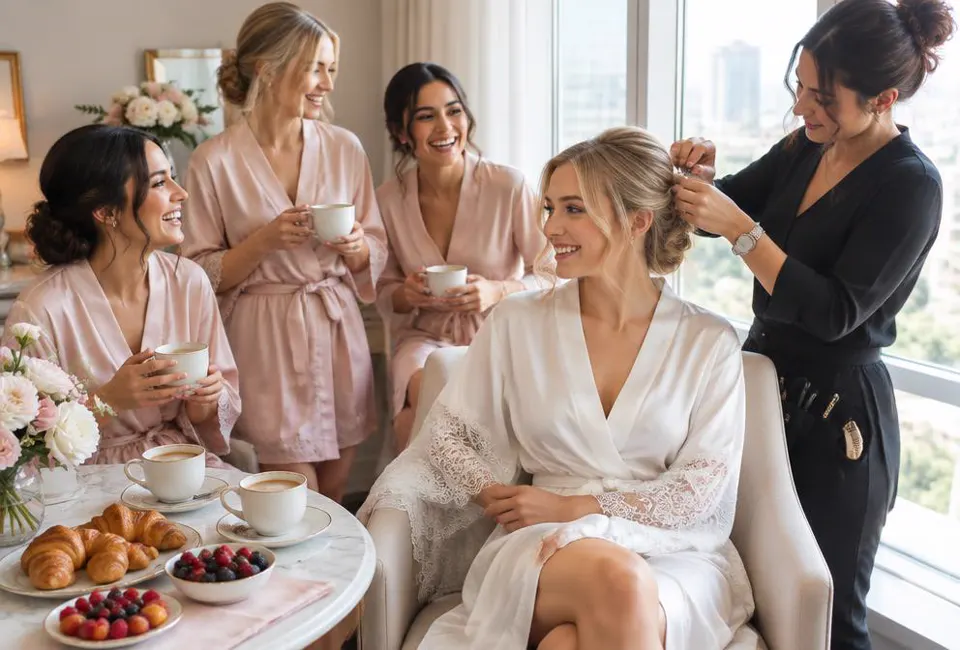
The Morning Math: Calculating Your Start Time
The success of your wedding day depends on how you structure the final hours before you say I do. Mastering your wedding morning timeline requires a mathematical approach to ensure you never feel rushed during your transition into marriage.
The most common mistake couples make is picking an arbitrary wake up time based on how they feel. Instead, professional planners use the Reverse Engineering Formula. This method starts with your Ceremony Time and subtracts every logistical layer until you arrive at your Hard Start Time. You must account for travel, a buffer for unexpected delays, and the precise duration of beauty services. For example, if Sarah and David are marrying at 4:00 PM, they do not start at 10:00 AM because it sounds right. They subtract 30 minutes for travel, a 45 minute buffer, and 5 hours of services to find their true start time.
Establishing Your Service Durations
When building your wedding morning timeline, precision is your best friend. Standard industry timing allocates 45 minutes per bridesmaid or family member for makeup, and another 45 minutes for hair. The bride requires a larger window, typically 60 to 90 minutes per service, to allow for intricate details and veil placement. If you have five bridesmaids and two mothers, that is over five hours of work for a single stylist. To avoid a 4:00 AM wake up call, consider hiring a second stylist to run concurrent services, effectively cutting your total preparation time in half.
| Person | Hair Duration | Makeup Duration | Total Time |
|---|---|---|---|
| Bride | 60 to 90 mins | 60 to 90 mins | 120 to 180 mins |
| Bridesmaid | 45 mins | 45 mins | 90 mins |
| Mother of Bride | 45 mins | 45 mins | 90 mins |
| Flower Girl | 20 mins | 10 mins | 30 mins |
Beyond the chair, you must account for the dressing phase. Stepping into a wedding gown is not like putting on a sundress. It involves buttons, corsets, or intricate zippers that can take 20 to 30 minutes, especially if your bridal party is also trying to get dressed simultaneously. Add a 30 minute buffer specifically for photos of the final details like jewelry and shoes. If your photographer arrives at noon, you should be nearly finished with hair and makeup to ensure they capture the most polished version of the morning activities without interfering with the flow.
Consider the logistics of your location when finalizing the math. If you are getting ready at a hotel but the ceremony is at a private estate, your travel time should be calculated using peak traffic data for that specific day of the week. Many couples overlook the time it takes to load the bridal party and luggage into vehicles. A group of ten people rarely moves as fast as two people. Build in an extra 15 minutes for the transition from the hotel room to the car to keep the wedding morning timeline on track and stress free.
Morning Math Essentials
- Confirm the exact ceremony start time with your venue.
- Count the total number of hair and makeup services needed.
- Calculate travel time using a GPS app for the specific time of day.
- Add 30 minutes for the bride to get into the dress and accessories.
- Allocate 45 minutes for a photography window of final details.
- Identify the 'Hard Start Time' for the very first person in the chair.
- Build in a 15 percent time buffer for unexpected delays.
- Schedule a specific 30 minute window for a bridal party lunch break.
Three Scenarios: Early, Mid-day, and Evening
Developing a tailored wedding morning timeline requires matching your preparation pace to the specific requirements of your ceremony time and venue logistics.
The structure of your wedding morning timeline depends heavily on the logistical constraints of your chosen ceremony style and location. A morning service requires a military grade level of efficiency to ensure everyone is ready before noon. Mid afternoon ceremonies allow for a more leisurely pace but require careful management of the midday slump to maintain energy. Evening galas offer the luxury of a slow start but often involve more complex photography sessions or cultural rituals that fill the afternoon hours. Understanding these three distinct rhythms helps couples anticipate where potential delays might occur and how to adjust their expectations accordingly.
Scenario One: The Traditional Early Service
Chloe and Liam have a 1:00 PM traditional church ceremony. Because their venue is twenty minutes from their getting ready location, their wedding morning timeline begins at 6:00 AM. This early start accommodates a bridal party of five for hair and makeup. At 7:00 AM, a protein rich breakfast is served to prevent mid morning fatigue. The hair and makeup artists arrive at 6:30 AM to set up their stations. By 11:30 AM, Chloe begins dressing to allow for final portraits and a prompt departure at 12:20 PM. This schedule prioritizes punctuality to respect the strict windows often enforced by religious venues.
Scenario Two and Three: Garden and Gala Timelines
Aisha and Sam represent the mid day ceremony with a 4:00 PM garden wedding. Their wedding morning timeline is less pressurized, starting at 9:00 AM. This allows for a full breakfast and a relaxed atmosphere. The first look is scheduled for 1:30 PM to take advantage of the natural light before the sun becomes too harsh. Meanwhile, Hiro and Yuki are hosting a 6:00 PM formal gala. Their day starts at 11:00 AM with a brunch. They utilize the afternoon for an extended couple session at 3:00 PM. This evening focus requires a second hair and makeup touch up session just before the ceremony to ensure a fresh look.
| Activity | Chloe (1:00 PM) | Aisha (4:00 PM) | Hiro (6:00 PM) |
|---|---|---|---|
| Wake Up and Breakfast | 6:00 AM | 9:00 AM | 11:00 AM |
| Vendor Arrival | 6:30 AM | 10:00 AM | 12:30 PM |
| Dressing Begins | 11:30 AM | 2:30 PM | 4:30 PM |
| Pre-Ceremony Photos | 12:00 PM | 1:30 PM | 3:00 PM |
| Ceremony Start | 1:00 PM | 4:00 PM | 6:00 PM |
Regardless of which scenario reflects your plans, the common denominator is the need for buffer time. In each case, an extra thirty minutes is hidden within the dressing phase to account for missing accessories or difficult fastenings. For Chloe and Liam, this buffer is vital because church bells do not wait. For Hiro and Yuki, the later start means they must resist the urge to sleep in too late, as losing the early afternoon window can lead to a rushed photography session. Balancing the needs of the vendors with the physical stamina of the wedding party is the primary goal of every successful wedding morning timeline.
Universal Preparation Essentials
- Confirm vendor arrival times 48 hours in advance
- Set out all accessories including shoes and jewelry the night before
- Assign one person to manage the food and hydration schedule
- Designate a specific area for hair and makeup near natural light
- Charge all mobile devices and external batteries fully
- Steam all garments at least 12 hours before the start time
- Create a playlist to maintain a positive and calm atmosphere
- Distribute a printed version of the timeline to the bridal party
Finalizing your wedding morning timeline involves a honest assessment of your own habits. If you are naturally slow in the morning, choose the start time of the scenario above and subtract an additional thirty minutes. Each couple has unique needs. Aisha and Sam might need more time for garden setup checks, while Hiro and Yuki might need extra time for formal attire complexities like cufflinks or corsets. Use these templates as a foundation, then layer in your specific travel times and cultural traditions to create a document that provides peace of mind throughout your celebration.
Communication Scripts for Vendors and Family
Clear communication is the engine that keeps your wedding morning timeline on track, preventing delays that ripple throughout the entire celebration. By using structured scripts, you ensure every participant understands their role and the precise moment their presence becomes critical.
When communicating with your wedding party, clarity is more important than politeness alone. For a bridesmaid like Sarah, who may be prone to running late, you must provide a hard arrival time rather than a general window. A script for this scenario might read: Hi Sarah, I am so excited for Saturday. To ensure our hair and makeup schedule stays on track, please arrive at the bridal suite by 7:15 AM sharp. We have a tight wedding morning timeline, and the stylists must start their first appointment at 7:30 AM to avoid late fees. This approach sets a firm boundary while explaining the logistical necessity behind the early start.
Professional Coordination with Photography Teams
Managing expectations with your photographer requires an understanding of their workflow. Most professionals do not need to be present for the entire three hour makeup process. Instead, they usually arrive during the final 30 percent of the getting ready process to capture the finishing touches and the dress reveal. You might send a confirmation email saying: We are looking forward to having you document our morning. Based on our wedding morning timeline, we expect hair and makeup to be 70 percent complete by 10:30 AM, which is when we would like you to begin coverage. Please let us know if this arrival time aligns with your shot list for the flat lays and bridal portraits.
Consider the example of Maria and Leo, a couple who coordinated a complex morning involving two separate getting ready locations. To keep both sides synchronized, they sent a group message to their immediate family members two days prior. The script used was: Hello everyone, we can not wait to see you. For the photography schedule to work, the groomsmen need to be fully dressed and ready for photos by 9:00 AM at the hotel lobby. This ensures we stay on schedule for the first look. By providing a specific location and a hard deadline, Maria and Leo eliminated the common morning mistake of family members wandering off during key transition periods.
| Recipient | Lead Time | Key Message Focus |
|---|---|---|
| Hair and Makeup | 14 Days | Final headcount and start sequence |
| Wedding Party | 7 Days | Hard arrival times and breakfast plan |
| Photographers | 7 Days | Final 30 percent completion arrival |
| Transport/Drivers | 48 Hours | Pick up address and contact person |
| Parents | 48 Hours | Dressed and ready time for portraits |
Effective communication also involves setting expectations for the physical space. If you are getting ready at a venue or hotel, your script to the bridesmaids should include a request to keep personal belongings in a designated corner. This ensures that when the photographer arrives for that final 30 percent of the morning, the room is visually clean for photos. A simple text could say: To help the photos look their best, please keep all suitcases and garment bags in the closet area. This allows us to focus on the moments rather than the clutter, keeping our wedding morning timeline moving smoothly without a last minute cleaning frenzy.
Lastly, always appoint a point of contact who is not the bride or groom. Your scripts should direct questions toward a trusted maid of honor or a wedding coordinator. For example, tell your vendors: On the morning of the wedding, please direct all logistical questions to my sister, Elena, at 555-0102. I will not have my phone active during the wedding morning timeline to ensure I stay present. This delegation prevents the couple from becoming a bottleneck for information, allowing the schedule to flow naturally while they focus on the emotional significance of the day ahead.
Vendor and Family Communication Tasks
- Send 7:15 AM arrival alerts to early hair appointments
- Confirm the 70 percent completion mark with your photographer
- Distribute the final itinerary to all parents via digital message
- Assign a non-couple point of contact for vendor arrivals
- Verify transport arrival times for off-site photo locations
- Request bridesmaids keep the suite tidy for photography
- Confirm final payment or tip distributions for morning staff
- Send the specific suite number or entry code to all vendors
- Ensure all wedding party members know the breakfast schedule
Budgeting for Morning Logistics
Developing a robust wedding morning timeline requires more than just scheduling minutes: it requires an intentional financial strategy to cover the hidden costs of early logistics.
Every decision made before the ceremony carries a financial weight that ripples through your total wedding investment. Whether you are aiming for the US average of about $33,000 (The Knot Real Weddings Study 2025) or the Canadian average of about C$30,000 (RBC), the way you distribute these funds determines the quality of your morning experience. Couples often overlook the costs of bridal suite rentals, early vendor access fees, and professional delivery for breakfast. By failing to account for these specific needs, you risk dip into the emergency fund before the ceremony even begins.
The Five Percent Rule for Morning Success
To ensure a seamless transition from waking up to walking down the aisle, experts recommend allocating 2 to 5 percent of your total budget exclusively for morning logistics. For a couple like Sarah and Omar, who are working with a budget of A$35,315 (Easy Weddings 2025) in Australia, this translates to roughly A$700 to A$1,700. This dedicated fund covers high quality catering to keep the bridal party energized and reliable transportation to get everyone to the venue on time. Spending this amount upfront prevents the day of stress that occurs when you are forced to scramble for last minute solutions.
| Category | Suggested Percentage | Purpose | Stress Reduction Impact |
|---|---|---|---|
| Catering | 1.5% | High protein breakfast and hydration | Prevents mid-morning fatigue and fainting |
| Transport | 1.0% | Shuttle or hired car for the party | Eliminates parking and navigation delays |
| Service Fees | 0.5% | Early setup fees for hair and makeup | Ensures professionals arrive on schedule |
| Miscellaneous | 1.0% | Emergency kit refills and tips | Handles unexpected wardrobe malfunctions |
Transportation is a significant variable in your wedding morning timeline. If your getting ready location is separate from your venue, the cost of moving people and attire must be precise. In the UK, where averages range from £20,600 (Bridebook 2024) to £23,000 (Which? 2024), a significant portion of the logistics budget should focus on professional drivers. Relying on rideshare apps during peak hours can introduce unnecessary risks. A pre booked car service ensures that the wedding dress, the flowers, and the VIPs arrive simultaneously, protecting the integrity of your photo schedule.
Finally, consider the cost of space. If your venue does not offer a bridal suite before noon, you may need to book an extra night at a hotel to ensure access at 7:00 AM. This prevents a rushed environment where vendors are tripping over each other in a cramped room. Investing in a spacious environment allows your photographer to capture those iconic morning moments without clutter. When you view these expenses as insurance against chaos, the 2 to 5 percent allocation becomes one of the most valuable parts of your entire wedding spend.
Logistics Budget Final Review
- Confirm if early venue access requires an additional hourly fee.
- Include 20 percent gratuity for hair and makeup artists.
- Budget for a delivery fee for morning coffee and breakfast.
- Allocate funds for a steamer and emergency sewing kit.
- Set aside a small buffer for parking fees at the hotel or venue.
- Factor in the cost of a late checkout for the getting ready suite.
- Review transportation contracts for hidden fuel or mileage surcharges.
- Account for the cost of snacks for the wedding party during photos.
To See or Not to See: The First Look Framework
Choosing between a traditional aisle reveal and a private first look is the single most significant variable in your wedding morning timeline. This decision dictates whether your schedule front-loads photography sessions or preserves the morning for quiet preparation.
The First Look Framework is a strategic choice that trade-offs morning leisure for afternoon freedom. If you opt for a private reveal, you must add approximately 90 minutes to your wedding morning timeline before the ceremony begins. This buffer allows for the couple's reveal, followed by immediate couple portraits and full wedding party photos. While this requires a much earlier start for hair and makeup services, it effectively clears the schedule during the cocktail hour. Couples who prioritize spending time with guests usually choose this path, as it allows them to transition straight from the ceremony to socializing without disappearing for a two hour photo session.
The Reveal Decision Matrix
| Factor | Traditional Aisle Reveal | Private First Look |
|---|---|---|
| Morning Start Time | Standard (Later) | Accelerated (90 mins earlier) |
| Post-Ceremony Flow | Formal photos for 60 to 90 mins | Join cocktail hour immediately |
| Emotional Dynamic | Public, high-pressure moment | Private, intimate experience |
| Photography Volume | Condensed and rushed | Extensive and varied locations |
| Hair and Makeup | Standard longevity needed | Must withstand extra 2 hours |
Consider the case of Sarah and Mateo, who prioritized a sunset ceremony. By choosing a First Look, they started their wedding morning timeline at 9:00 AM for a 4:00 PM ceremony. They completed their couple portraits and family groupings by 2:30 PM, allowing for a 30 minute refreshment break before the guests arrived. This prevented the common stress of chasing the fading light after the vows. Conversely, Liam and Priya preferred a traditional reveal. Their timeline allowed them to sleep in until 10:30 AM, but they understood that 80 percent of their cocktail hour would be spent with the photographer rather than their guests.
Step by Step First Look Photographic Sequence
- Minute 0 to 15: Partner A arrives at the designated private location to set the scene.
- Minute 15 to 30: Partner B arrives for the reveal and initial reactions are captured.
- Minute 30 to 60: Romantics and couple portraits at the primary location.
- Minute 60 to 90: Full wedding party joins for group shots and editorial poses.
- Minute 90 to 120: Immediate family portraits (optional) or final touch-ups before the ceremony hiding period.
When calculating the costs associated with these logistics, remember that extended photography coverage or early morning venue access may impact your total. For context, the average wedding costs about $33,000 in the US (The Knot Real Weddings Study 2025) and approximately A$35,315 in Australia (Easy Weddings 2025). Regardless of the region, about 10 to 15 percent of a wedding budget is typically allocated to photography. A First Look ensures you maximize this investment by providing more time for creative shots without the time pressure of an impatient crowd waiting at the reception venue. It also serves as a dress rehearsal for your movements in your formal attire.
The decision ultimately hinges on your personality types and the specific logistics of your venue. If the thought of a hundred eyes watching your first reaction to your partner feels overwhelming, the First Look offers a sanctuary. However, if you have dreamed of the heavy doors opening to a long walk down the aisle, the traditional route is worth the sacrifice of your cocktail hour. Ensure you communicate this choice to your catering team and transport providers at least six weeks in advance, as it shifts the entire momentum of the day. A well planned morning leads to a relaxed evening.
First Look Readiness Checklist
- Confirm venue access for the 90 minute pre-ceremony window.
- Ensure florist delivers bouquets and boutonnieres 2 hours early.
- Arrange for a touch-up kit to be present at the reveal site.
- Designate a 'clearance coordinator' to keep guests away from the reveal area.
- Schedule hair and makeup completion 30 minutes before the reveal begins.
- Pack comfortable shoes for walking between portrait locations.
- Assign a bridesmaid or groomsman to manage the train and veil during the walk.
- Verify that the photographer has scouted lighting for the earlier time slot.
Common Morning Mistakes to Avoid
Even the most meticulously planned wedding morning timeline can be derailed by small oversights that snowball into major delays. By identifying these common pitfalls early, you can implement structural safeguards to keep your celebration on track.
The Steaming Crisis is a frequent culprit for late starts. Many couples wait until the morning of the wedding to remove gowns and suits from their garment bags, only to find deep creases that require professional attention. For example, a couple like Sarah and Omar might lose forty minutes attempting to steam a multi layered tulle dress with a handheld device that keeps spitting water. To avoid this, all outfits must be unbagged, inspected, and steamed forty eight hours prior to the ceremony. Assigning a specific family member to perform a final check the night before ensures that no one is wrestling with a hot iron while the photographer is waiting to begin portraits.
Solving the Missing Person and Low Battery Dilemmas
The Missing Person scenario often involves a bridesmaid or groomsman who has stepped away for coffee or a quick errand just as they are needed for group photos. You can mitigate this by utilizing a strict stay in place policy once the hair and makeup process begins. If someone must leave, they should be required to sign out with a designated point person. Similarly, the Low Battery issue occurs when phones used for music, navigation, or vendor coordination die at critical moments. Ensure every preparation suite has a dedicated charging station with at least four high speed ports to prevent a communication blackout during the final hour.
The most effective structural solution for your wedding morning timeline is the 15 percent buffer rule. This formula requires you to add a fifteen percent time margin to every major transition point. If the schedule says travel to the venue takes twenty minutes, you must allocate twenty three minutes. If hair and makeup for the group is estimated at four hours, you should schedule four hours and thirty six minutes. This padding absorbs the inevitable friction of lost shoes, misplaced jewelry, or emotional phone calls, preventing a five minute delay at 9:00 AM from becoming a thirty minute catastrophe by noon.
| Task Category | Estimated Base Time | Calculated Buffer | Total Allocated Time |
|---|---|---|---|
| Hair and Makeup | 180 Minutes | 27 Minutes | 207 Minutes |
| Getting Dressed | 30 Minutes | 5 Minutes | 35 Minutes |
| Vendor Arrival | 60 Minutes | 9 Minutes | 69 Minutes |
| Travel to Venue | 40 Minutes | 6 Minutes | 46 Minutes |
| First Look Photos | 45 Minutes | 7 Minutes | 52 Minutes |
Underestimating the time needed for small tasks is a common trap for couples globally. Whether you are working with an Australian average budget of A$35,315 according to Easy Weddings 2025 or a Canadian budget of C$30,000 via RBC, time remains your most valuable resource. A common mistake is failing to account for the time it takes to move a group of people from one room to another. A party of ten does not move at the speed of one person. Use the buffer rule specifically for these transitions to ensure that your financial investment in professional photography and hair styling is not wasted on rushed or skipped sessions.
Morning Mistake Prevention List
- Steam all garments at least 24 hours in advance.
- Remove all tags and stickers from shoes and accessories.
- Designate a single room for all charging devices.
- Appoint a bridesmaid or groomsman as the location warden.
- Apply the 15 percent buffer to all travel durations.
- Pre pack the emergency kit with scissors and safety pins.
- Set an alarm for 30 minutes before the photographer arrives.
- Verify that all floral deliveries have a confirmed contact person.
- Distribute a physical copy of the timeline to all VIPs.
Finally, avoid the mistake of skipping a real meal. Many couples rely on caffeine and adrenaline, which leads to a physical crash during the ceremony. Schedule a formal thirty minute window for a high protein breakfast or lunch. This is not just for sustenance but acts as a psychological reset. If you are following the UK average spend of £20,600 per Bridebook 2024 or up to £23,000 per Which? 2024, allocating a small percentage of that for professional morning catering is a wise move. A well fed wedding party is more likely to remain punctual and focused throughout the day.
The T-Minus 60 Minutes Checklist
The final hour of your wedding morning timeline is the bridge between preparation and the ceremony. This phase requires a transition from logistical coordination to emotional presence, ensuring every detail is secured before the departure.
The cooling period begins exactly sixty minutes before departure. During this fifteen minute window, all vendors, including photographers and hair stylists, should conclude their active tasks. Consider the case of Elena and Marcus, who dedicated this time to sitting in a quiet room with water and light snacks. They stopped answering texts and avoided mirrors to simply breathe. This buffer prevents the frantic energy that often leads to forgotten items like rings or marriage licenses. By stepping away from the chaos, you regulate your nervous system, allowing you to enter the ceremony with a sense of calm rather than exhaustion.
The Sixty Minute Countdown Schedule
| Time Increment | Action Item | Responsible Party |
|---|---|---|
| T-60 to T-45 | Cooling Period: Hydrate and breathe | The Couple |
| T-45 to T-30 | Accessories: Shoes, jewelry, and perfume | The Couple and Attendants |
| T-30 to T-15 | Final Kit Check: Rings, vows, and emergency bag | Best Man or Maid of Honor |
| T-15 to T-05 | Staging and Outerwear: Coats or wraps | Entire Wedding Party |
| T-05 to T-00 | Departure: Vehicle loading and final exit | Transportation Lead |
At the forty five minute mark, focus on the tactile details that complete your look. This is the designated window for putting on shoes, cufflinks, watches, and heirloom jewelry. Doing this now, rather than earlier, prevents damage to delicate fabrics and minimizes the risk of losing small items during the morning bustle. For instance, if you are wearing heavy earrings or a complex veil, this is the time to secure them firmly. Ensure your attendants are also fully dressed at this stage so they can assist you without worrying about their own attire. This sequence creates a polished transition into your wedding day persona.
The final fifteen minutes are dedicated to the departure protocol. This is when the wedding party moves to the transport vehicles in a specific order to ensure a grand entrance. The lead vehicle usually carries the bridesmaids or groomsmen, while the couple or the person walking them down the aisle departs last. Consider a couple like Sarah and Jamie, who used a checklist to ensure the rings and written vows were physically in the hands of the best man before the car doors closed. This structured exit prevents the stress of realizing a critical item is still on a hotel nightstand.
The Final Exit Protocol
- Verify the physical location of the wedding rings.
- Confirm that written vows are in a pocket or clutch.
- Distribute bouquets and boutonnieres to all members.
- Check that all cell phones are on silent or left behind.
- Ensure the emergency kit is loaded into the primary vehicle.
- Do a final mirror check for stray hairs or lipstick on teeth.
- Formally hand over house or hotel keys to a designated guest.
- Confirm the transportation driver has the correct ceremony address.
- Take one final deep breath together before stepping out.
Managing the final hour effectively means respecting the transition from private preparation to public celebration. Whether your budget aligns with the UK average of about £20,600 according to Bridebook 2024 or the Australian average of approximately A$35,315 per Easy Weddings 2025, the value of a calm morning is universal. By following a strict minute by minute breakdown, you eliminate the need for last minute decision making. This allows the couple to focus entirely on the commitment they are about to make, arriving at the altar refreshed, organized, and ready to celebrate their new chapter.