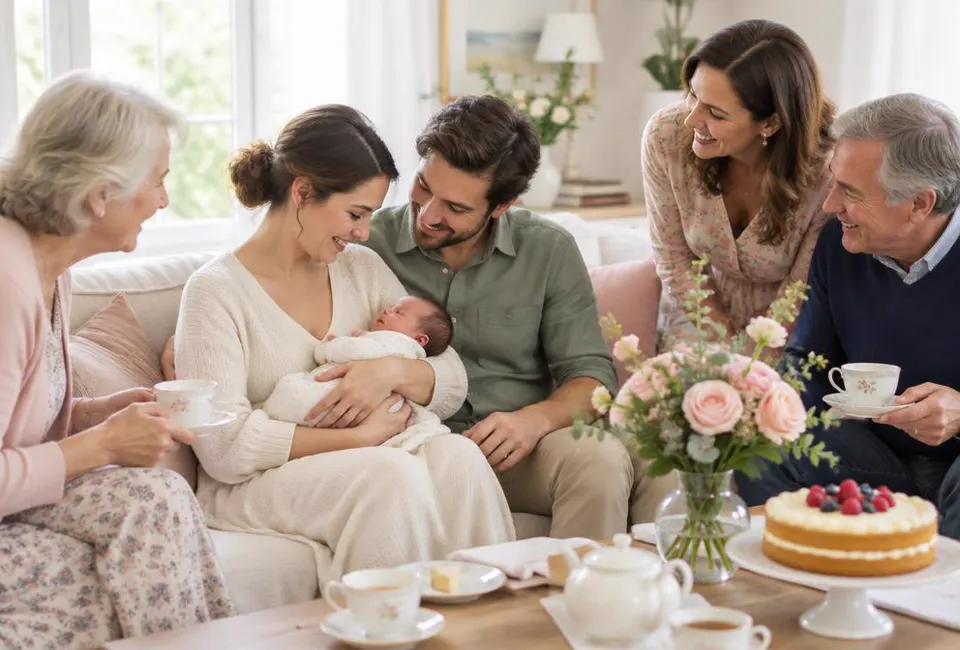
Establishing Strategic Goals for Your Sip and See Party
The primary objective of any early childhood celebration is to introduce the newest family member to your social circle. Defining clear goals ensures that the event remains focused on the comfort of the infant and the recovery of the parents.
When planning a sip and see party, the goal differs significantly from a traditional baby shower. A shower focuses on preparation, whereas these post birth events focus on presentation. You must decide if the event is intended to be an intimate gathering for close relatives or a broader social debut for friends and colleagues. Clear objectives help prevent the exhaustion that often follows large scale hosting during the fourth trimester. Consider how much time you want guests to spend with the infant versus socializing with each other. If the priority is to minimize germ exposure, the goal should be a viewing rather than a handling event. Establishing these boundaries early in the planning process allows you to communicate expectations clearly to your guests. By setting a specific start and end time, you protect the baby's sleep schedule and the parents' limited energy reserves during those first few months.
Secondary goals often involve the practicalities of new parenthood, such as replenishing essential supplies or celebrating a specific milestone like the end of the first month. For some, the goal is purely celebratory, a chance to enjoy a glass of champagne and reconnect with the adult world after weeks of isolation. For others, it is a way to consolidate dozens of individual house calls into one manageable afternoon. This efficiency is a primary driver for many modern families who find it difficult to host visitors every weekend. By focusing the energy into a single three hour window, you reclaim your private time for the rest of the month. You should also consider the emotional tone you wish to set, whether that is a formal garden party or a casual pajama brunch. These decisions will ultimately dictate every other logistical choice, from the catering menu to the layout of the furniture in the venue.
Priority Alignment Matrix
Core Event Objectives
- Consolidation of visiting hours to preserve family privacy.
- Formal introduction of the infant to extended social networks.
- Celebrating the transition into parenthood with a support system.
- Providing a low pressure environment for gift giving and well wishes.
- Minimizing repetitive hosting duties over several weeks.
- Creating a controlled environment for safe infant interaction.
Another crucial aspect of goal setting is determining the level of interaction allowed between guests and the baby. Some parents prefer a hands off approach where the baby remains in a bassinet or carrier, while others are comfortable with passing the child among close relatives. If your goal is to keep the baby calm, you might plan for the event to coincide with a period of alertness rather than a nap time. However, many find that a sleeping baby is easier to manage during a party as it reduces the likelihood of overstimulation. You must also account for your own physical recovery. If you are still healing, your goal should be to remain seated and have guests come to you. This shift in hosting dynamics is perfectly acceptable and expected in the context of a new arrival celebration. Always prioritize the health and wellbeing of the core family unit above the entertainment of the guests.
Think about the long term memories you wish to create through this event. Documentation is often a high priority, so you might set a goal to capture specific photos with grandparents or godparents. If photography is a priority, the timing must account for natural light and the baby's typical mood. You might also want to incorporate a guest book or a time capsule for the child to read in the future. These sentimental goals add depth to the event beyond the immediate social gathering. Consider how the event will feel for older siblings if this is a sprinkle or a second child celebration. Ensuring the older child feels included and celebrated can be a vital goal for family harmony. When everyone understands the purpose of the day, the atmosphere remains relaxed and the logistics flow much more smoothly. Clear goals act as a filter for every subsequent decision in the planning process.
Communication of these goals to your co host or partner is essential for a unified front. If one person wants a quiet tea and the other wants a loud cocktail party, the resulting tension will be felt by the infant. Sit down and list your top three priorities for the day. Is it photography, food quality, or maximum guest attendance? Once you have identified these, you can allocate your resources accordingly. For example, if photography is the top goal, you might spend more on decor and a professional photographer while simplifying the food. If the goal is community support, you might focus on a potluck style meal that encourages lingering conversation. Each choice should reflect the primary mission of the event. Do not feel pressured to conform to traditional expectations if they do not serve your family's current needs or comfort levels during this transitional period.
Finally, consider the logistical goal of guest management. You want to ensure that guests feel welcomed and informed without requiring constant attention from the host. This can be achieved through clear signage and a well structured flow of activities. The goal is to create an environment where the event can almost run itself. This might mean setting up self service drink stations or having a designated 'baby station' where guests can view the infant. By automating as much as possible, you free yourself to actually enjoy the moments and the company. The success of a sip and see party is measured by the lack of stress felt by the parents and the comfort of the newborn. If you reach the end of the day feeling supported rather than drained, you have successfully met your most important planning goals. Every other detail is secondary to the health and happiness of your growing family.
Curating the Guest List and Managing Social Dynamics
The guest list is the most significant factor in determining the complexity and cost of your event. Managing this list requires a balance between social obligations and the limited capacity of new parents.
Creating a guest list for a baby celebration requires a tiered approach to ensure you do not overlook essential family members while keeping the total count manageable. Start by listing your immediate family and closest friends who have likely already seen the baby or have been heavily involved in the first few weeks. This forms your inner circle. The second tier includes extended family and broader social groups who are eager to meet the newcomer. The third tier consists of colleagues or neighbors who you may wish to include if space and budget allow. It is often helpful to set a hard cap on the number of guests based on the size of your home or chosen venue. Unlike a wedding, a baby celebration is usually more casual, but the physical constraints of hosting with a newborn are much stricter. Be realistic about how many people you can truly interact with in a short window.
One effective strategy for managing the guest list is to consider the age range and potential noise levels. If you are hosting in a small space, a high number of young children might create a chaotic environment that could overwhelm the infant. You may choose to make the event adult only or invite only older children who can maintain a level of decorum. Conversely, if the event is a sprinkle for a second or third child, you might embrace the chaos and invite families with children of similar ages. This creates a playdate atmosphere that keeps the older siblings entertained. Regardless of your choice, be consistent with your invitations to avoid offending friends or family. If you allow some children but not others, be prepared to explain your reasoning, which is usually based on space or relationship proximity. The comfort of the baby should always be the deciding factor in these matters.
Guest List Selection Criteria
- Immediate family members and primary support network.
- Close personal friends who have provided assistance post birth.
- Extended family members who live within a reasonable traveling distance.
- Key colleagues or mentors with whom you share a close bond.
- Neighbors who are part of your daily local community.
- Godparents or designated guardians for the child.
Managing social dynamics is also vital when bringing different groups of people together for the first time. You may have friends from high school, coworkers from your current job, and family members from out of town all in one room. As the host, your ability to introduce people is limited by your responsibilities to the baby. To mitigate this, consider inviting a 'social captain' from each group who can help facilitate introductions and keep the conversation flowing. This takes the pressure off you and ensures that no guest feels isolated. You should also be mindful of any existing tensions between family members and plan seating or flow accordingly. The focus of the day is the baby, and most guests will be on their best behavior, but a little strategic planning goes a long way in maintaining a harmonious and joyful atmosphere for everyone involved.
The size of the list directly impacts the 'see' portion of a sip and see party. If you invite 50 people, it is impossible for everyone to have a quality moment with the infant without causing the child distress. If your list is large, you must set very clear boundaries about how guests interact with the baby. You might choose to have the baby in a separate, quiet room where small groups of two or three can go in for a quick visit. This prevents a crowd from hovering over the bassinet, which can be intimidating for a small child. Alternatively, you can have a designated viewing time in the middle of the party and then move the baby back to a quiet area. Communicating these logistics to your guests ahead of time or through signage at the event helps manage their expectations and ensures they understand that their presence is valued even if their time with the baby is brief.
| Guest Count | Ideal Format | Staffing Needs |
|---|---|---|
| 10 to 20 | Intimate Brunch | Self Hosted |
| 20 to 40 | Open House Afternoon | One Assistant |
| 40 to 70 | Catered Cocktail Style | Two plus Servers |
| 70 plus | Large Venue Event | Full Event Team |
Data management for your guest list is also important for post event tasks like thank you notes. Keep a detailed spreadsheet that includes names, addresses, and eventually, the gifts received. This will save you a tremendous amount of stress in the weeks following the party. You might also want to include a column for dietary restrictions, especially if you are serving a full meal. Being a thoughtful host means ensuring everyone has something safe and delicious to eat. If you are using digital invitations, many platforms allow you to track RSVPs and dietary needs automatically, which is a great time saver. Remember that the guest list is a reflection of your community, and those invited are there to support you in your new role. While it can feel like a chore to organize, the end result of having all your loved ones in one place to meet your baby is well worth the effort.
Finally, be prepared for last minute changes. With infants involved, and often other guests with children, cancellations are common due to illness or scheduling conflicts. Do not take these personally. Similarly, you may find that you need to scale back the list even after invitations have been sent if you or the baby are not feeling up to a large crowd. It is always better to host a smaller, more comfortable event than a large, stressful one. Flexibility is key when planning around a new addition to the family. If you find the process of creating a guest list too overwhelming, consider asking a close friend or the baby's grandparents to take the lead on the initial draft. They can provide a different perspective and help you narrow down the list to the most essential attendees, ensuring the event remains a joy rather than a burden.
Budgeting and Financial Planning for Baby Celebrations
A well planned budget prevents financial stress from overshadowing the joy of the new arrival. By allocating funds based on percentages, you can maintain control regardless of your total spending limit.
Budgeting for a baby celebration requires a pragmatic approach that prioritizes high impact items over unnecessary frills. Start by determining a total amount you are comfortable spending without dipping into essential savings for the baby's future. For the purpose of this framework, let us assume a total budget of 2,000 in your local currency. You should allocate approximately 40 percent of this to food and beverages, as this is the primary way you will host your guests. Another 20 percent should be set aside for the venue, if you are not hosting at home. The remaining 40 percent is split between invitations, decor, photography, and a small contingency fund. By following this percentage based model, you ensure that the core elements of the party are well funded. If you choose to host at home, you can redistribute the venue portion into higher quality catering or more elaborate decorations to enhance the space.
Food costs can fluctuate wildly depending on the time of day and the level of service. For a sip and see party, a midday gathering with light snacks and drinks is much more cost effective than a full dinner. You can save significantly by preparing some items yourself or purchasing high quality pre made platters from a local deli. If you choose to hire a caterer, ask for a menu that focuses on finger foods which require fewer plates and utensils. This not only saves money on rentals but also makes the event more casual and easier to clean up. Drinks should also be kept simple. A signature cocktail, a non alcoholic punch, and some sparkling water are usually sufficient. Avoid a full open bar unless it is a very formal evening event. Remember to account for the cost of ice, napkins, and glassware, which can add up if not planned for in the initial food and beverage allocation.
Strategic Resource Allocation
| Category | Percentage | Example Amount |
|---|---|---|
| Catering & Beverages | 45% | 450 |
| Decor & Florals | 15% | 150 |
| Stationery & Postage | 10% | 100 |
| Photography | 15% | 150 |
| Contingency Fund | 10% | 100 |
| Miscellaneous | 5% | 50 |
Decorations are another area where costs can spiral if not managed. Focus your spending on one or two high impact areas rather than trying to decorate every corner of the room. A beautiful floral arrangement on the main table and a coordinated set of balloons or a banner can create a festive atmosphere without a large investment. Consider items that can be repurposed later in the baby's nursery, such as high quality framed prints or custom wooden signage. This adds value to your spending beyond the few hours of the party. If you are on a tight budget, DIY decorations can be very effective, but be honest about your available time. With a newborn, your time is often your most valuable resource, and it may be worth spending a little more to buy pre made items rather than trying to craft everything from scratch in the middle of the night.
Invitations and stationery costs vary based on whether you choose digital or physical formats. While digital invitations are nearly free and highly efficient for tracking RSVPs, physical invitations provide a tangible keepsake for a significant life event. If you opt for physical cards, remember to include the cost of high quality paper, printing, and postage. A compromise is to send digital invitations to most guests but print a small number of high quality physical cards for immediate family and your own memory book. This allows you to have the best of both worlds without breaking the budget. For a sprinkle or a second child, you might lean more towards the casual digital approach, whereas a first child's introduction often feels more formal. Always check for hidden costs like tax and shipping when ordering stationery online to ensure your budget remains accurate.
Photography is an investment that many parents find essential. While everyone has a smartphone, hiring a professional for just two hours can ensure you have high quality, well composed images that include you, the host. If a professional photographer is outside your budget, ask a friend who is talented with a camera to take on this role as their gift to you. Provide them with a list of must have shots so you are not disappointed later. Having someone dedicated to photos allows you to stay in the moment and interact with your guests without worrying about capturing the perfect shot. This is one of the few areas where spending a little extra can provide a lifetime of value through the memories preserved. Ensure you discuss the delivery format and timeline with whoever is taking the photos before the event begins.
Finally, consider the cost of professional cleaning before and after the event. If you are hosting at home, the stress of preparing the space can be significant. Hiring a service to do a deep clean a day before the party is a gift to yourself that is often worth every penny. Similarly, having help with the post party cleanup allows you to return to your normal routine with the baby much faster. If your budget is tight, perhaps this is something a family member could sponsor instead of a traditional gift. When looking at your finances, remember that the goal is celebration, not debt. A simple, well executed party with a small budget is far more enjoyable for everyone than a lavish event that leaves the parents feeling stressed about their bank account. Focus on the value of the experience and the community you are building around your child.
Selecting the Ideal Venue and Timing for Your Event
The choice of venue and date sets the tone and logistical boundaries for your celebration. These decisions must prioritize the baby's routine and the parents' comfort above all else.
Choosing the right venue involves weighing the convenience of home against the ease of an external location. Hosting a sip and see party at home is traditional and allows the baby to remain in a familiar environment. It also means you have all your supplies, like diapers and changes of clothes, immediately available. However, it requires the most work in terms of cleaning and preparation. If you choose to host at home, limit the party to a few rooms to minimize the cleanup area. Make sure there is a dedicated quiet space away from the noise where you can retreat for feeding or if the baby becomes overstimulated. The comfort of having your own bed and bathroom just a few steps away cannot be overstated during those first few months of parenthood. If your home is small, consider using outdoor spaces like a patio or garden to increase the capacity.
External venues, such as a private room in a local cafe, a community center, or a park pavilion, offer the benefit of a neutral space where you don't have to worry about cleaning. This can be a massive relief for tired parents. When evaluating a venue, check for accessibility, especially for guests with strollers or elderly family members. The temperature control is also vital, as newborns are sensitive to heat and cold. Look for a venue that provides basic furniture like tables and chairs, which reduces the need for rentals. If you are choosing an outdoor venue, always have a solid backup plan for inclement weather. A beautiful park gathering can quickly become stressful if there is no shade or shelter from rain. Ensure the venue is close enough to your home that you can easily transport the baby and any necessary gear without a long, tiring drive.
Optimal Scheduling Strategies
Venue Evaluation Checklist
- Proximity to home for quick travel with the infant.
- Availability of a private, quiet area for nursing and diaper changes.
- Adequate seating for the number of guests expected.
- Clear policies on external catering and decorations.
- Ease of parking and accessibility for all guest types.
- Cleanliness and general safety of the environment for a baby.
The timing of the event is perhaps the most critical logistical factor. Most baby celebrations take place between two and four months after the birth. This gives the parents time to establish a routine and the baby time to develop a slightly stronger immune system. The time of day should revolve around the baby's 'happy window,' which for most infants is late morning or early afternoon. A typical two to three hour window, such as 11:00 AM to 1:00 PM or 2:00 PM to 4:00 PM, is ideal. This allows guests to visit during a time when the baby is likely to be alert but not yet overtired from the day. It also avoids interfering with the evening bedtime routine, which is often the most challenging time for new parents. Short, defined timeframes are respected by guests and protect the family's schedule.
When selecting a date, consider the time of year and any major holidays. You want to avoid dates where many of your guests might be traveling or have other commitments. Saturday and Sunday afternoons are the most popular choices as they allow for a relaxed pace. Check with your most important guests, such as grandparents, before finalizing the date to ensure they can attend. If you are planning a sprinkle for a later child, you might even consider a weekday morning if your social circle consists mainly of other parents who are free during those hours. However, for a general sip and see party, weekends remain the standard. Always allow yourself more time than you think you need to get ready on the day of the event. Babies have a way of creating delays right when you need to leave the house or welcome guests.
| Venue Type | Pros | Cons |
|---|---|---|
| Private Home | Free, comfortable, baby supplies at hand | High prep and cleanup effort |
| Local Cafe | No cleanup, professional catering | Rental costs, less privacy |
| Public Park | Spacious, good for kids, low cost | Weather dependent, no privacy |
| Community Hall | Large capacity, flexible decor | Can feel impersonal, requires setup |
Seasonality also plays a role in venue selection. A winter baby might require an indoor cozy setting with warm beverages, while a summer baby is perfect for an outdoor garden party with chilled drinks. Be mindful of flu and cold seasons when hosting a large group indoors with a newborn. If you are hosting during a peak illness season, you may want to choose a larger venue where people can spread out, or even opt for an outdoor event with heaters if possible. The health and safety of the infant should be the primary filter for all venue and timing decisions. If you feel overwhelmed at any point during the planning, remember that it is perfectly fine to delay the event by a few weeks. There is no hard rule on when the baby must be introduced to the world, and your peace of mind is paramount.
Finally, think about the flow of the venue. You want to create a path that leads guests from the entrance to the food and drink area, and then eventually to the viewing area. Avoid bottlenecks by keeping the bar and the food station in different parts of the room. If the baby is the focal point, ensure there is enough space around the bassinet or seating area for a few people to stand comfortably without blocking the entire room. Good lighting is also important, especially if you are hosting in a darker indoor space. Natural light is always best for photos and creates a cheerful atmosphere. By carefully selecting your venue and timing, you create a foundation for a successful event that honors the new addition to your family while respecting the reality of your new life as a parent.
Invitations, Communication, and Event Etiquette
The invitation is your first opportunity to set expectations and communicate the unique nature of your baby celebration. Clear etiquette guidelines ensure that guests arrive prepared and act respectfully around the newborn.
Invitations for a baby celebration should be sent out four to six weeks in advance. This gives guests enough time to clear their schedules but isn't so far in advance that they forget the details. The wording should clearly state the type of event, whether it is a sip and see party, a sprinkle, or a traditional shower. If you have specific requests regarding gifts or health precautions, the invitation is the place to mention them politely. For example, you might include a gentle note asking guests to ensure they are healthy before attending or a brief mention of your gift registry if you have one. Providing a clear RSVP date and method is essential for your planning. Whether you use a digital link or a phone number, make it as easy as possible for guests to respond so you can finalize your catering and seating arrangements.
Health etiquette is a modern necessity when introducing a newborn to a crowd. It is perfectly acceptable to ask guests to wash their hands upon arrival or to use hand sanitizer provided at the door. You might also request that guests who have recently been ill or exposed to illness stay home and visit at a later date. Framing these requests as being for the 'protection of the baby's developing immune system' is usually well received by all. You can also set boundaries regarding physical contact, such as 'please no kissing the baby' or 'we ask that only family hold the baby today.' These rules help you feel more in control of the environment and protect the health of your child. Most guests will appreciate the guidance and will be happy to comply to ensure the baby stays safe and healthy during the celebration.
Essential Information for Guests
Items to Include on the Invitation
- Full name of the baby (if already born) and the parents.
- Date and a specific time window (e.g., 2:00 PM to 4:00 PM).
- Full address of the venue with any parking instructions.
- A clear RSVP deadline and contact method.
- Brief mention of the event style (e.g., 'Light snacks and refreshments').
- Health guidelines or gift preferences if applicable.
Gift etiquette can be a delicate subject. For a first baby, a registry is standard and expected. For a sprinkle or a sip and see for a subsequent child, the emphasis is often more on the visit than the gift. You might include a phrase like 'your presence is the only gift we require' if you truly do not want items. However, many people still want to bring something small. In these cases, suggesting books for the baby's library or diapers is a practical way to guide their generosity. If you do receive gifts at the event, it is generally better to open them later rather than during the party. This allows you to focus your attention on your guests and the baby, and it avoids the potentially long and tedious process of a public gift opening, which can be difficult to manage with an infant in tow.
Communication during the event is just as important as the invitation. Consider having a small sign near the entrance that reiterates the basic 'rules of the house,' such as where to put coats, where the restroom is, and a reminder to wash hands. This reduces the number of repetitive questions you have to answer throughout the day. If you have a larger guest list, you might also have a small program or a few cards scattered around that explain the meaning of the celebration or share a few facts about the baby's first few weeks. This adds a personal touch and keeps guests engaged. The goal is to make everyone feel informed and comfortable without requiring you to be a constant tour guide. A well informed guest is a more relaxed and helpful guest.
Thank you notes are the final piece of event etiquette. While it can be daunting to write dozens of notes with a newborn, it is a vital way to show your appreciation for the support of your community. Try to write a few each day while the baby is napping, rather than trying to do them all at once. If you are truly overwhelmed, a digital thank you with a photo of the baby using the gift is a modern and acceptable alternative. The key is to acknowledge the kindness shown to you and your new child within a reasonable timeframe, usually within three to four weeks after the event. Keeping your gift list organized during the party will make this process much smoother. Remember that these notes are not just about the gifts; they are about strengthening the bonds with the people who will be part of your child's life.
In summary, the way you communicate with your guests before and during the event sets the stage for a positive experience. By being clear about your needs, boundaries, and expectations, you create a safe and enjoyable environment for everyone. People generally want to be helpful and respectful, but they need to know what that looks like in your specific home or for your specific baby. Don't be afraid to be direct yet kind in your messaging. Your friends and family are there because they care about you and your new arrival, and they will appreciate the effort you put into making the celebration organized and inclusive. Proper etiquette is the glue that holds the social aspects of the event together, allowing the joy of the occasion to take center stage.
Operational Logistics and Spatial Design
Developing a robust logistical framework ensures the celebration remains manageable for new parents. Proper spatial planning accommodates fluctuating guest counts while prioritizing the health and comfort of the infant.
When planning the flow of a sip and see party, the primary concern is the physical comfort of the newborn and the primary caregivers. Unlike a traditional shower where the guest of honor remains seated at the front for gift opening, these events are fluid. You must designate a quiet zone away from the main socializing area where the infant can sleep, feed, or be changed without interruption. This area should be strictly off limits to guests, ensuring the baby is not overstimulated by constant noise or light. In the main event space, prioritize standing room with scattered clusters of seating rather than a formal banquet layout. This encourages the natural movement of guests, allowing them to cycle through the greeting area without creating a bottleneck. Ensure paths to the food station and the infant viewing area are wide enough for two people to pass comfortably, reducing the risk of accidental bumps or spills in tight quarters.
Hygiene and Health Management
Health considerations are paramount when introducing a newborn to a large group of people. Instead of placing hand sanitizer in a single, inconspicuous location, integrate hygiene stations into the decor at every major touchpoint. Place a stylish station at the entrance, near the food service area, and immediately adjacent to the infant greeting zone. This subtle reinforcement ensures that every guest has sanitized their hands before approaching the baby. You might also include a gentle sign explaining the household rules regarding physical contact, such as asking guests not to kiss the baby or touch their face. By making these protocols visible and accessible, you remove the social awkwardness for the parents who might otherwise feel uncomfortable enforcing rules repeatedly. This structured approach to hygiene protects the vulnerable immune system of the newborn while maintaining a welcoming atmosphere for all attendees who wish to meet the new arrival.
Waste management is an often overlooked logistical detail that can quickly become overwhelming in a residential setting. With guests constantly arriving and departing, the volume of used napkins, disposable cups, and plates will accumulate rapidly. Strategically place multiple waste bins that are lined and lidded to keep the environment tidy and odor-free. Use discrete signage or decorative covers to ensure these bins are easy to find without being an eyesore. If you are serving refreshments, consider using compostable or high quality disposable items to minimize the post event cleanup burden for the new parents. A designated area for discarded glassware is also essential if you are using permanent service ware. By automating the cleanup process through smart placement and clear cues, the hosts can focus their limited energy on their guests and their child rather than managing household chores during the peak of the celebration.
Logistics Readiness Checklist
- Confirm the quiet zone is fully stocked with diapers and wipes.
- Verify the entrance path is clear of tripping hazards for older guests.
- Set up three distinct hand sanitizing stations at eye level.
- Check that all waste bins are lined with extra bags at the bottom.
- Ensure the climate control is set to a comfortable temperature for a baby.
- Designate a specific surface for guests to leave bags and coats.
Furniture arrangement dictates the social energy of the room. Aim for a layout that facilitates small group conversations rather than one large circle. Use existing surfaces like coffee tables and sideboards to hold food and drinks, keeping the center of the room open for movement. If the weather permits, utilizing outdoor space can significantly increase the capacity and ventilation of the event, which is beneficial for health reasons. However, ensure there is a clear transition between the outdoors and the indoor baby viewing area to prevent dirt and allergens from being tracked inside. Use area rugs or floor markers to subtly guide the flow of traffic in a one way direction past the infant. This prevents a crowd from forming around the baby and allows everyone a fair opportunity to see the newborn without the parents feeling smothered or overwhelmed by the proximity of the crowd.
Lighting plays a dual role in both aesthetics and functionality. During a daytime event, maximize natural light to keep the energy high and the photography clear. However, be mindful of direct sunlight on the baby, as newborns have sensitive skin and eyes. Use sheer curtains to diffuse bright light in the viewing area. As the afternoon progresses, transition to warm, soft indoor lighting that creates a cozy atmosphere. Avoid harsh overhead lights which can be jarring for an infant. Instead, use floor lamps and table lamps to create a layered lighting effect. This approach not only makes the space more inviting for guests but also helps maintain a calm environment for the child. If you plan on taking professional photos, test the lighting levels at the specific time of day the event occurs to ensure you have enough illumination without needing to use a disruptive camera flash near the baby.
A final logistical pillar involves the management of gifts and cards. Even if the invitation specifies that no gifts are expected, guests will inevitably bring tokens of affection. Designate a table near the entrance for these items so guests do not have to carry them through the house. Assign a trusted friend or family member to keep a discrete log of who brought what, as this is immensely helpful for the parents when they write thank you notes later. Ensure there is a supply of pens and sticky notes available to label any gifts that arrive without cards attached. This organization prevents the common problem of misplaced cards and ensures the parents can properly acknowledge every gesture of kindness. By handling the arrival of physical goods systematically, the hosts can maintain a clutter free environment that keeps the focus on the social connections and the celebration of the new family member.
Day-of Run Sheet and Timing
The success of a sip and see party depends on a flexible yet structured timeline that respects the baby's unpredictable schedule. This run sheet balances preparation with the actual event flow.
The morning of the event should be focused entirely on final setup and ensuring the household is calm. Start at least four hours before the guests arrive to avoid a last minute rush. The first hour should be dedicated to food preparation and arranging the serving platters. If you are using external catering, this is the time to confirm their arrival window. The second hour should focus on the environment, including setting the lighting, checking the temperature, and putting out the final decor elements. It is crucial that the parents take at least thirty minutes for themselves to rest or dress without pressure. By completing the heavy lifting early, the household remains peaceful as the baby wakes and feeds before the first guests appear. This early preparation is the key to maintaining a relaxed demeanor, which sets the tone for the entire gathering from the moment the doorbell rings.
Hourly Execution Framework
| Time Phase | Activity Focus | Key Responsibility |
|---|---|---|
| T minus 4 Hours | Food prep and station setup | Host or Helper |
| T minus 2 Hours | Decor and hygiene station check | Lead Planner |
| T minus 1 Hour | Parental rest and baby feeding | New Parents |
| Event Start | Greeting and hand sanitizing | Greeter |
| Hour 1 to 2 | Peak socializing and viewing | All Guests |
| Post Event | Immediate tidy and baby rest | Helper |
During the first hour of the event, the flow will likely be staggered as guests arrive according to their own schedules. The primary duty of the host is to facilitate introductions and ensure everyone knows where the refreshments are located. The new parents should ideally be positioned in a comfortable chair near the infant, allowing guests to come to them. This minimizes the physical strain on the recovering mother and keeps the baby in a stable environment. It is helpful to have a secondary host, perhaps a grandparent or close friend, who manages the door and the flow of food. This allows the parents to remain present with their guests and their baby. Monitoring the volume levels during this peak time is important. If the room becomes too loud, the secondary host can gently lower the background music or open a window to dissipate the energy and maintain a calm vibe.
As the event reaches its midpoint, typically around the two hour mark, the baby may need a scheduled nap or feeding. Do not feel obligated to keep the infant on display for the entire duration of the party. The parents should feel empowered to retreat to the quiet zone for as long as necessary. During this period, the event continues with the guests enjoying the refreshments and each other's company. This is an excellent time for the secondary host to circulate and engage with anyone who has not yet spoken to the parents. If the baby is sleeping, guests can be encouraged to view the nursery or look at a photo album of the baby's first weeks. This ensures that even when the guest of honor is absent, the theme of the celebration remains central and the guests feel involved in the family's new chapter without demanding the baby's constant presence.
The final hour of the event usually sees a natural tapering of guests. Use this time to begin a very subtle cleanup, such as clearing empty plates or replenishing water. This signals to remaining guests that the event is drawing to a close without the need for a formal announcement. The parents can use this quieter time to have more meaningful, longer conversations with those who stayed late, often their closest friends or relatives. Avoid the temptation to start heavy cleaning like vacuuming or loud dishwashing while guests are still present, as this can feel dismissive. Instead, focus on the social winding down. Once the final guest departs, the immediate priority is returning the home to a functional state for the baby. This means clearing walking paths and ensuring the kitchen is manageable, but leaving the deep cleaning for the following day when the parents have had a chance to rest.
Post event reflection is a vital but often skipped step in the run sheet. Once the baby is settled for the night, the parents should take ten minutes to jot down any specific stories or comments they want to remember. This documentation is valuable for memory books and future celebrations. It is also the time to ensure all gifts are safely stored and that the house is secured. If there is leftover food, package it immediately into individual portions that can be easily heated for meals over the next few days. This small act of organization provides a practical benefit to the parents long after the guests have gone. By following a structured timeline, the day transitions from a coordinated event into a peaceful evening, preventing the exhaustion that often follows poorly managed social gatherings for new families.
Common Mistakes and Prevention
Avoiding frequent pitfalls in event planning ensures the celebration remains a joyful milestone rather than a source of stress. Recognizing these errors early allows for proactive adjustments.
One of the most frequent mistakes in organizing a sip and see party is overcomplicating the menu. Many hosts feel pressured to provide a full meal or elaborate, multi course hors d'oeuvres. However, this level of catering requires significant attention and kitchen presence, pulling the hosts away from their guests and the baby. The most successful events utilize a 'build your own' station or a selection of high quality finger foods that require zero last minute preparation. Overcrowding the menu also increases the risk of spills and requires more cleanup. By simplifying the food offerings, you reduce the logistical burden and allow the focus to remain on the social interaction. Stick to items that can be eaten with one hand, as guests will often be holding a drink or perhaps even the baby, making complex cutlery use nearly impossible and potentially messy in a social setting.
Managing Guest Expectations
Failing to set clear boundaries regarding the baby's health and handling is another common oversight. Guests, fueled by excitement, may assume they can pick up, pass around, or kiss the newborn without asking. If the parents are not comfortable with this, it leads to internal stress and awkward social moments. To prevent this, include a gentle note in the invitation or a polite sign at the event. Using phrases like 'Look but please don't touch' or 'The baby is practicing social distancing' can set the tone effectively. Another error is not having a dedicated person to act as the 'gatekeeper.' This person can politely intervene if too many people are crowding the baby or if a guest appears to be unwell. Establishing these boundaries ahead of time ensures that the baby’s safety is prioritized without the parents having to feel like they are being overly protective or rude to their loved ones.
Underestimating the exhaustion levels of new parents is a mistake that can derail the entire experience. Often, friends or family members plan these events shortly after the birth, not realizing that the recovery process and sleep deprivation are still at their peak. It is vital to consult the parents on the timing and duration. A four hour event might seem standard, but for a new mother, two hours might be the absolute limit of her physical and emotional capacity. Avoid the mistake of 'open ended' parties. By clearly stating a start and end time on the invitation, you give the parents a guaranteed finish line. This allows them to conserve their energy and ensures they do not feel trapped by guests who linger too long. Respecting the parents' energy levels is the most important factor in making the celebration a positive memory for the family.
Neglecting the needs of other children in attendance is a logistical trap. If guests are bringing their own children, the environment can quickly become chaotic, which is stressful for a newborn. A common mistake is not providing a designated space or activity for older siblings or young guests. Without a distraction, children may naturally gravitate toward the baby or run through the house. Prevent this by setting up a small 'kid zone' with quiet activities like coloring books, puzzles, or a movie. This keeps the younger guests occupied and allows their parents to socialize and meet the new baby in peace. Furthermore, ensure that any snacks provided for children are relatively mess free to prevent damage to the home. Thinking through the experience of every age group prevents localized chaos and maintains the sophisticated yet relaxed atmosphere intended for the celebration.
Poor communication regarding gifts is a recurring issue. Many guests feel a strong social obligation to bring a gift even if the invitation says otherwise. When the hosts haven't prepared a place for these items, they end up scattered on tables, chairs, and floor spaces, creating clutter and potential hazards. A related mistake is failing to have a system for tracking who gave what. In the haze of new parenthood, it is remarkably easy to forget which guest brought which gift once the cards become separated. By preparing a designated gift area and a simple logbook, you avoid the post event stress of trying to solve the mystery of anonymous presents. This preparation allows the parents to feel organized and grateful rather than overwhelmed by the influx of new items into their already changing household environment.
Scenarios and Contingency Planning
Life with a newborn is inherently unpredictable. Preparing for various scenarios through a contingency framework ensures that the event can adapt to any situation without causing panic.
The most common scenario requiring a contingency plan is the 'fussy baby' situation. There will be days when a newborn simply does not want to be around a crowd, regardless of how much planning has occurred. If the baby is crying inconsolably or seems highly distressed by the noise, the best course of action is to prioritize the infant's needs over the guests' expectations. The parents should retreat to a quiet room and stay there as long as needed. The contingency here involves the secondary host stepping in to explain the situation to the guests with a smile. Most people will completely understand and appreciate the parents' commitment to their child. During this time, the event continues as a social gathering for the adults. Having a backup plan for 'baby viewing' via a digital photo slideshow or a printed album allows guests to see the baby's progress even if the infant is not physically present in the room.
Environmental and Space Contingencies
Weather can drastically impact an event planned for an outdoor space or a home with limited indoor capacity. If you were counting on a patio to hold half your guests and it rains, the indoor space will suddenly feel cramped and air quality may decrease. The contingency for this is the 'Room Flip' plan. Identify ahead of time which pieces of furniture can be moved to the garage or a bedroom to create more floor space. Additionally, ensure you have adequate ventilation, such as air purifiers or fans, to maintain a fresh environment when the guest density increases unexpectedly. If the heat becomes an issue, have a plan to move the food stations to the coolest part of the house to prevent spoilage and guest discomfort. Being mentally and physically prepared to rearrange the layout in thirty minutes or less prevents the hosts from feeling defeated by external factors beyond their control.
Unexpected guest counts can also challenge the success of the party. While RSVPs provide a baseline, these casual events often attract 'plus ones' or last minute attendees. The contingency for a sudden influx of people involves having a 'reserve supply' of refreshments and service ware. Store an extra 20 percent of drinks and non perishable snacks in the pantry, and keep a backup stack of plates and napkins hidden but accessible. If the house becomes too crowded for the baby's comfort, the secondary host can manage the flow by encouraging guests to move toward the refreshments or a different room. You can also implement a 'one in, one out' policy for the specific area where the baby is located. This prevents the newborn from being surrounded by too many people at once while ensuring every guest eventually gets their moment to see the new addition to the family.
Quick-Action Contingency Kit
- Extra stash of non-perishable snacks and bottled water.
- Backup outfit for the baby and both parents (in case of spills).
- A digital playlist of soothing white noise to mask party sounds.
- Basic first aid kit and a thermometer.
- Contact info for a local delivery service for extra ice or food.
- Portable air purifier to manage indoor air quality if rooms get crowded.
Health related contingencies are vital, especially in the context of a newborn. If a guest arrives showing visible signs of illness, such as coughing or sneezing, the host must be prepared to handle the situation delicately but firmly. The contingency plan should include a pre-agreed script between the hosts. A polite but clear statement like, 'We are being extra cautious with the baby's health right now, so we have to ask anyone who isn't feeling 100 percent to visit another time,' is usually sufficient. It is helpful to have this conversation at the door to prevent the guest from entering the main space. While it may feel uncomfortable, the safety of the infant is the ultimate priority. Having a plan for this specific scenario removes the 'heat of the moment' stress and ensures the parents don't have to make a difficult social decision on the fly while they are already tired.
Lastly, consider the scenario of a 'utility failure,' such as a power outage or a plumbing issue. While rare, these can be devastating during an event. The contingency is to have the contact information for a 24 hour plumber and an emergency light source like high powered lanterns ready. If the issue cannot be resolved quickly, the parents should have a pre-selected 'backup location,' such as a nearby relative's home, where the event could potentially migrate, or simply be prepared to end the event early. Having a drafted text message ready to go for all guests allows for quick communication if the event needs to be canceled or moved at the last minute. This level of preparation ensures that no matter what happens, the parents remain in control and the safety of the household and the infant is never compromised by an unexpected domestic crisis.
Post-Event Management and Recovery
The period following the celebration is crucial for the family's transition back to their routine. Efficient recovery strategies minimize the 'hangover' effect of hosting an event with a newborn.
The immediate hours following the event should be dedicated to restoring the home's tranquility. The primary goal is to remove the physical remnants of the party so the parents don't wake up to a mess the next morning. If friends or family members offered to stay and help clean, this is the time to accept their generosity. Focus on clearing all perishable food and trash first. Once the kitchen is functional and the main living areas are clear of debris, stop. The deep cleaning, such as mopping or dusting, can wait. The family needs to prioritize sleep and reconnecting with their baby after the stimulation of the day. A clean enough house is better than an exhausted parent. By focusing on the high impact tasks immediately, you create a psychological sense of closure for the event and allow the family to return to their 'new normal' without the weight of a huge to do list.
Expressing Gratitude and Preserving Memories
Thank you notes are the final formal step of any baby celebration. However, with a newborn, the traditional timeline for these notes can be extended. Aim to send them within three to four weeks. To make this manageable, use the logbook created during the event. If you have photos of the guests with the baby, including a print or a digital copy is a wonderful touch that people will treasure. You can also use pre-printed cards that match the theme of the party to save time. For very close friends or those who provided significant help, a phone call or a heartfelt text message on the evening of the event is a great way to show immediate appreciation. This follow up reinforces the community bonds that the event was designed to celebrate and ensures that everyone who contributed feels their effort was noticed and valued by the new family.
Managing the leftovers and gifts is the next logistical phase of recovery. Sort through the gifts and remove all packaging, which can be bulky and create clutter. Organize the new items by size or utility, so they are ready to use when the baby needs them. For food, be realistic about what the family will actually consume. If there is a large amount of catering left, offer it to the helpers or neighbors. Having a fridge full of healthy, ready to eat meals is a significant benefit of hosting, so prioritize keeping items that provide nutrition and ease for the parents. Check the expiration dates on any opened items and discard anything that won't be eaten within two days. This organized approach to post event resources ensures that the party provides a lasting benefit to the household rather than just a temporary increase in chores and storage needs.
Evaluating the success of the event is helpful if you plan to host more celebrations in the future. Take a moment to discuss with your partner or co host what worked well and what was stressful. Did the flow of the room work? Was there enough food? Did the hygiene stations get used? These insights are valuable for planning the baby’s first birthday or future family gatherings. Don't focus on the minor things that went wrong; instead, look at the overall atmosphere and the comfort of the baby. The goal of a sip and see party is to introduce the child to their community in a way that feels authentic and joyful. If that was achieved, the event was a success regardless of any small logistical hiccups. Recording these reflections in a journal or a digital note helps preserve the 'lessons learned' for the next chapter of your family's social life.
Finally, give yourselves permission to hibernate for a few days after the event. Hosting is an emotional and physical drain, and the 'social hangover' is real for both parents and infants. Avoid scheduling any other appointments or visitors for at least forty eight hours. Use this time to rest, hydrate, and focus exclusively on your baby's needs. This period of quiet recovery is essential for processing the experience and returning to a sustainable rhythm. The celebration was a significant milestone, and by allowing yourself time to recover, you ensure that the memories of the day remain positive. Successful event planning includes the plan for what happens when the party ends, and for new parents, that plan must prioritize self care and the continued health and happiness of their new arrival above all else.