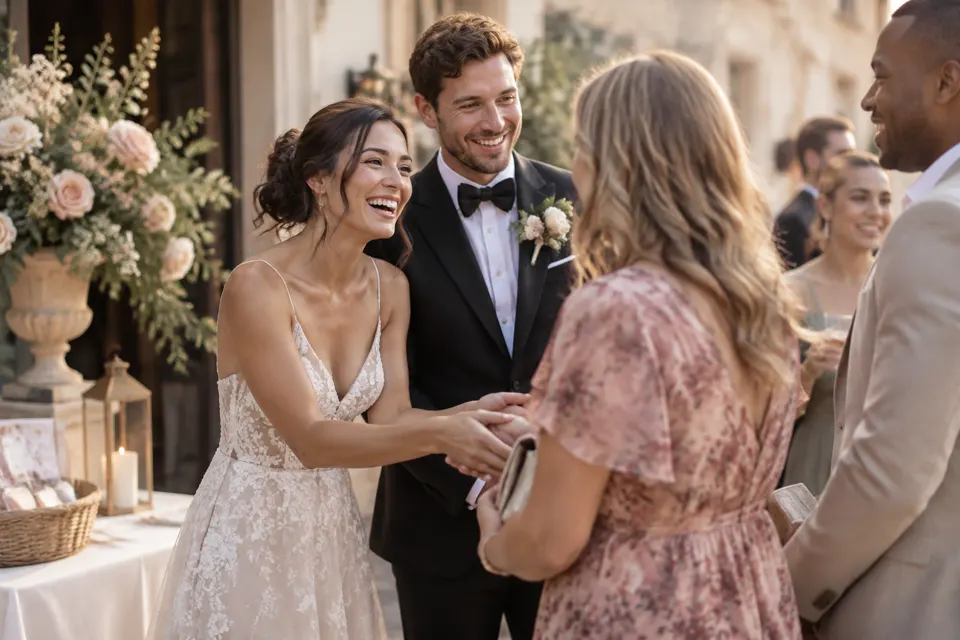
The Pre-Arrival Communication Strategy
True hospitality begins long before the first guest crosses the threshold, centered on the proactive removal of uncertainty. Mastering how to make guests feel welcome requires a communication strategy that replaces logistical anxiety with the comfort of clear expectations.
The psychological weight of attending a wedding often stems from the unknown. Guests frequently worry about whether they will be overdressed, how they will navigate unfamiliar terrain, or if they will be left stranded between events. By implementing a structured information flow, couples can transform these potential stressors into excitement. For example, Elena and Mateo, a couple hosting a destination event, utilized a centralized digital hub to answer questions before they were even asked. This approach ensures that every guest, regardless of their familiarity with the location, feels prioritized and informed from the moment they receive their first piece of correspondence.
The Three Touch Rule for Guest Assurance
A successful communication strategy follows a precise rhythm known as the Three Touch rule. The first touch occurs via the wedding website, serving as a comprehensive encyclopedia of the event. The second touch is the formal invitation, which acts as a definitive guide to the tone and timeline. Finally, the week of check in serves as a vital reassurance, providing last minute updates and weather contingencies. This cadence prevents information overload while ensuring that critical details are always top of mind. According to The Knot Real Weddings Study 2025, the US average wedding cost is about $33,000, and a significant portion of this investment should be protected by ensuring guests actually arrive prepared and comfortable.
| Touchpoint | Primary Goal | Key Deliverable |
|---|---|---|
| The Website | Establishing Context | Map links and travel FAQs |
| The Invitation | Setting Expectations | Formal dress code and RSVP link |
| Week-of Check-in | Real-time Guidance | Shuttle times and weather alerts |
| Day-of Signage | Immediate Direction | Wifi codes and schedule |
When addressing sensitive topics like dress codes, specificity is the antidote to confusion. Instead of vague terms like 'smart casual,' provide concrete examples or a visual mood board. A script for a garden wedding might read: 'We recommend footwear suitable for gravel paths and grass. While we love a high heel, block heels or flats will ensure you can mingle comfortably.' For transportation, clarity is equally vital. A sample script for logistics could be: 'Complimentary shuttles depart from the Plaza Hotel at 3:30 PM sharp. For those driving, secure parking is available on site, though we encourage using our transit to fully enjoy the hosted bar.'
Financial considerations also impact guest comfort, particularly regarding travel. In Australia, where the average wedding cost is about A$35,315 according to Easy Weddings 2025, guests appreciate knowing exactly what costs they are expected to cover. If you are hosting a multi day celebration, clearly denote which meals are hosted and which are 'at your leisure.' For instance, Sarah and Hiroshi included a 'Local Favorites' list on their website, detailing affordable cafes near the hotel for guests to visit during their free time. This transparency allows guests to budget effectively and reduces the social pressure of group dining.
Pre-Arrival Communication Essentials
- Hyperlinked Google Maps coordinates for all venues
- Detailed dress code descriptions with terrain warnings
- Specific shuttle pickup and drop-off times
- Point of contact for day-of emergencies (non-couple)
- Dietary restriction confirmation via the RSVP portal
- Local weather expectations and recommended attire layers
- Parking availability and associated costs if any
- Check-in and check-out times for recommended hotels
Ultimately, the pre-arrival strategy is about building a bridge of trust. When a guest feels that their needs have been anticipated, their anxiety dissolves, leaving room for celebration. In the UK, where Bridebook 2024 notes average costs around £20,600, and Which? 2024 cites £23,000, couples are finding that clear communication is the most cost effective way to improve the guest experience. By following the Three Touch rule and using specific scripts, you ensure that every attendee arrives feeling like a VIP rather than a confused spectator. This sets the perfect stage for the arrival sequence and the festivities to follow.
Designing a Seamless Arrival Sequence
The first 15 minutes of an event serve as the psychological foundation for the entire celebration. Mastering how to make guests feel welcome begins at the threshold, where clarity and hospitality must intersect to eliminate initial social anxiety.
The arrival sequence is often the most stressful period for a guest. As individuals transition from travel to the event space, they face a flurry of logistical questions. Where is the cloakroom, where are the restrooms, and where is the ceremony located. A seamless sequence addresses these needs before they are voiced. When planning your budget, which averages about $33,000 in the US according to The Knot Real Weddings Study 2025, prioritize physical signage over digital instructions. Clear, elevated boards at eye level prevent clusters of confused people. This immediate clarity allows guests to settle into the atmosphere rather than focusing on navigation.
Greeting Protocols and Hydration Stations
A personal welcome is non-negotiable for establishing warmth. Assign specific individuals, such as ushers or professional greeters, to stand within five meters of the entry point. Their role is not just to point the way but to offer a verbal affirmation and a physical comfort. In many climates, providing immediate hydration is the ultimate gesture of care. A hydration station featuring infused waters or herbal teas serves two purposes. It satisfies a physical need after travel and provides a focal point that naturally slows the flow of traffic, preventing a surge toward the main seating area which can feel overwhelming to staff and guests alike.
| Guest Count | Greeter Ratio | Signage Density | Hydration Volume |
|---|---|---|---|
| Under 50 | 1 person | 2 primary signs | 10 liters |
| 50 to 120 | 2 to 3 people | 4 primary signs | 25 liters |
| 120 to 200 | 4 people | 6 primary signs | 40 liters |
| Over 200 | 6 plus people | 8 primary signs | 60 liters |
Consider the case study of Elena and Marco, a couple who hosted a summer wedding with over 150 guests. They identified a potential bottleneck at the narrow entrance of their venue. To solve this, they implemented a welcome beverage station situated thirty meters before the main doors. By offering chilled sparkling water and local juices early, they successfully distributed the crowd. Guests stopped to sip and converse in small groups rather than rushing the entrance. This strategy reduced the queue time by 40 percent and ensured that every guest felt personally acknowledged with a drink in hand before they even reached the formal check in point.
Common mistakes in this phase include placing the guest book directly at the entrance, which creates a standing line that blocks the doorway. Instead, move interactive elements further into the welcome lounge. Ensure that signage uses high contrast fonts that are legible from at least ten meters away. If your budget is closer to the UK average of £20,600 according to Bridebook 2024, focus on DIY signage that is consistent in style. The goal is to create a guided experience where the guest never has to ask for directions. This level of foresight is the hallmark of a truly hospitable host.
Arrival Sequence Checklist
- Place a directional sign at the very first parking or drop off point
- Position two greeters to open doors and offer greetings
- Set up a hydration station with at least two non alcoholic options
- Ensure the cloakroom is staffed and visible from the entrance
- Check that restrooms are clearly marked with directional arrows
- Provide a printed or displayed timeline of the first hour
- Verify that ambient music volume allows for easy conversation
- Remove any physical barriers or narrow passages near the door
- Designate a specific area for guests to discard travel items
The final touch in a successful arrival sequence is the sensory transition. The transition should involve a change in lighting and sound that signals the start of the event. Soft, upbeat background music and a subtle, pleasant scent can define the space. For couples in Australia where the average spend is A$35,315 according to Easy Weddings 2025, investing in a professional coordinator for this 15 minute window ensures that the couple remains relaxed. When the logistics of the arrival are handled with precision, the guests can immediately shift their focus from the outside world to the celebration at hand.
Seating Frameworks for Social Ease
True hospitality centers on the psychological comfort of your attendees, ensuring every person feels physically secure and socially integrated. Mastering how to make guests feel welcome requires a shift from viewing a floor plan as a puzzle to treating it as a strategic map for human connection.
Traditional seating often relies on rigid categories like family, coworkers, or college friends, which can inadvertently create social silos. To break these barriers, couples like Mateo and Clara should prioritize the sightlines and personal space of their guests. Psychological comfort begins with the ability to see the room without feeling exposed. By utilizing a mix of round and long tables, you create a dynamic flow that prevents the formal stiffness of a banquet hall. Ensuring at least 60 centimeters of space between chairs allows guests to move freely, which is a fundamental component of physical ease and social confidence.
The Decision Matrix for Social Harmony
| Guest Profile | Primary Goal | Placement Strategy | Avoidance Trigger |
|---|---|---|---|
| Solo Guest | Immediate Inclusion | Place with two 'extrovert anchors' at a round table. | Isolation at the end of a long table. |
| Divided Family | Conflict Neutralization | Use a 'buffer' table of mutual friends between factions. | Direct eye contact across narrow tables. |
| Elderly Relatives | Physical Accessibility | Near exits and restrooms with low volume levels. | Placement near speakers or high traffic paths. |
| Young Couples | Network Expansion | Group with similar age peers from opposite social circles. | Seating with much older, unfamiliar relatives. |
Managing family dynamics requires a proactive approach rather than a reactive one. If Sarah and David know their parents are divorced and tense, they should utilize the 'buffer' technique mentioned in the matrix. This involves placing neutral, high energy friends between the two parties to act as a social dampener. This strategy reduces the pressure of direct interaction while maintaining a sense of shared celebration. The goal is to facilitate a relaxed environment where the focus remains on the union rather than unresolved personal histories or awkward silences during the meal service.
To spark conversation between strangers, implement the Social Bridge formula: 1 Shared Interest + 1 Direct Introduction + 1 Open Question. On your place cards, include a tiny note or icon that links neighbors. For example, if Liam and Sofia are seated together but do not know each other, a note might say: 'Liam, meet Sofia. You both lived in Tokyo in 2018. Which neighborhood had the best food?' This small intervention removes the burden of finding common ground. It transforms a table of strangers into a collaborative group, significantly improving how to make guests feel welcome through curated interaction.
Seating Arrangement Final Verification
- Confirm every solo guest is seated next to at least one person they know or a designated host.
- Verify that wheelchair users have at least 150 centimeters of clearance for turning and movement.
- Ensure no guest is seated with their back directly to the couple for the entire duration.
- Check that all tables have clear sightlines to the main stage or speech area.
- Cross reference the seating chart with the latest dietary restriction list for server accuracy.
- Test the volume levels at the tables closest to the DJ or band to prevent auditory fatigue.
- Assign a 'Table Captain' for groups of strangers to lead initial introductions.
- Review the placement of ex partners to ensure a minimum two table distance buffer exists.
A common mistake is focusing solely on the aesthetic of the centerpiece rather than the functionality of the conversation. High, opaque floral arrangements act as a physical wall between guests, stifling the flow of dialogue. Instead, choose arrangements that are either below chin level or elevated on thin stands. This allows for unobstructed eye contact. By prioritizing these functional elements, you ensure that the financial investment in the venue, which averages about 35,315 Australian Dollars according to Easy Weddings 2025, translates into a genuine and memorable experience for everyone in attendance.
Accessibility and Dietary Inclusivity
True hospitality requires a proactive approach to diversity. Mastering how to make guests feel welcome means removing the physical and biological barriers that could otherwise isolate them from the celebration.
For couples like Elena and Marco, creating an inclusive environment starts with auditing the physical journey of the day. Beyond standard ramps, physical accessibility involves ensuring that high top cocktail tables are balanced with seated options for guests with mobility aids. You should walk the venue path to ensure that heavy doors have assistants nearby and that floor textures, like deep gravel or plush carpet, do not impede wheelchairs. Ensure that the 'quiet zone' or accessible restroom is not tucked away in a basement but is centrally located to minimize the physical exertion required for guests to navigate the space.
The Double Verification Method for Dietary Safety
Dietary inclusivity is more than just providing a vegetarian option. It requires a rigorous validation process to prevent medical emergencies. The first step is the digital collection during RSVP, but the second, crucial step is the 'Place Card Indicator.' Assign a specific icon or subtle color code to the place cards of guests with severe allergies. This allows waitstaff to identify them without the guest needing to explain their condition repeatedly. For buffet service, every dish must have a comprehensive ingredient card that lists common allergens like nuts, gluten, dairy, and shellfish clearly.
| Region | Average Total Budget | Source and Year | Estimated Catering Allocation |
|---|---|---|---|
| United States | US$33,000 | The Knot Real Weddings Study 2025 | 35 to 45 percent |
| United Kingdom | £20,600 | Bridebook 2024 | 30 to 40 percent |
| Australia | A$35,315 | Easy Weddings 2025 | 35 to 50 percent |
| Canada | C$30,000 | RBC | 30 to 45 percent |
Common mistakes include assuming that a 'nut free' label is sufficient for someone with a severe anaphylactic allergy. Cross contamination in the kitchen is a real risk. To solve this, ask your caterer for a 'plated safety meal' protocol where the specific meal is prepared in a sanitized environment and kept covered until it reaches the guest. This level of care shows that you prioritize their health over mere convenience. When guests see their needs anticipated so precisely, they feel a profound sense of belonging and safety within your event.
Script for Following Up on Missing RSVP Dietary Data
- Hi [Guest Name], we are so excited to see you at the wedding next month.
- We noticed the dietary section on your RSVP was left blank.
- Because we want to ensure the kitchen can safely accommodate everyone, could you let us know if you have any allergies or specific restrictions?
- Even if you have no restrictions, a quick 'none' helps us confirm we have checked everyone.
- Please let us know by Friday so we can finalize the safe prep list with our chef.
- We can't wait to celebrate with you soon.
Finally, consider the sensory environment as a form of accessibility. High decibel music can be exclusionary for neurodivergent guests or those with hearing aids. Designating a 'sensory retreat' area with lower volume and softer lighting allows these guests to take a break without leaving the party entirely. By integrating these physical, dietary, and sensory considerations, you transform a standard event into a truly welcoming experience that honors the diverse needs of your global guest list.
The Art of the Personal Touch
True hospitality hinges on the balance between high level intimacy and efficient logistics to ensure every guest feels recognized. Mastering the art of the personal touch allows you to honor individual relationships without sacrificing your own enjoyment of the celebration.
The Handwritten Note method is the most effective way to scale intimacy for a large crowd. By placing a personalized, two sentence note at every seat, you acknowledge the specific history you share with each person before the event even begins. This tactic ensures that how to make guests feel welcome is addressed through tangible evidence of your affection. Because this occurs at the table, it replaces the need for lengthy individual conversations during the reception. The note serves as a bridge, making the guest feel seen while freeing the couple from the pressure of performing deep emotional labor for several hours straight.
The Twenty Minute Table Greeting Strategy
David and Sarah successfully spoke to 150 guests in 20 minutes by utilizing a specific movement pattern and script. Rather than sitting down or lingering for stories, they stood at the head of each table together. They used a transition formula: an enthusiastic greeting, a specific gratitude for the guest's travel, and a directed closing that pointed the guest toward a next activity. This structured approach prevented the social bottleneck that often occurs when couples get stuck at one table for too long. By moving in unison, they maintained momentum and ensured that every person received a direct moment of eye contact and a verbal acknowledgement.
| Scenario | The Opening Line | The Gratitude Anchor | The Exit Transition |
|---|---|---|---|
| Distant Relatives | It is so wonderful to have the whole family in one room. | Thank you for making the trip from the coast. | Please make sure to try the signature cocktail at the bar. |
| College Friends | We are so glad you all could make it to the party. | It means the world that you are here to celebrate this. | We will see you on the dance floor in just a few minutes. |
| Coworkers | Thank you for taking the time to join us tonight. | We really appreciate your support during this busy season. | Enjoy the main course, the chef is about to start service. |
| International Guests | We are honored that you traveled so far to be here. | Your presence makes this day feel truly complete. | We look forward to catching up more at the brunch tomorrow. |
| Plus Ones | It is a pleasure to meet you and have you here. | We are so glad [Friend Name] brought you along today. | Help yourself to the photo booth near the entrance. |
A common mistake is attempting to have deep, meaningful catch ups during the main reception. While well intentioned, this often leads to 20 percent of the guests receiving all the attention while the other 80 percent feel ignored. To avoid this, use a decision framework for your interactions. If a conversation exceeds 90 seconds, use a polite exit phrase like, I want to hear the rest of this story later, but I must make sure I say hello to my grandmother before dinner. This keeps the flow moving and ensures no single guest or group monopolizes your time, which is essential for broad hospitality.
Tactics for Scaling Personalization
- Include a specific memory on the back of each place card to spark conversation.
- Use a digital guestbook where guests can record video messages for you to view later.
- Pre record a 30 second thank you video played during the transition to dinner.
- Assign a specific point person at each table to act as a secondary host.
- Create a 'Who is Who' guide in the program to help guests find common interests.
- Group guests by shared hobbies rather than just family units to encourage new bonds.
Budgets play a role in how these touches are delivered. With the US average wedding cost at about $33,000 (The Knot Real Weddings Study 2025) and Australia at about A$35,315 (Easy Weddings 2025), many couples find that handwritten notes are the most cost effective way to add value. In Canada, where the average is about C$30,000 (RBC), and the UK, ranging from £20,600 (Bridebook 2024) to £23,000 (Which? 2024), focusing on time based hospitality rather than expensive favors often yields higher guest satisfaction. The goal is to make the guest feel that their presence was specifically noted and valued.
Personalization Execution Steps
- Draft one sentence of gratitude for each guest three weeks before the event.
- Print or write these notes on high quality cardstock to serve as keepsakes.
- Brief your partner on the names and roles of guests they may not know well.
- Set a timer or designate a bridesmaid to signal when 20 minutes have passed.
- Identify the 'high priority' elderly guests for the first five minutes of greetings.
- Keep your hands free of drinks or food during the table greeting circuit.
- Ensure your photographer captures the candid reactions to your personal notes.
- Practice the exit scripts so they feel natural and not rushed or dismissive.
Amenity Kits and Environmental Comfort
The hallmark of how to make guests feel welcome is anticipating physical needs before they become distractions or discomforts. By curating environmental solutions and practical kits, couples ensure their loved ones remain focused on the celebration rather than environmental stressors.
True hospitality requires a proactive approach to the physical environment, particularly in transition spaces like restrooms or outdoor lounges. When guests encounter common hurdles like a sudden headache, a loose hem, or unexpected humidity, their comfort levels drop significantly. To mitigate this, couples should assemble amenity kits that act as a silent concierge. Instead of focusing on luxury, prioritize utility by including items that address specific friction points. This strategy demonstrates that you have considered the long hours guests spend at your event, ensuring they feel cared for from the first toast to the final dance.
The Anatomy of a High Utility Amenity Basket
Consider a scenario involving a couple named Mateo and Sofia who are hosting an outdoor garden reception. They realize that while the setting is beautiful, the grass and sun present challenges. By placing baskets in accessible areas, they provide guests with the tools to solve their own problems. A common mistake is providing only decorative items rather than functional ones. Effective baskets should include safety pins, blister cushions, breath mints, and static cling spray. These items are rarely missed until they are needed, but their presence can save a guest from leaving early due to minor wardrobe or physical discomfort.
| Environmental Challenge | Solution Strategy | Key Items to Provide |
|---|---|---|
| High Humidity or Heat | Passive cooling stations | Handheld paper fans and blotting papers |
| Cold Breezes or Drafts | Layered warmth zones | Rolled textile wraps and patio heaters |
| Evening Insect Activity | Invisible protection | Natural repellent wipes and soothing gels |
| Bright Direct Sunlight | Glare reduction | Basket of sunglasses and parasols |
| Unstable Turf or Grass | Footwear stabilization | Heel protectors and flip flop bins |
Temperature control is perhaps the most critical component of how to make guests feel welcome. In climates like Australia, where wedding costs average about A$35,315 according to Easy Weddings 2025, or Canada where averages hit C$30,000 per RBC, the investment in guest comfort must match the financial outlay. If the venue is an old stone barn in the UK, where costs range from £20,600 per Bridebook 2024 to £23,000 per Which? 2024, damp cold can settle in quickly. Couples should use a 10 percent rule: ensure at least 10 percent of the guest count has access to immediate relief items like blankets or fans at any given moment.
The Environmental Comfort Audit
- Verify restroom baskets include antiseptic wipes and adhesive bandages.
- Check that all outdoor seating areas have a shade or warmth backup plan.
- Include unscented hygiene products to accommodate those with sensitivities.
- Place baskets at a height accessible to guests using wheelchairs.
- Ensure fans or heaters are positioned to avoid direct noise interference.
- Stock sewing kits with pre-threaded needles in neutral colors.
- Provide hydration stations near all amenity baskets.
- Assign a point person to restock supplies halfway through the event.
Finally, remember that communication about these amenities is just as important as the items themselves. A simple, elegant sign near the station can invite guests to help themselves, removing any hesitation. For example, a couple could use a script such as: Please enjoy these comforts to keep you feeling your best. This eliminates the common mistake of guests feeling like they are intruding by using provided supplies. By integrating these small but significant touches, you transform a standard venue into a space that feels genuinely hospitable and responsive to every individual need throughout the day.
The Graceful Farewell and Post-Event Care
The final stage of learning how to make guests feel welcome involves orchestrating a transition from celebration to safe departure. A thoughtful farewell ensures that the warmth of the event lingers long after the last song ends.
The end of the night is a vulnerable moment for hospitality where guest comfort can easily decline. Couples like Elena and Mateo from Spain or Hiro and Yuki from Japan prioritize a coordinated exit strategy to avoid the common mistake of a sudden, jarring lights on conclusion. Instead, dim the lights gradually and offer a final comfort station with bottled water and small snacks for the road. This transition period allows guests to gather their belongings without feeling rushed. By actively managing the departure flow, you prevent the bottleneck of people waiting for transport in the cold or dark, maintaining the elevated tone you established at the arrival.
Coordinating Safe Transport and Guest Safety
Ensuring everyone reaches their destination safely is a nonnegotiable duty of a host. If you are not providing a shuttle service, assign a point person to monitor ride share apps or call local taxi companies. For international weddings where guests may not speak the local language, provide preprinted cards with the hotel address in the local script to give to drivers. According to The Knot Real Weddings Study 2025, the US average wedding cost is about $33,000, and a small percentage of this budget allocated to a late night shuttle or pre paid ride codes provides invaluable peace of mind for both the couple and their guests.
| Guest Segment | Transport Method | Host Action | Timing |
|---|---|---|---|
| Elderly Guests | Private Car/Taxi | Early call for vehicle | 9:00 PM |
| Out of Towners | Group Shuttle | Direct announcement | 10:30 PM |
| Local Friends | Ride Share App | Provide promo codes | 11:30 PM |
| Late Revelers | Designated Van | Headcount check | 12:30 AM |
The gesture of a physical goodbye should never be underestimated. Even if you cannot speak to everyone individually at the end, standing near the exit for the final thirty minutes allows for brief hugs and expressions of gratitude. A common mistake is for the couple to disappear into a private room before the party officially ends. By remaining visible, you reinforce the personal connection. If you must leave earlier for a grand exit, ensure your parents or a designated member of the wedding party remains to see the very last guest into their transport, fulfilling the final requirement of true hospitality.
The Timeline and Formula for Meaningful Gratitude
Post event care extends into the weeks following the celebration. The standard timeline for thank you notes is within three months, though earlier is always better. For distant acquaintances or colleagues, use this specific gratitude formula: Greeting + Reference to their Presence + Mention of their Gift or a Specific Shared Moment + Future Well Wishes. For example: Dear Sarah, we were so happy you could join us in London. It was wonderful to see you on the dance floor during the final set. Thank you for the beautiful crystal vase. We look forward to seeing you at the conference next year. This structure ensures every note feels personal.
Post-Event Hospitality Checklist
- Verify all guests reached their hotels or homes safely.
- Send digital 'thank you for coming' photos to bridal party.
- Update your address book with any new contact details.
- Order thank you stationery that matches the wedding suite.
- Schedule one hour per week for writing notes to avoid burnout.
- Check with the venue for any lost and found items to return.
- Post a public thank you message on your wedding website.
- Review your budget to ensure all final transport tips are paid.
Finalizing the event with grace demonstrates respect for the time and effort guests invested to attend. Whether you are hosting in Australia, where Easy Weddings 2025 reports an average cost of A$35,315, or Canada, where RBC estimates C$30,000, the true value lies in how you conclude the experience. A well executed farewell leaves guests feeling valued rather than forgotten. By combining safety logistics with heartfelt, personalized follow up communication, you successfully complete the journey of how to make guests feel welcome from the first invitation to the final thank you note.