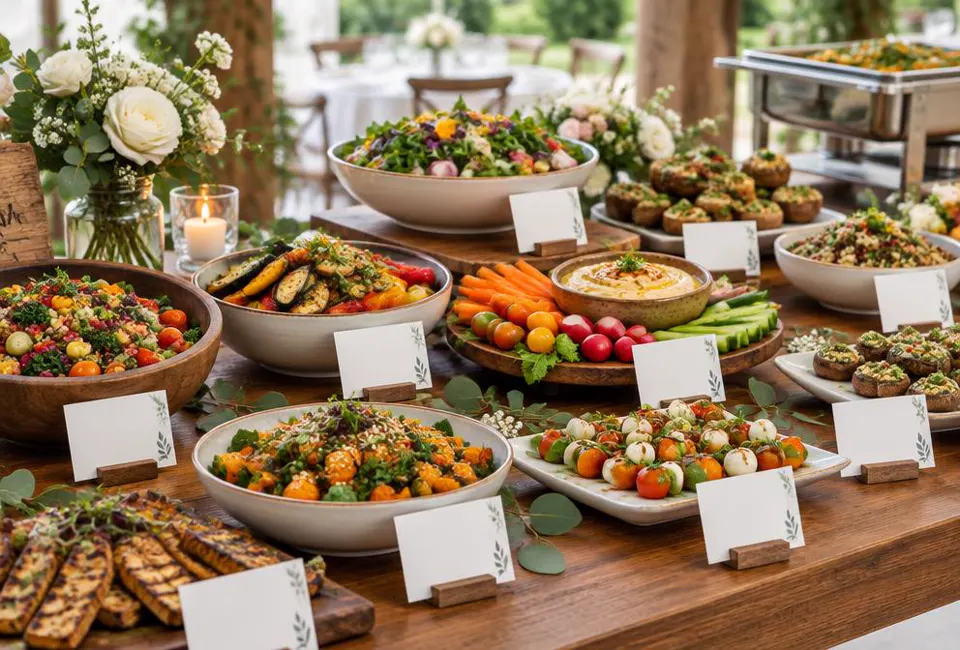
The Strategic Dietary Data Framework
Successfully managing a wedding menu requires a structured approach to classification to ensure guest safety and kitchen efficiency. By utilizing the Strategic Dietary Data Framework, couples can distinguish between critical medical risks and personal food preferences.
Every guest list contains a spectrum of nutritional needs that can overwhelm even the most experienced catering teams. To maintain order, couples must adopt a three tier classification system. The first tier includes life threatening allergies where cross contamination could result in anaphylaxis. The second tier covers religious restrictions, such as Halal or Kosher needs, which are non negotiable for the guest. The final tier consists of lifestyle preferences like keto or low carb diets. Organizing data this way prevents high risk medical alerts from being buried under a mountain of minor requests, ensuring the kitchen staff knows exactly where to focus their rigorous safety protocols.
The Maria and David Method: Prioritizing Risk
Consider the scenario of Maria and David, a couple planning their reception with a guest list of two hundred people. During their RSVP process, they discovered thirty unique dietary requests ranging from a severe peanut allergy to a dislike of cilantro. If Maria and David treated every request with equal weight, the catering staff might become desensitized to the urgency of the peanut allergy. By prioritizing medical needs over picky eating, they allow the chef to dedicate specific prep areas for the high risk guests. This strategic focus reduces the likelihood of human error during the high pressure window of dinner service.
| Category | Example | Action Plan | Kitchen Priority |
|---|---|---|---|
| Tier 1: Medical | Celiac, Shellfish | Substitute Meal | Critical Safety |
| Tier 2: Religious | Halal, No Pork | Ingredient Swap | Strict Compliance |
| Tier 3: Lifestyle | Vegan, Paleo | Menu Inclusion | Standard Service |
| Tier 4: Dislike | No Onions | Note for Chef | Low Priority |
Implementing this framework requires a clear decision matrix for what to accommodate in full. While medical and religious needs always require a dedicated alternative dish, lifestyle preferences are often best handled through inclusive menu design. For instance, if Maria and David select a naturally gluten free and vegan side dish for everyone, they satisfy Tier 3 guests without creating extra work for the kitchen. This approach keeps the catering team focused on the complex task of preventing cross contamination for Tier 1 guests. It also helps manage the logistical burden when catering costs are high, such as the US average of 33,000 dollars reported by The Knot Real Weddings Study 2025.
Finally, couples must realize that they cannot be everything to everyone. The goal of how to collect guest dietary requirements is to ensure every guest can eat safely and with dignity, not to provide a bespoke cafe experience for every individual whim. By setting boundaries early, you protect your budget and your sanity. In the UK, where Bridebook 2024 notes average costs around 20,600 pounds, efficiency is key. Use your classification data to negotiate a streamlined menu that addresses the most common Tier 2 and Tier 3 needs globally while leaving room for the specialized Tier 1 safety measures.
Steps to Categorize Your Data
- Identify all guests with Tier 1 anaphylactic risks.
- Flag all Tier 2 religious requirements for specific meat sourcing.
- Group Tier 3 lifestyle choices to see if one 'universal' dish works.
- Review Tier 4 dislikes and decide which are too minor to track.
- Cross reference the list with your caterer's standard menu.
- Draft a color coded summary for the head chef and floor manager.
- Confirm the number of dedicated allergen free meals required.
Wording for Invitations and Digital RSVPs
Effective communication begins with the very first invitation or digital link your guests receive. This section provides precise wording strategies to ensure you collect actionable safety data rather than a list of minor culinary preferences.
The language you choose for your RSVP cards or digital portals dictates the quality of the data you receive. When couples use generic checklists, they often end up with a high volume of false positives that complicate catering logistics. For example, a guest who mildly avoids bread might check a Gluten Free box if it is the only option, but they would not write it down if the question specifically asked for severe medical requirements. By framing the request around safety and chef communication, you signal to your guests that this information is for their protection, not for general food preferences. This distinction is vital for maintaining a manageable kitchen workflow.
The Power of Open Ended Questions
Consider the difference between a list of checkboxes and a blank text field. Checkboxes encourage guests to select anything that sounds remotely applicable, whereas an open field requires active thought. Sarah and Marc, a couple planning a wedding in London, found that switching from a checklist to a single open line reduced their dietary count by twenty percent. Their prompt simply read: Please list any severe food allergies or medical dietary requirements we should share with our chef. This wording ensures that only critical information like Celiac disease or anaphylactic nut allergies is reported. It filters out guests who merely dislike mushrooms or onions, keeping your catering team focused on life saving food preparation.
| Wording Strategy | Example Text | Data Outcome | Risk Level |
|---|---|---|---|
| The Checklist | Vegetarian, Vegan, GF, DF | Includes minor preferences | High Overload |
| The General Ask | Any dietary requirements? | Vague or missing details | Moderate |
| The Safety Prompt | List medical allergies for the chef | High accuracy, safety focused | Low |
| The Specific Script | Provide severe restrictions only | Clear and actionable data | Lowest |
Digital RSVP platforms offer unique opportunities for conditional logic. If a guest indicates they have a dietary requirement, a second field can appear asking for the severity level. A couple in Toronto, Elena and David, used this method to distinguish between an allergy and a lifestyle choice. Their digital form asked: Does this requirement result in a severe medical reaction? If the answer was yes, the guest provided specific details. This two step process provides the caterer with a clear hierarchy of needs, ensuring that the kitchen treats a true allergy with the necessary cross contamination protocols while still acknowledging other health needs.
Scripts for Different Invitation Formats
- For Paper Cards: To help us keep you safe, please list any life threatening food allergies or strictly medical dietary needs.
- For Digital RSVPs: We want you to enjoy your meal safely. Please detail any severe allergies our catering team must be aware of.
- For Follow Up Emails: We noticed a dietary note on your RSVP. Could you please clarify if this is a severe allergy or a preference so we can inform our chef?
- For Inclusive Language: Our chef is happy to accommodate medical needs. Please share any restrictions here.
- For Clarification: Please note that we cannot accommodate general dislikes. Only medical requirements will be passed to the kitchen staff.
Precision in wording also prevents unnecessary costs. If a guest checks a box for a specialty meal they do not strictly require, the couple may still be charged a premium for that plate. By using scripts that emphasize medical necessity, you ensure that your budget is spent on genuine needs. In various markets, such as Australia where weddings average A$35,315 according to Easy Weddings 2025, or Canada where they average C$30,000 according to RBC, managing these small details can help maintain financial control. Precise scripts lead to precise ordering, which ultimately results in a safer and more efficient celebration for every guest in attendance.
RSVP Design Checklist for Dietary Collection
- Replace checkboxes with open text fields for better accuracy.
- Use the word medical or severe to qualify dietary requests.
- Include a specific mention of the chef to emphasize safety.
- Ensure digital forms have enough characters for detailed descriptions.
- Check that your RSVP deadline allows enough time for caterer review.
- Provide a contact email for guests with complex multiple allergies.
- Avoid lists of common allergens that might prompt unnecessary clicks.
- Verify that your digital logic captures data for each guest individually.
- Review the wording to ensure it sounds hospitable yet firm.
Communicating with Your Catering Team
Clear communication with your kitchen staff transforms raw data into a safe dining experience. This section outlines how to translate guest responses into an actionable catering plan using visual tools and strict timelines.
The foundation of successful catering begins with the Seating Chart Overlay method. Instead of handing your chef a simple list of names, you must provide a visual map of the dining room. Imagine a couple like Mateo and Elena who are hosting 150 guests. They assign each dietary category a specific color. Vegan guests are highlighted in green, nut allergies in red, and gluten free requirements in blue. By placing these colored dots directly onto the seating plan next to the guest names, you allow servers to identify exactly where a special meal must be delivered without having to ask the guest and interrupt the flow of the evening.
Establishing a Hard Deadline for Final Numbers
Catering teams require a final headcount and a detailed breakdown of dietary needs well in advance to order fresh ingredients. Most professional venues require this data between 14 and 30 days before the event date. If you miss this window, you risk the kitchen being unable to source specific substitutes like high quality gluten free flour or dairy free creams. For a couple like Sarah and David, submitting their final list 21 days out ensured their caterer could prepare a separate, safe workspace to avoid cross contamination for a guest with a severe celiac condition. Accuracy at this stage prevents unnecessary surcharges.
| Table Number | Guest Name | Requirement Type | Severity Level |
|---|---|---|---|
| Table 4 | Julia Smith | Vegan / No Soy | Lifestyle Choice |
| Table 7 | Mark Ronson | Peanut Allergy | Severe / Anaphylactic |
| Table 12 | Lina Chen | Gluten Free | Medical / Celiac |
| Table 2 | Tom Baker | Halal | Religious |
| Table 9 | Sarah White | Shellfish Allergy | Severe |
Handling last minute changes requires a pre-established protocol to avoid kitchen chaos. If a guest informs you of a new allergy 48 hours before the wedding, do not simply send an email and assume it is handled. Call the catering manager directly to confirm the change. A common strategy is to ask the kitchen to prepare five percent extra of the most restrictive meal, such as a vegan and gluten free option. This covers unexpected guest arrivals or late notifications without forcing the chef to cook a new dish from scratch during the main service rush. Always keep a master copy of the seating chart at the kitchen pass.
Transparency regarding your budget helps the catering team suggest the most efficient ways to meet diverse needs. Whether you are working with the US average of 33,000 dollars according to The Knot Real Weddings Study 2025 or the UK average of 20,600 pounds per Bridebook 2024, food costs remain a significant portion of the total. Providing precise data prevents the waste of expensive specialty ingredients. When you deliver your final spreadsheet, ensure it includes a summary section that totals the requirements. For example, your summary should state: 12 Vegan, 4 Gluten Free, 2 Nut Free. This allows the head chef to verify their internal prep list against your master records instantly.
Catering Communication Delivery Checklist
- Confirm the caterer deadline for final dietary counts.
- Create a color coded seating chart for the floor staff.
- Generate a summary table totaling every specific restriction.
- Highlight life threatening allergies in bold red text.
- Provide the caterer with the mobile number of the wedding planner.
- Verify that every guest has a designated table and seat number.
- Ask the chef if they require separate place cards for allergies.
- Plan for a small buffer of allergen friendly meals.
- Send the final document in a printable PDF format.
Navigating Cultural and Religious Restrictions
When learning how to collect guest dietary requirements, couples must recognize that many food choices are rooted in ancient cultural and religious traditions rather than lifestyle trends. Mastering the etiquette of these requests ensures every attendee feels respected and safe at the celebration.
Religious dietary laws often dictate not just what is eaten, but how it is processed and prepared. For guests practicing Kosher or Halal traditions, the prohibition of pork and certain slaughter methods are primary concerns. Hindu vegetarianism frequently excludes eggs and root vegetables like garlic or onions in stricter Sattvic diets. Because these requirements are deeply personal, the wedding host must bridge the gap between a guest's needs and the kitchen's capabilities. It is not enough to simply offer a meatless option: you must understand the environment in which that food is produced.
The Arjun and Sarah Scenario: Verifying Prep Surfaces
Consider Arjun and Sarah, a couple hosting a multicultural wedding with guests from both Hindu and Muslim backgrounds. To ensure their menu is truly inclusive, they must go beyond a basic ingredient list. They should ask their caterer if the kitchen uses separate preparation surfaces, knives, and cutting boards for Halal meat and vegetarian dishes. For their guests who keep strictly Kosher, Arjun and Sarah might need to coordinate with a certified Kosher kitchen to provide double wrapped meals that are heated in a non Kosher oven. This level of detail prevents accidental cross contamination.
| Observance | Key Prohibitions | Kitchen Requirement |
|---|---|---|
| Halal | Alcohol, Pork, Non certified meats | Dedicated Halal prep area |
| Kosher | Shellfish, Mixing meat and dairy | Certified rabbinical oversight |
| Hindu Vegetarian | Meat, Poultry, Fish, Sometimes eggs | Vegetable only oils and utensils |
| Jainism | Root vegetables, Animal products | No onions, garlic, or potatoes |
| Latter day Saints | Alcohol, Coffee, Tea | Mocktail and caffeine free options |
The etiquette of asking guests for clarification is a delicate balance of hospitality and logistics. Rather than assuming the level of strictness, use a follow up script after the initial RSVP. You might say: We want to ensure your meal aligns perfectly with your dietary traditions. Could you let us know if you require a certified Halal meal or if a pork free menu prepared in a standard kitchen is sufficient? This shows guests that you value their comfort and are willing to coordinate the necessary logistics with your catering team to avoid mistakes.
Finally, remember that the cost of specialized catering can vary by region. While the US average for a wedding is about $33,000 according to The Knot Real Weddings Study 2025, and Australia is about A$35,315 per Easy Weddings 2025, specialized religious catering often adds a premium. In Canada, where the average is C$30,000 per RBC, or the UK at £20,600 per Bridebook 2024, couples should allocate an extra 10 to 15 percent of their catering budget if they require certified external meals to meet strict religious standards.
Vendor Vetting for Cultural Requirements
- Ask if the caterer has experience with certified Kosher or Halal meals.
- Confirm if separate frying oil is used for vegetarian and meat items.
- Check if sauces contain hidden animal fats or alcohol bases.
- Inquire about the storage of religious meals to prevent contamination.
- Ask for a specific list of ingredients in multi component dishes.
- Verify if the staff is trained on the importance of separate serving utensils.
- Discuss the possibility of double wrapping meals for strict observance.
- Ensure all buffet labels clearly state ingredients like gelatin or lard.
On Site Safety and Identification Systems
Managing dietary safety on the wedding day requires a bridge between your RSVP spreadsheet and the physical guest table. This section outlines how to facilitate seamless service while maintaining the aesthetic flow of your reception decor.
Effective on site identification removes the burden of explanation from the guest. When a guest arrives at their seat, they should not have to flag down a server to explain their celiac disease or nut allergy for the fifth time. Instead, your stationery acts as a silent signal. By integrating discreet markers into your place cards or menus, you create a fail safe system that allows the service team to scan a table and immediately identify where the specialized plates belong. This process protects guests from accidental exposure while ensuring the dining experience feels unified rather than clinical.
Discreet Visual Coding Systems
Consider the example of Sarah and Leo, who had several guests with severe allergies. They utilized a small gold foil dot in the bottom right corner of the place cards to indicate a gluten free meal, while a silver dot indicated a vegan choice. To the average guest, these looked like decorative accents. To the catering staff, they were critical safety markers. Other couples use different colored cardstock for the names, such as off white for standard meals and a soft blush for dietary restrictions. These subtle cues prevent the need for unsightly plastic badges or verbal interrogations during the celebration.
| Method | Visual Indicator | Best Used For | Staff Training Point |
|---|---|---|---|
| Ribbon Loop | 3mm colored velvet ribbon | Plated sit down service | Check ribbon color before placing plate |
| Iconography | Small symbol (leaf or star) | Modern minimalist menus | Locate symbol in bottom right corner |
| Card Shape | Deckled edge vs straight edge | Artistic or rustic themes | Deckled edges indicate restricted diet |
| Ink Color | Grey ink vs black ink | Formal calligraphy cards | Grey calligraphy denotes special needs |
| Embossing | Raised wax seal color | High end luxury settings | Match seal color to allergy category |
The placement of these markers is as important as the markers themselves. Ensure your floor plan and seating chart clearly denote which tables have guests with severe allergies. When your catering team performs their pre service briefing, they should be handed a master list that correlates table numbers with specific seat positions. If Maria is at Table 4, Seat 6, the server should already know she requires a dairy free meal before they leave the kitchen. This proactive approach mirrors the standards seen in high end hospitality where the guest experience is prioritized above all else.
Coordination with your stationer is the final step in this safety chain. When ordering your place cards, provide a spreadsheet that includes a column for the specific visual code required for each guest. This ensures no errors occur during the printing or assembly phase. If you are DIYing your stationery, use a consistent punch tool or stamp to maintain a professional look. For couples navigating the average wedding cost of $33,000 in the US (The Knot Real Weddings Study 2025), these small stationery details are a cost effective way to elevate the service level without requiring additional staff or expensive equipment.
On Site Safety Deployment Checklist
- Provide a legend of all symbols to the catering manager 48 hours prior.
- Verify that place cards are set at the correct seats during setup.
- Ensure the font size for name cards is legible for servers in low light.
- Cross reference the final seating chart with the master allergy list.
- Brief the front of house staff on the specific color or icon meanings.
- Prepare five extra 'blank' coded cards for last minute seat swaps.
- Confirm the kitchen has a copy of the coded legend near the plating station.
- Check that the code is visible even when a napkin is placed on the plate.
- Verify that floral centerpieces do not block the view of the place cards.
Finally, remember that the goal is to protect the guest without making their medical requirements the centerpiece of the table. Whether you are spending £20,600 in the UK (Bridebook 2024) or A$35,315 in Australia (Easy Weddings 2025), the quality of care remains the priority. By using these discreet systems, you allow your guests to relax and enjoy the meal, knowing that you have already handled the details of their safety. This level of preparation reflects a sophisticated host who values both the health and the comfort of their wedding attendees.
Mistakes to Avoid in the Collection Process
Understanding how to collect guest dietary requirements involves more than just asking the question; you must also identify the logistical traps that lead to service failures. Avoiding these common errors ensures that your wedding budget, which averages about $33,000 in the US according to The Knot Real Weddings Study 2025, is spent on meals guests can actually consume safely.
One primary mistake is accepting vague responses without clarification. When a guest writes 'no vegetables' or 'picky eater' on a digital RSVP, couples often assume this is a preference rather than an allergy. For example, Sarah and Mateo received a response stating 'I do not eat green things.' Without following up, they did not realize the guest had a severe allergy to nightshades, including green peppers. Failing to ask for the 'why' behind a vague restriction leads to kitchen confusion. You should always treat every ambiguous note as a potential medical necessity until proven otherwise by a direct conversation with the guest.
The Buffet Bias and Cross Contamination Errors
Couples often assume that buffet service styles are the safest option because they offer variety. This is a dangerous misconception. In a buffet setting, guests often use the same serving spoon for multiple dishes, leading to immediate cross contamination of allergens like nuts or shellfish. If your caterer does not provide dedicated servers for each station, a gluten free dish can become contaminated within minutes of the first guest arriving. You must ensure that high risk allergens are physically separated by at least twelve inches or placed on a separate table to prevent accidental spills between trays.
| Scenario | The Mistake | The Formula Action | Sample Script |
|---|---|---|---|
| Blank Response | Assuming no dietary needs. | Check against known history. | I noticed this was blank; just confirming no allergies? |
| Vague Term | Guessing the restriction. | Request the medical trigger. | Could you specify if this is an allergy or a preference? |
| Group Response | Generalizing for a family. | Assign needs to individuals. | Does the nut allergy apply to both you and your plus one? |
| Late Update | Ignoring the new data. | Update the master floor plan. | I have noted this for the chef; please confirm you saw this. |
A critical error in the collection process is failing to account for the 'silent restrictor.' These are guests who leave the dietary section blank but are known by the family to have restrictions. Use the Follow Up Formula: verify, document, and confirm. Do not assume that because Aunt Martha has been a celiac for twenty years she will remember to tell you. If a known restriction is missing from the RSVP, the couple must reach out directly. Silence is not a confirmation of safety. It is often a sign of a guest not wanting to be a burden, which leads to them going hungry on the night.
Finally, many couples forget to sync their dietary list with their seating chart. Collecting the data is only half the battle. If the catering team knows there are ten vegans but does not know which table they are sitting at, the service will be delayed. This is particularly relevant in Canada where wedding costs average C$30,000 according to RBC. To protect this investment, avoid the mistake of keeping dietary data in a separate spreadsheet. It must be integrated into the final guest list provided to the venue to ensure the right meal reaches the right person without an awkward public interrogation.
Final Data Validation Steps
- Verify every 'none' response against your personal knowledge of the guest.
- Highlight guests who listed 'intolerance' versus 'anaphylactic allergy' for the chef.
- Confirm that buffet labels include all ingredients, not just the name of the dish.
- Check that children's meals are also screened for common allergens like dairy.
- Ensure the 'Follow Up Formula' was applied to all blank RSVP submissions.
- Cross reference the final catering count with the physical seating plan locations.
- Double check that vendors like photographers have also submitted their requirements.
- Identify any 'lifestyle' diets that may conflict with the hidden ingredients in sauces.
- Confirm that the catering lead has a physical copy of the final dietary spreadsheet.
Logistics for Different Service Styles
The final stage of how to collect guest dietary requirements involves translating data into delivery based on your chosen dining format. Whether you serve a formal meal or a casual buffet, the physical movement of food dictates the level of safety for guests with restrictions.
Managing plated service is often considered the gold standard for safety. Because each plate is composed in the kitchen, the risk of cross contact remains low compared to communal dining. For example, if a guest named Sarah indicates a severe shellfish allergy, the kitchen staff prepares her plate in a sanitized area before any other dishes are touched. When the meal is served, the server must confirm Sarah's name and her specific requirement before setting the plate down. This direct chain of custody ensures that the data collected during the RSVP process is executed precisely at the table.
The Chef Lead Tour Strategy
Buffet service presents the highest risk for guests with allergies due to the high probability of guests switching serving spoons between trays. To mitigate this, implement the Chef Lead Tour. Ten minutes before the buffet officially opens, a member of the culinary team walks guests with severe restrictions through the line. The chef points out exactly which dishes are safe and explains the ingredients. This allows these guests to serve themselves first, using fresh utensils that have not yet been touched by the general public. It provides peace of mind and reduces the pressure on guests to guess which items are safe.
| Service Style | Primary Risk | Best Mitigation Strategy | Communication Need |
|---|---|---|---|
| Plated | Server error | Color coded place cards | High: Server to Guest |
| Buffet | Cross contamination | Chef Lead Tour | Medium: Signage and Labels |
| Family Style | Shared utensils | Individualized Plating | High: Pre service briefing |
| Food Stations | Ingredient mixing | Dedicated allergen station | Low: Visual icons on menus |
Family style dining is popular for its social atmosphere, but it is problematic for guests with restrictions. When large platters are passed around, one guest using a spoon from a nut based salad to scoop potatoes can trigger an allergic reaction. The most effective solution is Individualized Plating. For instance, if Marcus and Elena are hosting a dinner where 15 percent of guests have gluten intolerance, those specific individuals should not eat from the shared platters. Instead, the catering team should bring them a pre plated, complete version of the meal directly from the kitchen, bypassing the communal bowls entirely.
Clear communication with your catering manager about these logistics is essential at least thirty days before the event. You should provide a final seating chart that highlights every guest with a requirement, color coded by their specific need. For a buffet, ensure that every single dish has a visible ingredient card. These cards should use universal icons for common allergens like dairy, nuts, and soy. This redundancy in communication ensures that even if a guest misses the Chef Lead Tour, they still have the information needed to make safe choices at the station.
Execution Steps for Wedding Day Logistics
- Conduct a final walk through of the buffet line with the catering lead to check for accurate labeling.
- Ensure every guest with an allergy has a distinct marker on their place card, such as a small colored dot or icon.
- Brief the service staff on the location of guests receiving individualized plates during family style service.
- Confirm that the kitchen has prepared 5 percent extra of the most common restriction meals, such as vegan or gluten free, for unexpected needs.
- Verify that serving utensils for the buffet have long handles to prevent them from slipping into the food pans.
- Designate a specific staff member to oversee the Chef Lead Tour and answer guest questions.
Ultimately, the success of how to collect guest dietary requirements depends on the final transition from the digital RSVP to the physical plate. By choosing a service logistics model that prioritizes isolation of allergens, you protect your guests and your peace of mind. Whether it is Sarah receiving her shellfish free plate or the gluten free guests enjoying their own private portions, these small logistical adjustments define a truly inclusive celebration. Precision in these final steps ensures that every guest feels cared for and safe regardless of their dietary needs.