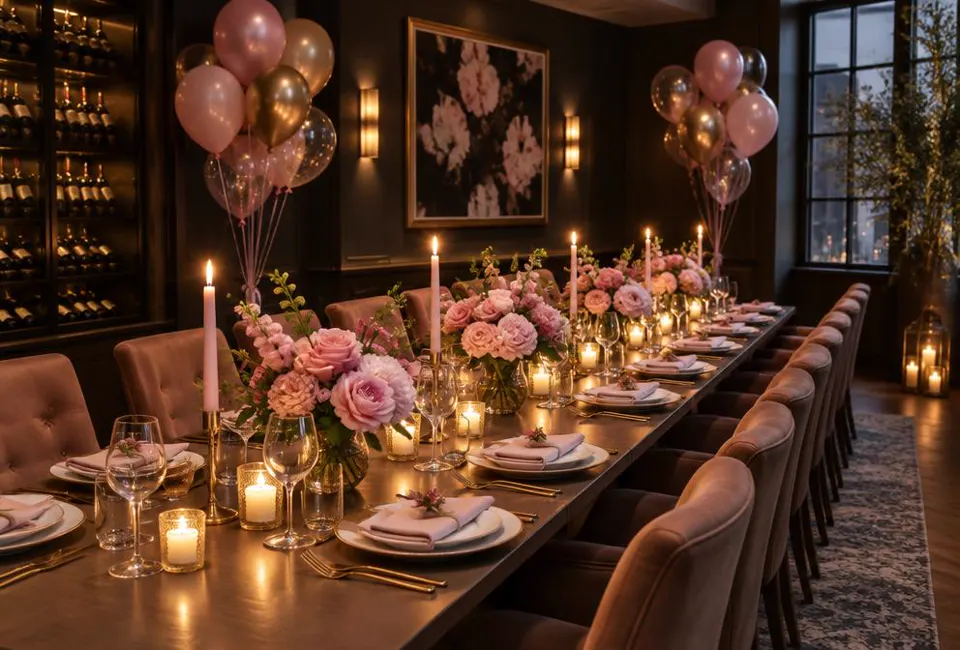
Defining Celebration Goals and Vision
Every successful event begins with a clear articulation of purpose and atmosphere. Identifying your core objectives will simplify every subsequent decision in the planning process.
Before you begin searching for birthday party venues, you must establish the emotional core of the event. A milestone birthday for an adult often requires a different psychological approach than a high energy celebration for a young child. Start by asking what the primary objective is for the day. Is the goal to facilitate deep conversation among old friends, or is it to provide a space for high activity and movement? When you define the desired atmosphere as intimate, formal, rowdy, or relaxed, you create a filter through which all potential locations must pass. This step prevents the common mistake of choosing a beautiful space that ultimately conflicts with the intended energy of the gathering. A quiet gallery might be aesthetically pleasing but would fail if the goal is a dance heavy celebration. Conversely, a large hall might swallow the warmth of a small family dinner. Establishing these pillars early ensures a cohesive experience.
The theme of the party serves as the visual bridge between your goals and the physical space. A well chosen theme dictates the layout and the necessary amenities of your chosen site. If the vision involves a vintage masquerade, the venue needs architectural character like high ceilings or ornate moldings. If the goal is a modern minimalist lounge, a clean gallery space or a rooftop with industrial lines works best. Consider how the physical environment will support or detract from your chosen aesthetic. It is far more cost effective to find a space that naturally fits your theme than to spend a significant portion of your budget trying to mask the existing decor. The architecture of a room speaks to guests the moment they walk in, so ensure that the first impression aligns with the specific story you want to tell. This alignment makes the event feel intentional rather than assembled from disparate parts.
Framework for Event Objective Selection
Once the atmospheric goals are set, you must consider the logistical constraints that your vision imposes. For example, a goal of inclusivity for all ages requires a space that is accessible to both strollers and mobility aids. A goal of total privacy requires a venue with exclusive buyouts rather than just a reserved table in a public space. Write down three non negotiable feelings you want your guests to experience when they arrive. These could be adjectives like surprised, relaxed, or pampered. These words act as a compass during the site visit. If a location does not immediately evoke those feelings, it is likely not the right fit regardless of the price point. Remember that the goal is not just to host a party, but to create a specific memory. The venue is the container for that memory, so its characteristics must be compatible with the contents you intend to place inside it.
Timing also plays a critical role in how goals are achieved within a space. An afternoon garden party has a completely different set of requirements compared to a midnight gala. If your goal involves a specific time of day, you must verify that the venue can accommodate that timeframe without rushing the setup or cleanup process. Often, planners overlook the transition periods, leading to a frantic environment that ruins the intended vibe. Your goals should include a rough timeline of events, including speeches, cake cutting, and gift opening. Each of these moments needs a dedicated spot within the floor plan. If the venue lacks a natural focal point for these transitions, you will need to manufacture one using lighting or furniture, which adds to the overall complexity of the planning. Start with the end in mind to avoid these late stage logistical hurdles.
Consider the long term impact of the event when setting your goals. For many, a birthday is a time to reflect on the past year and look forward to the future. This might mean including a multimedia presentation or a space for a guest book. If these elements are important, the venue must have the technological infrastructure to support them. A goal of high engagement might require interactive stations like a photo booth or a DIY cocktail bar. Each of these additions takes up physical square footage. By identifying these needs at the start, you can ensure the square footage of the room is sufficient not just for the people, but for the experiences those people will have. A crowded room is rarely a comfortable room, and comfort is often the hidden foundation of guest satisfaction. Clear goals lead to clear spatial requirements.
Primary Goal Setting Checklist
- Identify the core emotion: Joyful, sophisticated, or adventurous.
- Determine the level of privacy required for the group.
- Decide if the focus is on dining, dancing, or conversation.
- Assess the need for multimedia or stage areas.
- Define the expected duration of the event.
- List any special traditions that require specific equipment.
Finally, the goals should be communicated to all stakeholders involved in the planning. If you are planning for someone else, their goals might differ from your own. A surprise party has the ultimate goal of secrecy, which dictates a venue with multiple entrances and a way to hide the guest list from the honoree. A collaborative goal setting session ensures that the final selection satisfies everyone. It is also helpful to document these goals so you can refer back to them when you feel overwhelmed by the sheer number of birthday party venues available in the market. Having a written set of objectives keeps you focused on what truly matters, preventing you from being swayed by trendy features that do not actually serve your specific needs. This clarity is the hallmark of a professional event planner and ensures a successful outcome every time.
Managing the Guest List and Spatial Capacity
The size of your guest list is the single most influential factor in your venue search. Understanding the relationship between human count and square footage is vital for comfort.
Creating a guest list is more than just writing down names: it is an exercise in spatial planning. You must start by categorizing your list into tiers: the non negotiables, the secondary friends, and the optional acquaintances. This tiered approach allows you to scale the list up or down based on the capacity limits of the birthday party venues you find attractive. Most spaces have a maximum fire code capacity, but that number is often too high for a truly comfortable event. A room rated for 100 people might only comfortably fit 70 when you account for tables, chairs, and movement. As a general rule, you should aim for a venue that fits your 'likely' guest count at about eighty percent of its total capacity. This buffer ensures that even if everyone attends, the room does not feel like a crowded subway car, allowing guests to move freely and interact comfortably.
The demographics of your guest list also dictate the type of space you need. If your list includes many elderly relatives or families with small children, your spatial requirements change significantly. You will need wider aisles, more seating, and perhaps a separate quiet area. If the list is primarily young adults who prefer to stand and mingle, you can opt for a smaller space with high top tables and a large dance floor. Understanding the behavioral patterns of your guests helps you visualize how the space will be used. Do not just count heads: count needs. A group of 50 people who all know each other requires a different layout than 50 people who are meeting for the first time. The latter group needs more open space and 'breakout' areas to facilitate introductions without the pressure of a formal seating chart. Tailoring the space to the guests is key.
Square Footage and Capacity Formulas
| Event Style | Sq. Footage per Guest | Notes |
|---|---|---|
| Standing Cocktail | 6 to 8 sq. ft. | Allows for high movement and mingling. |
| Seated Dinner (Round) | 12 to 15 sq. ft. | Includes space for tables and service aisles. |
| Theater Style Seating | 8 to 10 sq. ft. | Best for presentations or short performances. |
| Dance Floor Area | 3 to 5 sq. ft. | Calculate for only 40% of the total guest list. |
Communication with your guests starts long before the invitations go out, often through the RSVP process. Use a digital tracking system to monitor the count in real time. This allows you to make adjustments to your venue layout or catering orders as the date approaches. If your list grows beyond the capacity of your chosen venue, you will need a contingency plan. This might involve changing the style of the event from a seated dinner to a cocktail reception to free up floor space. Alternatively, if the list is much smaller than expected, you can use room dividers, plants, or pipe and drape to make a large hall feel more intimate. The guest list is a living document that requires constant management to ensure the physical space remains appropriate for the crowd size throughout the planning timeline.
Consider the arrival and departure patterns of your guests as well. If everyone is expected to arrive at the same time, the venue must have a large enough foyer or entrance area to handle the influx without creating a bottleneck. If the party is a 'drop in' style, the peak capacity might be lower, allowing for a smaller space. However, you must always plan for the maximum number of people who could be in the room at any single moment. Accessibility is another crucial factor: ensure that the venue is fully compliant with local accessibility laws to accommodate all guests on your list. This includes ramps, wide doorways, and accessible restrooms. Failing to account for these needs can lead to a significant portion of your guest list feeling excluded or uncomfortable, which is the opposite of a successful celebration.
Guest List Logistics Checklist
- Create a tiered list: Must-invite, Should-invite, and Could-invite.
- Calculate the total square footage needed based on the event style.
- Verify the venue's legal fire code capacity and comfortable capacity.
- Check for ADA compliance and elevator access if applicable.
- Plan for a 'peak hour' when the most guests will be present.
- Account for space needed for vendors, staff, and performers.
Finally, remember that the guest list is the foundation of your budget. Almost every cost in event planning is calculated on a per head basis. From catering to party favors, each person added to the list has a direct financial impact. When scouting birthday party venues, be honest about your realistic guest count. It is tempting to overestimate to ensure a large party, but this often leads to wasted money on a space that is too large or food that goes uneaten. Conversely, underestimating can lead to a cramped and dangerous environment. Balance your social desires with the physical realities of the space and the limitations of your budget. A well managed guest list leads to a well managed event where every attendee feels valued and every square inch of the venue is utilized effectively for the best experience.
Strategic Budgeting and Cost Allocation
A successful event requires a realistic financial roadmap. Understanding where to invest and where to save is the hallmark of a savvy host.
Budgeting for a party is an exercise in prioritization. You must begin with a total figure that you are comfortable spending and then work backward. A common mistake is to book a venue first and then realize there is little money left for food or entertainment. To avoid this, use a percentage based allocation strategy. Typically, the venue and catering combined will consume about 50 percent of your total budget. The remaining 50 percent should be split among decor, entertainment, photography, and a contingency fund. By establishing these percentages early, you can determine exactly how much you can afford to spend on each category. If you find a venue that costs more than 20 percent of your total budget, you must be prepared to reduce spending in another category to maintain the balance. This disciplined approach ensures you don't run out of funds mid way.
When looking at birthday party venues, always ask for a comprehensive breakdown of costs. Many spaces have hidden fees that are not immediately apparent in the base rental price. These can include service charges, cleaning fees, insurance requirements, and overtime costs. In your budget spreadsheet, create a line item for 'Hidden Costs' and allocate at least 10 percent of your total budget to it. This acts as a buffer against unexpected expenses. For example, if your total budget is 1,000 in your currency, you should set aside 100 for these surprises. If you don't use it, you can spend it on last minute upgrades like better champagne or more floral arrangements. If you do need it, you will be grateful for the foresight. Transparency with the venue manager about your budget constraints can also lead to creative solutions or discounts.
Budget Allocation Breakdown
| Category | Percentage of Total | Example (10,000 total) |
|---|---|---|
| Venue Rental | 15% to 20% | 1,500 to 2,000 |
| Food and Beverage | 30% to 35% | 3,000 to 3,500 |
| Decor and Styling | 10% to 15% | 1,000 to 1,500 |
| Entertainment | 10% to 15% | 1,000 to 1,500 |
| Admin and Contingency | 15% to 20% | 1,500 to 2,000 |
Negotiation is a powerful tool in budget management. Don't be afraid to ask for a better rate, especially if you are booking during a slower season or on a weekday. Many birthday party venues are willing to waive certain fees, such as the coat check or cake cutting fee, if it means securing a booking. Another way to save is to look for 'all inclusive' venues that provide tables, chairs, linens, and basic audiovisual equipment. Renting these items separately can quickly inflate your costs due to delivery and setup fees. However, if you have a very specific aesthetic that the venue's inventory doesn't match, you may be better off with a 'blank canvas' space. In this case, you must carefully calculate the cost of bringing in every single item. A low rental price for a bare warehouse might end up costing more than a luxury hotel once rentals are factored in.
Food and beverage costs are often the most volatile part of the budget. To control these, consider the style of service. A seated three course meal is generally the most expensive option due to the labor required. A buffet or passed hors d'oeuvres can be more cost effective, but even then, you must watch for high waste items. When discussing menus with caterers, ask for options that use seasonal ingredients, as these are often fresher and less expensive. Alcohol is another major expense. Opting for a limited bar with just wine, beer, and one signature cocktail can significantly reduce costs compared to a full open bar. Always ask about the 'corkage fee' if you plan to bring your own wine. Sometimes, the fee is so high that it is cheaper to buy directly from the venue. Always do the math before committing to any catering contract.
Finally, keep a rigorous record of every payment made. Use a digital folder to store all contracts and receipts. As the event approaches, you will likely face small, incremental costs that seem insignificant but can add up to a large sum. Things like extra stamps for invitations, a last minute dress fitting, or additional party favors can easily derail a budget if not tracked. By staying organized, you ensure that the financial side of the planning remains a source of control rather than stress. A well executed budget allows you to enjoy the party without the looming anxiety of debt. It also provides a clear template for future events, helping you refine your spending habits over time. The goal is to maximize the guest experience for every unit of currency spent, creating the highest possible 'return on investment' for your celebration.
Selecting the Ideal Venue Location
The venue is more than just a room: it is the stage upon which your event unfolds. Choosing the right one requires a blend of intuition and rigorous inspection.
When beginning your search for birthday party venues, location should be your first filter. The physical address determines the travel time for your guests and the overall convenience of the event. A venue that is too far away or difficult to reach might result in a high number of 'no' RSVPs. Consider the geographic center of your guest list and try to find a space within a reasonable radius of that point. Accessibility via public transport and the availability of parking are equally important. If guests have to spend an hour looking for a parking spot or pay exorbitant fees, they will arrive at the party frustrated. A venue with its own dedicated parking lot or a valet service adds a level of luxury and ease that sets a positive tone for the entire evening. Always visit the location at the same time of day your event will take place to check traffic patterns.
The layout of the venue is the next critical consideration. You must visualize the flow of the party from the moment a guest enters. Is there a clear place for coats and bags? Is the bar positioned to avoid long lines that block the path to the food? A good venue layout facilitates movement and prevents 'dead zones' where guests might feel isolated. Look for a space that feels full but not crowded. If the room is too large, you can use furniture or lighting to create smaller, more intimate zones. If it is small, you need to ensure the furniture is minimal and efficient. Lighting is often the most underrated aspect of a venue. Natural light is wonderful for daytime events, but for evening parties, you need a space with dimmable lights or the ability to add your own lighting rigs. Avoid venues with harsh, unflattering fluorescent lights.
The Essential Venue Site Visit Checklist
What to Inspect During Your Visit
- Check the number and cleanliness of the restrooms.
- Test the sound system and check for acoustic echoes.
- Look for sufficient electrical outlets for DJs or decor.
- Verify the climate control: air conditioning and heating.
- Assess the kitchen facilities for your catering team.
- Inspect the loading dock or service entrance for vendors.
- Look for any safety hazards like loose rugs or poor lighting.
Acoustics play a massive role in the success of a party. If a venue has too many hard surfaces like glass, tile, and concrete, the sound will bounce around, making it difficult for guests to hear each other. This leads to people shouting, which further increases the noise level and can cause fatigue. During your site visit, pay attention to how voices carry. If the room feels echoey while empty, it will be even louder once music and dozens of people are added. Venues with carpets, curtains, or acoustic panels are much better for conversation heavy events. If you fall in love with a high echo space, you may need to invest in pipe and drape or other soft goods to dampen the sound. Never ignore the auditory environment, as it is one of the most common complaints guests have after an event. A comfortable sound level encourages longer stays and more engagement.
The 'vibe' or character of the venue should complement your theme without needing extensive modification. A historic library has a completely different energy than a sleek modern penthouse. Think about the 'bones' of the building. Does the architecture inspire you? Are there unique features like a fireplace, a grand staircase, or a stunning view that can serve as a backdrop for photos? Utilizing the existing features of a space is a smart way to save on decor costs. Conversely, if you choose a 'black box' venue, you have total creative control but must be prepared for the logistical challenge of building everything from scratch. This includes bringing in furniture, lighting, and even walls. The choice between a character rich space and a blank canvas depends entirely on your budget, your creative vision, and the amount of time you have to manage the setup.
Finally, consider the staff and management of the venue. You will be working closely with these people for weeks or months. Are they responsive to your emails? Do they seem organized and professional? A venue with a difficult manager can make the planning process a nightmare, regardless of how beautiful the space is. Ask for references or look at online reviews specifically focusing on the management's flexibility and problem solving skills. You want a partner who is invested in the success of your event, not just someone looking to collect a rental fee. Pay attention to the fine print in the contract regarding setup times and breakdown requirements. Some venues only allow an hour for setup, which might not be enough for complex decor. Negotiating extra time upfront can save you a significant amount of stress on the day of the birthday party.
Choosing a Date and Crafting Invitations
Timing and communication are the final steps in securing your guests' commitment. A strategic date and a compelling invitation ensure a high attendance rate.
Choosing the right date for a birthday party is a balancing act between the honoree's schedule and the availability of the guests. While the actual birthday is the most obvious choice, it may not always be the most practical. Saturdays are the most popular days for parties, meaning birthday party venues will be more expensive and harder to book. Consider a Friday night or a Sunday brunch as alternatives. These slots are often cheaper and can offer a more unique vibe. Also, check the calendar for major holidays, sporting events, or local festivals that might cause traffic issues or compete for your guests' attention. If many of your guests are traveling from out of town, a holiday weekend might be beneficial as it gives them extra travel time, but it also means higher flight and hotel costs. Weigh these factors carefully before committing to a specific day.
Once the date is set, the timeline for invitations begins. For a major milestone or a destination event, 'Save the Date' cards should be sent out four to six months in advance. This is especially important in the busy summer months or during the end of year holiday season when people's calendars fill up quickly. For a standard local party, sending invitations six to eight weeks before the event is usually sufficient. This gives guests enough time to clear their schedules and make any necessary arrangements without being so far in advance that they forget the details. Be clear about the RSVP deadline, setting it for two to three weeks before the event. This gives you enough time to provide final headcounts to the venue and caterer, who usually require these numbers 72 hours to a week before the event starts.
The Anatomy of a Perfect Invitation
The invitation is the first glimpse guests have of your event, so it should reflect the style and formality of the party. Whether you choose physical paper invitations or digital ones, the information must be clear and concise. Include the basics: the name of the honoree, the date, the start and end times, and the full address of the venue. Don't forget to include a map link for digital invites or a small printed map for paper ones. If there is a dress code, state it clearly: 'Festive Attire,' 'Black Tie,' or 'Casual Backyard' help guests feel comfortable and prepared. Also, include information about gifts. If you prefer no gifts, a simple 'Your presence is the only gift we require' is a polite way to say it. If you have a registry or a specific charity for donations, provide those details as well. The more information you provide, the fewer questions you will have to answer individually.
Must-Have Invitation Details
- Honoree name and the occasion (e.g., 40th Birthday).
- Date and specific start/end times.
- Venue name and full physical address.
- RSVP date and method (phone, email, or website).
- Dress code expectations.
- Dietary restriction request line.
- Parking or transportation instructions.
Digital invitations have become increasingly sophisticated and offer many benefits for the modern host. They allow for instant RSVP tracking, easy updates if details change, and automated reminders for guests who haven't responded. They are also more environmentally friendly and cost effective. However, for a very formal event, a high quality paper invitation still carries a weight and prestige that digital versions cannot match. If you go the paper route, consider the costs of printing, envelopes, and postage, which can add up to several hundred in your currency for a large guest list. Many hosts now use a hybrid approach: paper invitations for the initial announcement and a digital platform for RSVPs and updates. This provides the elegance of traditional mail with the efficiency of modern technology. Whichever method you choose, consistency in design and tone is key to building anticipation.
Finally, the invitation process is an opportunity to build excitement. You can include a link to a curated playlist, a teaser video, or a hint about a surprise guest or activity. This 'pre-event engagement' makes guests feel like they are part of a special experience even before they arrive. Once the invitations are sent, stay on top of the responses. If a week has passed since the RSVP deadline and you are still missing answers, a polite follow up text or phone call is appropriate. People are busy and often forget to click 'confirm' even if they plan to attend. Having an accurate count is essential for the venue's setup and the caterer's preparations. With the date secured and the invitations managed, you have completed the foundational work of party planning, allowing you to focus on the creative details that will make the night truly memorable.
Operational Logistics and Site Management
Effective logistical planning ensures the chosen site functions as a cohesive environment for your guests. Managing the movement of people and resources requires a deep understanding of the venue physical layout and limitations.
When selecting birthday party venues, the logistical framework often determines the actual comfort of the attendees. You must evaluate the load in and load out procedures to ensure that decorations, catering equipment, and entertainment setups can enter the space without obstructing guest arrival. Consider the dimensions of service elevators and the proximity of loading bays to the main event hall. If a venue lacks a dedicated freight entrance, you may face delays that eat into your rental time. It is vital to calculate the time required for every vendor to set up their specific station. A florist might need two hours for complex centerpieces, while a sound technician could require three hours for audio testing. Coordinating these windows prevents a crowded floor during the critical hours before the celebration begins. Always request a detailed floor plan that marks the location of every power outlet and circuit breaker to avoid electrical overloads during the event.
Vendor Coordination and Technical Requirements
Managing third party contributors requires clear communication regarding the venue policies and restrictions. You should verify whether the site provides in house technical support or if you must bring your own specialists for lighting and sound. If you are hiring external caterers, check the availability of a prep kitchen and the specific appliances provided. Many spaces offer only a warming kitchen, which means food must arrive pre cooked and ready for service. Confirm the waste management policy, as some locations require you to remove all trash at the end of the night while others include cleaning services in the total fee. Understanding these nuances early helps you avoid unexpected labor costs. You should also map out the guest flow from the entrance to the coat check and then to the main reception area. Ensuring a logical progression prevents bottlenecks and allows guests to navigate the space naturally without needing constant direction from staff members.
Connectivity and climate control are two often overlooked logistical elements that can ruin an otherwise perfect evening. If your event includes a digital presentation or live streaming, you must test the local Wi-Fi strength in every corner of the room. Poor signal quality can disrupt social media sharing and professional entertainment alike. Similarly, verify the air conditioning or heating capacity based on the projected guest count. A room that feels comfortable for ten people during a site visit will feel significantly warmer once one hundred guests are dancing and moving around. Ask the venue manager about the ventilation system and whether the temperature can be adjusted quickly if the room becomes stuffy. It is better to have a slightly cooler room at the start than a sweltering environment halfway through the party. These technical details form the backbone of a successful guest experience and should be prioritized during the final planning stages.
Logistics Audit Checklist
- Verify all door widths for equipment clearance.
- Confirm the number of dedicated power circuits available for the band.
- Test the guest Wi-Fi password and connection speed.
- Locate the freight elevator and obtain the access code.
- Establish a clear schedule for trash removal and recycling.
- Assign a specific point of contact for venue emergencies.
Security and accessibility are the final pillars of site management that require your attention. You must ensure that the venue complies with all local accessibility laws, providing ramps, wide doorways, and appropriate restroom facilities for guests with mobility challenges. Beyond legal requirements, consider the safety of your guests throughout the night. If the venue has multiple floors or hidden corners, you may need to hire professional security personnel to monitor the exits and prevent unauthorized access. This is particularly important for high profile events or venues located in busy urban centers. Evaluate the lighting in the parking area and the path to the main entrance to ensure guests feel safe arriving and departing after dark. A secure environment allows everyone to relax and focus on the celebration. By addressing these logistical details thoroughly, you transform a simple room into a professional event space that runs like a well oiled machine.
Capacity management extends beyond just the number of chairs in a room. You must consider the ratio of guests to restrooms to avoid long queues that frustrate attendees. A general rule of thumb is to provide at least two toilets for every fifty guests. If the venue facilities are insufficient, you might need to reconsider the guest list or look for a different space. Furthermore, assess the acoustics of the room when it is empty versus when it is full. Hard surfaces like marble or glass can create echoes that make conversation difficult once music is playing. You can mitigate this by adding soft furnishings or requesting the venue to use acoustic panels. The goal is to create an environment where the energy stays high but the noise levels remain manageable. A well managed space reflects the effort you put into the planning process and ensures that the logistical elements remain invisible to your guests.
Finally, establish a clear protocol for the end of the event. This includes a systematic approach to packing up decorations, returning rented equipment, and conducting a final walkthrough with the venue manager. Having a written document that lists every item brought into the space ensures that nothing is left behind or misplaced. You should also confirm the deadline for vacating the premises to avoid overtime charges, which can be quite high at popular birthday party venues. Clear communication with your team and vendors about the strike schedule prevents chaos during the final hour. By managing the exit as carefully as the entry, you protect your security deposit and maintain a positive relationship with the venue staff. This professional approach to logistics ensures that the event concludes on a high note without any lingering administrative or financial complications for the host.
Day-of Run Sheet and Timing Mastery
A precise run sheet acts as the heartbeat of your event, coordinating every movement from dawn until the final guest departs. Timing is the invisible force that keeps a party engaging and prevents the schedule from slipping into chaos.
Creating a day of run sheet involves more than just listing the start time of the party. It is a comprehensive minute by minute guide that dictates the actions of every vendor and staff member involved. You should start the schedule at least six hours before the guests arrive to account for the delivery of perishables like flowers and cake. Each entry in the run sheet should specify the task, the person responsible, and the expected duration. For example, if the catering team needs one hour to set up the buffet, schedule them to finish thirty minutes before the doors open to allow for a final inspection. This buffer time is essential for addressing minor issues like a missing serving utensil or a misaligned table runner. A well structured timeline ensures that the transition from setup to active event is seamless and stress free for the host and the venue team.
Managing the Event Flow and Transitions
Once the event begins, the run sheet focuses on the flow of the program. You must balance high energy moments, such as the grand entrance or the cake cutting, with periods of social interaction and dining. A typical birthday party might allocate forty percent of the time to drinks and appetizers, thirty percent to the main meal or activities, and the remaining thirty percent to dancing and dessert. Use the run sheet to cue the DJ or band when it is time to shift the tempo of the music. For instance, lowering the volume during the meal encourages conversation, while increasing the beat later in the evening signals the start of the party phase. By dictating these transitions, you maintain control over the energy of the room and ensure that the event never feels stagnant or poorly paced. Consistency in timing keeps guests engaged and excited for what comes next.
| Phase | Duration (Minutes) | Percentage of Event |
|---|---|---|
| Guest Arrival and Welcome Drinks | 60 | 20% |
| Seated Dinner or Main Activity | 90 | 30% |
| Speeches and Cake Cutting | 30 | 10% |
| High Energy Dancing / Entertainment | 90 | 30% |
| Wind Down and Guest Departure | 30 | 10% |
The run sheet must also include contact information for every key player, including the emergency cell phone numbers of vendors and the venue manager. If a delivery is late, you should not have to search through emails to find the driver number. Assign a designated timekeeper, often a trusted friend or a professional coordinator, to monitor the clock and nudge the program along if a speech runs too long. It is common for speeches to exceed their allotted time, so building in a ten minute cushion after the formal presentations can prevent the entire evening from being pushed back. This flexibility is the secret to a relaxed atmosphere. When the host is not stressed about the clock, the guests feel more at ease. A detailed schedule serves as the blueprint for success, allowing you to delegate tasks and focus on enjoying the celebration you worked so hard to plan.
Effective communication during the live event is facilitated by the run sheet. Distribute copies to the catering lead, the entertainment team, and the venue staff so everyone is literally on the same page. If the food service is running slightly behind, the DJ can be alerted to play another set to keep the guests occupied. This synchronicity prevents the awkward gaps that can occur when one department does not know what the other is doing. Furthermore, the run sheet should include a 'strike' section that details the teardown process after the guests leave. List the order in which vendors should pack up to avoid a bottleneck at the exit. For example, the caterers might need to clear the kitchen first, followed by the AV team removing large speakers and lighting rigs. This organized conclusion ensures the venue is returned in good condition and all rental items are accounted for.
Finally, remember that the run sheet is a guide, not a rigid law. While it is important to stick to the schedule for logistical reasons, you must remain observant of the room mood. If guests are having an exceptionally good time on the dance floor, you might choose to delay the late night snack service by fifteen minutes to keep the momentum going. Conversely, if the energy is dipping, you might move up a scheduled activity to re engage the crowd. The ability to make these real time adjustments based on your prepared timeline is what separates a great event from a mediocre one. By having a solid plan in place, you gain the freedom to be spontaneous when it matters most. Your preparation in selecting among various birthday party venues and detailing their operations will culminate in this single day of execution, where timing is everything.
Common Mistakes and Scenarios
Even the most diligent planners can fall into traps that compromise the quality of their event. Recognizing these common errors allows you to build defenses into your planning process from the very beginning.
One of the most frequent mistakes when researching birthday party venues is failing to account for hidden costs that exist outside the base rental fee. Many hosts look at the sticker price and assume it covers everything, only to be surprised by mandatory service charges, insurance fees, or corkage taxes. To avoid this, always calculate the total cost including a twenty percent buffer for gratuities and unexpected administrative fees. Another common error is overestimating the capacity of a space. While a venue might claim to hold two hundred people, that number often refers to a standing cocktail reception without furniture. If you plan for a seated dinner with a dance floor, the actual comfortable capacity might be closer to one hundred and twenty. Always ask for the capacity based on your specific layout rather than the maximum legal occupancy of the room to ensure guest comfort.
Atmospheric Errors and Lighting Oversight
Lighting is a critical element that is frequently overlooked during the venue selection phase. A space that looks bright and airy during a midday tour can feel cold and sterile at night if it relies solely on overhead fluorescent fixtures. Hosts often forget to check if the lights are dimmable or if they need to bring in supplemental uplighting to create a warm ambiance. Similarly, consider the impact of natural light if the party starts before sunset. Windows are beautiful, but they can create glare on screens or make the room uncomfortably hot in the summer. Test the lighting at the exact time of day your event will occur to see the true atmosphere. Failing to do so can result in a party that feels more like a corporate meeting than a celebratory birthday event. Small adjustments in lighting can significantly improve the perceived value and mood of the entire occasion.
Another scenario involves the miscalculation of guest arrival patterns. Many planners assume everyone will arrive exactly at the start time, but in reality, guests often trickle in over the first hour. If you have scheduled a major highlight or speech for the very beginning, a significant portion of your audience might miss it. Plan for a 'soft start' period where background music and light refreshments are available to accommodate late arrivals. Conversely, failing to plan for early arrivals can be equally awkward. Ensure the venue is ready and staff are in place at least thirty minutes before the official start time. This prevents the embarrassment of guests walking into a room filled with half finished decorations or bustling vendors. Being prepared for both ends of the arrival spectrum ensures a professional and welcoming first impression for everyone who attends.
Mistake Prevention Checklist
- Confirm the actual 'seated' capacity with the venue manager.
- Ask for a full list of non negotiable service fees.
- Check if the venue provides coat check staff or just the racks.
- Verify the dimming capabilities of all lighting fixtures.
- Ensure there is a backup plan for outdoor spaces in case of wind.
- Double check the end time to avoid automatic overtime penalties.
Communication breakdowns between the host and the venue staff represent another major risk factor. Do not rely on verbal agreements made during a site visit, as personnel can change or memories can fade over months of planning. Every promise made by the venue, from the availability of a specific microphone to the inclusion of certain linens, must be documented in the contract or via a confirmed email thread. If a mistake occurs on the day, having a written record allows you to resolve the issue quickly and professionally. Furthermore, ensure that your vendors have the direct contact information for the venue coordinator. If the cake delivery driver gets lost, they should be able to call the venue directly rather than interrupting the host during the setup phase. Establishing clear lines of communication protects you from becoming the middleman for every minor logistical hurdle.
Ignoring the soundscape of the venue is a mistake that can lead to a disjointed atmosphere. If you choose a venue that hosts multiple events simultaneously, check for sound leakage between rooms. There is nothing more distracting than a heartfelt speech being drowned out by the bass from a nearby wedding or another birthday party. Ask the venue manager about the soundproofing measures in place and visit during a time when other events are occurring to test the noise levels yourself. Additionally, consider the acoustics for your own entertainment. A room with too much echo will make music sound muddy and speeches difficult to understand. Investing in a professional sound check or choosing a space with soft surfaces can mitigate these issues. The auditory experience is just as important as the visual one in creating a memorable birthday celebration.
Finally, many hosts fail to plan for the 'human element' of their guest list. This includes not providing enough seating for older guests or failing to offer diverse food options for different dietary needs. When choosing birthday party venues, look for spaces that offer versatile seating areas where people can sit and talk away from the main music. Providing a mix of high top tables for standing and lower chairs for resting accommodates a wider range of physical needs. In terms of catering, always include a vegetarian and gluten free option as a standard part of your menu. Ignoring these basic needs can make guests feel unwelcome or uncomfortable, which detracts from the overall success of the event. A thoughtful host anticipates the needs of their guests and chooses a venue and service style that caters to everyone in attendance.
Contingency Planning and Risk Mitigation
The hallmark of an expert planner is the ability to anticipate problems before they arise. A robust contingency plan ensures that even significant disruptions do not stop the celebration from continuing.
Contingency planning begins with a thorough risk assessment of the venue and the surrounding environment. Weather is the most obvious variable, particularly for outdoor birthday party venues. You must have a 'Plan B' that is just as attractive as the primary plan. This might involve an indoor backup room at the same location or a high quality tent rental that is reserved in advance. Simply hoping for good weather is not a strategy. Beyond the weather, consider the risk of technical failure. If your entire presentation relies on a single laptop and one projector, have a second laptop and a backup thumb drive ready. Ask the venue if they have spare cables and adaptors on site. By identifying these single points of failure, you can create redundancies that protect the event from being derailed by a minor hardware malfunction or a sudden rain shower.
Health, Safety, and Emergency Protocols
Safety should never be left to chance during a celebration. You should be aware of the location of all fire exits and ensuring they are not blocked by decorations or catering equipment. Locate the first aid kit and the automated external defibrillator if the venue has one. It is also wise to have a list of local emergency contacts, including the nearest hospital and a 24 hour pharmacy. If you are serving alcohol, have a plan for guests who may become intoxicated. This includes having a reliable transport partner or a ride share code available to ensure everyone gets home safely. Managing the risks associated with food allergies is equally vital. Ask your caterer to provide clear labels for every dish listing potential allergens like nuts, dairy, and shellfish. These small steps in safety planning demonstrate a high level of care for your guests and protect you from liability.
Vendor cancellations are a stressful reality in the event industry. To mitigate this risk, work only with reputable professionals who provide written contracts with clear cancellation and substitution clauses. If your primary photographer becomes ill, their contract should specify that a qualified replacement will be provided at no extra cost. For critical elements like the birthday cake or the main entertainment, it is helpful to have a list of 'last minute' alternatives in your planning binder. While these backups might not be your first choice, they are better than having no cake or no music. Furthermore, ensure you have paid all deposits and confirmed the final details one week before the event. This final check often catches misunderstandings before they turn into day of disasters. A proactive approach to vendor management significantly reduces the likelihood of a no show on the big day.
Financial risks are often managed through comprehensive event insurance. This type of coverage can protect you against loss of deposits, damage to the venue, or liability claims arising from accidents during the party. While it represents a small percentage of your total budget, the peace of mind it provides is invaluable. Review the venue's own insurance policy to see what it covers and where your personal liability begins. For example, if a guest spills a drink and damages an expensive carpet, you need to know who is responsible for the cleaning costs. Having insurance ensures that a single accident does not result in a significant financial burden. In the context of birthday party venues, this is particularly important if you are renting a high end or historic space where repairs can be extremely costly. Protect your investment and your reputation by being properly insured.
Communication during a crisis is just as important as the plan itself. Establish a clear chain of command so that if something goes wrong, everyone knows who is authorized to make decisions. For instance, if the air conditioning fails, the venue manager should report directly to the host or the designated coordinator to discuss immediate solutions like bringing in portable fans or opening windows. Avoid causing panic among guests by keeping internal communications discreet. If a minor delay occurs, simply adjust the schedule and continue as smoothly as possible. The goal is to solve the problem behind the scenes without interrupting the guest experience. By remaining calm and following your pre established contingency steps, you maintain control of the environment and ensure the party continues to be a positive experience for everyone involved.
Finally, consider the potential for unexpected guest fluctuations. While you have a confirmed RSVP list, there is always the possibility of 'plus ones' arriving unannounced or guests bringing children who were not included in the original count. Prepare for this by having a small surplus of food and a few extra chairs available in storage. This prevents the awkwardness of a guest having nowhere to sit or not enough food to eat. Similarly, if several guests cancel at the last minute, have a plan to adjust the room layout so it doesn't look empty. Moving tables closer together or creating a larger dance floor area can help maintain the energy of the room despite a lower turnout. Being adaptable to these changes in guest numbers ensures that the atmosphere remains festive and welcoming regardless of the final count.
After the Event and Post-Party Evaluation
The conclusion of the party does not mark the end of your responsibilities as a host. A structured wrap up process ensures all financial obligations are met and provides valuable insights for future planning.
The immediate post event phase involves a physical walkthrough of the space with the venue manager. This is your opportunity to confirm that no damage occurred and that all rented equipment has been returned or collected. Take photos of the room in its final state to serve as evidence in case of a future dispute regarding the security deposit. If the venue provided catering or bar services, review the final bill carefully against your original agreement. Look for discrepancies in consumption figures or labor hours. Settling these accounts while the details are fresh in everyone mind prevents prolonged negotiations later. If you were satisfied with the service, it is also the appropriate time to distribute any final gratuities to the staff who worked the floor. A professional exit leaves a lasting positive impression on the venue team and simplifies the administrative closure of the event.
Vendor Feedback and Relationship Management
Once the physical cleanup is complete, focus on providing feedback to your vendors. If a service provider exceeded your expectations, a written testimonial or a positive review on a public platform is highly valuable to them. Conversely, if a vendor fell short, provide constructive feedback privately. Explain specifically where the service did not meet the agreed standards and how it impacted the event. This professional approach helps vendors improve their services and may lead to a partial refund or discount if the failure was significant. Building strong relationships with quality vendors is beneficial if you plan to host more events in the future. They are more likely to offer better rates or priority booking to clients who are clear, fair, and professional in their dealings. Your reputation as a host is built on these interactions, so manage them with care and integrity.
Reflecting on the success of the celebration requires an honest evaluation of the venue and your planning choices. Did the layout facilitate the social interactions you hoped for? Was the noise level appropriate for all age groups? Use a simple scoring system to rate different aspects of the event, such as catering quality, staff helpfulness, and technical reliability. This data is incredibly useful for the next time you search for birthday party venues. If a particular location had excellent service but poor acoustics, you might choose a different space for a music heavy event but return there for a quiet dinner party. Keeping a folder of these notes, along with copies of final contracts and budgets, creates a personal playbook that makes future planning much more efficient. Experience is the best teacher, provided you take the time to document the lessons learned from each occasion.
| Category | Metric | Score (1-10) |
|---|---|---|
| Venue | Functionality and Flow | Enter Score |
| Catering | Food Quality and Service Speed | Enter Score |
| Atmosphere | Lighting, Sound, and Decor | Enter Score |
| Logistics | Setup and Teardown Efficiency | Enter Score |
| Value | Overall Quality for Price Paid | Enter Score |
Gratitude is the final touch of a successful host. Within forty eight hours of the event, send thank you notes to those who went above and beyond, including both guests and key staff members. If someone gave a particularly moving speech or helped with the setup, a personalized message acknowledges their contribution and strengthens your social bonds. For your guests, consider sharing a digital gallery of photos from the night. This keeps the positive energy of the party alive and shows appreciation for their attendance. In a professional context, if you used a venue for a corporate birthday milestone, a formal thank you letter to the management can help secure favorable terms for future bookings. A small gesture of appreciation goes a long way in the hospitality industry and marks you as a thoughtful and sophisticated event organizer.
Analyzing the final budget is a critical step in the post event process. Compare your actual spending against your initial projections to identify where you overspent or saved money. If you spent ten percent more on catering than planned, determine if it was due to a higher guest count or unexpected surcharges. This financial autopsy helps you create more accurate budgets for future parties. It also allows you to see the real cost per guest, which is a vital metric for evaluating the value of various birthday party venues. By understanding the true financial impact of your choices, you become a more fiscally responsible planner. Save all receipts and invoices in a single file for at least one year in case of any tax or insurance questions. This organized approach to the aftermath ensures that you can close the chapter on the event with full confidence and clarity.
Finally, take a moment to celebrate your own success. Planning a complex event involves hundreds of small decisions and significant physical and emotional energy. Once the final bill is paid and the thank you notes are sent, allow yourself to enjoy the memory of the celebration. Successful event planning is a skill that improves with every party you host. By following a structured approach to venue selection, logistics, timing, and contingency planning, you have provided a meaningful experience for the birthday honoree and their guests. The lessons learned during this process will serve as a foundation for your next great gathering. Whether it is a small intimate dinner or a large scale celebration, your commitment to detail and guest comfort is what truly makes a birthday party venues choice successful and the event itself unforgettable for years to come.