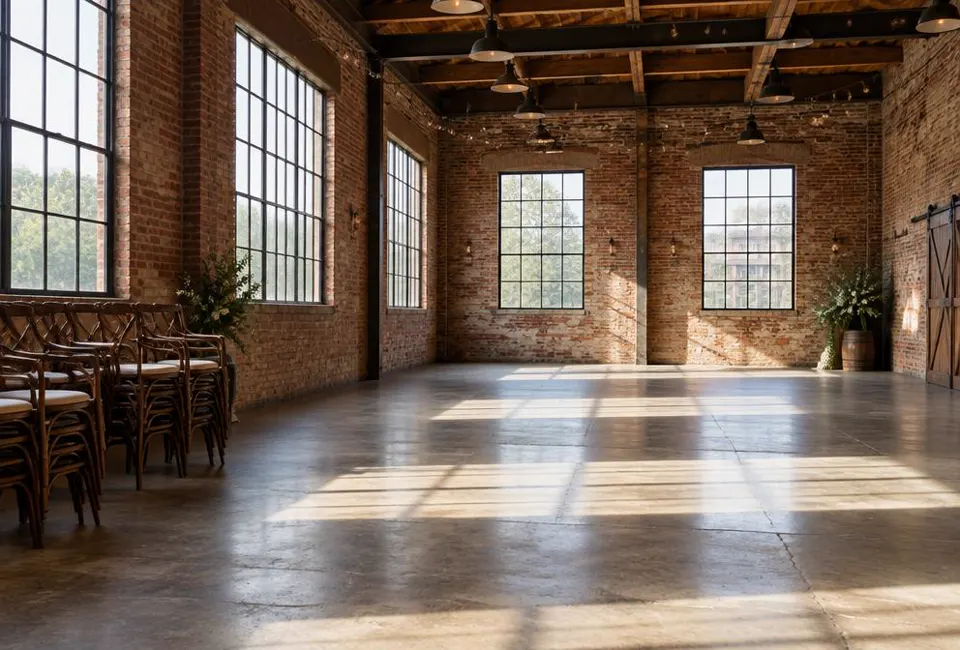
Defining All-inclusive and Blank-canvas Models
Choosing between all-inclusive versus blank-canvas venues is the first major fork in the road for any couple planning their wedding. This decision dictates not just the aesthetic of the day, but every logistical and financial move you will make for the next twelve months.
All-inclusive venues operate as a comprehensive hospitality package. These are typically dedicated event centers, luxury hotels, or established country clubs that provide a structural and operational foundation for your event. When you sign a contract with this type of venue, you are securing more than just a room. You are hiring an entire ecosystem of service. The venue provides the primary infrastructure like tables, chairs, and linens, but also the critical human element including catering teams, bar staff, and site coordinators. This model is designed for the couple who values convenience and consolidated billing over complete creative control of every micro-detail.
Blank-canvas spaces represent the opposite end of the spectrum. These venues, which include industrial warehouses, open fields, art galleries, and historic lofts, generally provide only the raw environment: the roof and the walls. The allure here is the total lack of restriction. You are not forced into a specific catering menu or a standard chair style. However, this freedom comes with a significant labor requirement. Every single item, from the fork on the table to the generator providing power, must be sourced and brought in by the couple or their hired planner. It is a build-your-own-world approach to wedding production.
The Infrastructure Reality: What You Are Buying
| Feature | All-Inclusive Model | Blank-Canvas Model |
|---|---|---|
| Furniture | Standard tables and chairs included | None provided: external rental needed |
| Catering | In-house kitchen and service staff | Open choice: must hire external team |
| Power/HVAC | Fully integrated systems included | May require portable units or generators |
| Setup/Cleanup | Handled by venue janitorial staff | Couple must hire crew or do it themselves |
| Linens/Plateware | Standard white or ivory provided | Must be rented or purchased separately |
Understanding the financial stakes is vital before committing to either path. According to The Knot Real Weddings Study 2025, the US average for a wedding is about $33,000. In the UK, Bridebook 2024 reports about £20,600, while Which? 2024 suggests figures closer to £23,000. Australian couples face an average of A$35,315 per Easy Weddings 2025, and RBC notes a Canadian average of C$30,000. At an all-inclusive venue, approximately 50 percent to 60 percent of this total is often paid to a single entity. In a blank-canvas scenario, that same budget is fragmented across twenty different vendors, which requires much more rigorous tracking.
Is it a 'Partial-Inclusive' Hybrid?
- The venue provides tables and chairs but no linens or glassware.
- A list of 'Required Vendors' is provided that you must choose from.
- The space includes a kitchen area but no actual catering staff.
- On-site coordination is provided for the building only, not the timeline.
- Basic lighting is installed but sound equipment is not included.
- Janitorial services are included for bathrooms but not for the event floor.
- The venue offers a bar structure but requires you to bring the alcohol.
- Trash removal is included but only if it is bagged by your team.
Ultimately, the choice hinges on how much of the process you wish to own. A couple like Sarah and David might choose a hotel because they have demanding careers and limited time to manage logistics. Conversely, a couple with a specific artistic vision might prefer the warehouse to ensure every element, from the artisanal lighting to the local food truck, reflects their personality. Neither path is inherently better, but one will certainly align more closely with your stress tolerance and your vision for the flow of the wedding day. Identifying your priority early prevents costly pivots later.
The Financial Framework: Cost Transparency
Evaluating all-inclusive versus blank-canvas venues requires moving beyond the sticker price to analyze the total cost of ownership. While a raw space may seem affordable at first glance, the secondary expenses required to make it functional often eclipse the price of a full-service alternative.
The primary financial trap for couples is focusing on the venue rental fee rather than the final invoice. According to The Knot Real Weddings Study 2025, the US average wedding cost is about $33,000. Similarly, Easy Weddings 2025 reports the Australian average at A$35,315. When you see a blank-canvas venue for $5,000, it represents only the shell of your event. Unlike an all-inclusive package that bundles catering, labor, and infrastructure, the raw space requires you to build a functional venue from scratch. This oversight leads many to believe they are saving money when they are actually inflating their logistical budget.
The Hidden Cost Formula for Raw Spaces
To accurately compare all-inclusive versus blank-canvas venues, you must apply a rigorous calculation for the raw space. Start with the Base Rental Fee and add the Infrastructure Load. This load includes a Kitchen Build-out (mobile ovens, prep tables, and hot holding cabinets), Power Generation (whisper-quiet generators if the site lacks industrial capacity), and Comfort Facilities (luxury portable restrooms). For a typical wedding of 100 guests, these three items alone can add $8,000 to your total. Without this formula, your budget will face significant depletion before you even select a florist or photographer.
| Expense Category | All-Inclusive Model | Blank-Canvas Model |
|---|---|---|
| Venue Rental Fee | $20,000 (Includes Essentials) | $5,000 (Space Only) |
| Rentals (Tables/Chairs/Linens) | Included | $4,500 - $7,000 |
| Catering Equipment & Labor | Included | $9,000 - $12,000 |
| Power & Climate Control | Included | $2,500 - $4,000 |
| Total Estimated Spend | $20,000 | $21,000 - $28,000 |
Consider the scenario of Sarah and David, who were torn between a $22,000 hotel package and a $6,000 historic warehouse. They initially chose the warehouse, thinking they saved $16,000. However, their caterer charged a $3,000 surcharge because there was no running water or stove on-site. They spent $4,000 on sound systems and lighting because the warehouse was a literal empty room. By the time they rented forks, spoons, and glassware, their 'budget' venue cost $27,000. This illustrates how all-inclusive versus blank-canvas venues can be deceptive if you do not account for every tangible item.
Essential Infrastructure Checklist for Raw Spaces
- Commercial generator fees for caterer power needs
- Kitchen tent and flooring for outdoor prep areas
- Trash removal and off-site disposal fees
- Delivery and setup labor for rental furniture
- Water station infrastructure for guest comfort
- Insurance premiums for non-traditional event spaces
Ultimately, the financial framework favors the all-inclusive model for those who prioritize budget predictability. When you sign a contract with a full-service venue, you lock in a rate that covers the vast majority of your needs. In contrast, a blank-canvas space leaves you vulnerable to fluctuating vendor prices and delivery surcharges. Unless you have a specific artistic vision that requires a raw space, the economies of scale offered by all-inclusive venues typically provide a higher value per dollar spent when calculating the total cost of ownership.
Decision Scenarios: Meet Sarah and David
Choosing between all-inclusive versus blank-canvas venues often comes down to a trade-off between professional time management and creative total control. These scenarios illustrate how lifestyle demands and aesthetic priorities dictate the final venue selection for different couples.
Sarah and David: The Efficiency Model
Sarah and David both work high-stress jobs in the corporate sector, frequently exceeding sixty hours per week. For them, the decision to book an all-inclusive hotel venue was driven by the need for a singular point of contact. With a global average cost sitting around $33,000 according to The Knot Real Weddings Study 2025, they realized that their limited free time was a valuable commodity. By selecting a venue that bundles catering, linens, and basic decor, they eliminated the need to interview dozens of external suppliers. This choice allowed them to focus on the high-level experience rather than the logistics of delivery schedules.
Even with an all-inclusive package, this couple knew that customization was key to making the event feel personal. They utilized a specific negotiation script during their final site visit to ensure their investment remained flexible. They asked: We notice the standard package includes a four-course meal and basic house wine. Since we do not require a late-night snack station, could we instead upgrade the wine selection to a premium tier at no additional cost? This approach allowed them to reallocate funds within the fixed budget of the hotel without increasing the total expenditure or adding new vendor contracts.
Mateo and Leanne: The Creative Visionaries
Mateo and Leanne are graphic designers who viewed their wedding as a large-scale art installation. They chose a vacant industrial warehouse, a classic blank-canvas venue. While the initial rental fee was lower than a hotel, they faced the creative tax: a significant investment of time to build an infrastructure from scratch. They had to source everything from portable restrooms and power generators to specific lighting rigs. Their strategy involved a strict vendor management system where every supplier was vetted for their ability to work in non-traditional spaces. This ensured their unique aesthetic vision was not compromised by logistical failures.
For this couple, the blank-canvas route meant managing a complex web of independent contracts. While the average Australian wedding cost is A$35,315 per Easy Weddings 2025, Mateo and Leanne found that their costs shifted heavily toward rentals and labor. Their vendor management strategy relied on a master load-in spreadsheet that detailed exactly when the florists, caterers, and furniture hire companies could access the loading dock. This level of granular detail is the hidden cost of the blank-canvas model, requiring either a professional planner or hundreds of hours of personal coordination to execute successfully.
Ultimately, the choice between these two paths depends on where you want to spend your energy. Sarah and David spent their time on career and family, trusting the venue to execute the details. Mateo and Leanne spent their weekends visiting prop houses and measuring floor plans to ensure a one-of-a-kind result. Both couples reached the same goal of a memorable celebration, but their workflows were diametrically opposed. Understanding which profile fits your personality is the first step in avoiding mid-planning burnout and ensuring the budget aligns with your specific lifestyle constraints.
Venue Fit Assessment Checklist
- Do you have more than ten hours per week to dedicate to wedding admin?
- Is having a unique, never-before-seen layout a non-negotiable priority?
- Are you comfortable managing a budget with fifteen or more separate vendors?
- Do you prefer a single invoice for the majority of your wedding expenses?
- Does the idea of sourcing your own electricity and water sound stressful?
- Is your primary goal to minimize the number of planning meetings required?
- Do you have a specific catering style that traditional venues cannot provide?
- Are you willing to pay a premium for convenience and onsite staff support?
- Will you be hiring a professional planner to manage logistics for you?
Logistics: Staffing and Coordination Realities
While the aesthetic of a venue captures the heart, the logistical framework behind the scenes determines whether the wedding day runs with precision or descends into chaos. Understanding the staffing realities of all-inclusive versus blank-canvas venues is essential for setting realistic expectations for your planning timeline.
All-inclusive venues typically provide an in-house coordinator who serves as the primary liaison between the couple and the facility operations. It is a common mistake to assume this individual functions as a personal wedding planner. Their priority is the venue, ensuring the kitchen meets service times and the house staff follows safety protocols. For a couple like Maya and Leo, this meant the venue coordinator handled the layout of the tables but did not assist with mailing invitations or managing their external photographer. Couples often hire an independent planner even at all-inclusive sites to handle these personal details and provide unbiased advocacy during contract negotiations.
The Heavy Lifting of Blank-Canvas Coordination
Choosing a blank-canvas venue transforms the couple into the temporary CEOs of a pop-up event company. Because these spaces often lack basic infrastructure, a professional wedding planner becomes a non-negotiable requirement rather than a luxury. This professional manages the load-in schedule, which is the precise timing for when the rental company, florist, and caterer arrive to build the event from scratch. Without a lead coordinator, a couple might find themselves directing a delivery truck while they should be getting dressed. The planner ensures that every vendor knows exactly where to plug in equipment without blowing a fuse or blocking a fire exit.
Invisible Logistical Requirements for Blank-Canvas Spaces
- Power source assessment including silent generators for remote areas.
- Potable water access for catering teams and beverage stations.
- Climate control solutions for seasonal temperature fluctuations.
- Luxury portable restroom trailers including lighting and waste management.
- Comprehensive trash removal and post-event site cleanup plans.
- Lighting for guest pathways and vendor loading zones.
- Temporary kitchen setup including ovens and refrigeration for caterers.
- Parking attendants and directional signage for remote properties.
Waste management is one of the most overlooked logistical nightmares when evaluating all-inclusive versus blank-canvas venues. At an all-inclusive hotel or banquet hall, trash removal is an invisible cost handled by the facility staff. In a field or a private warehouse, the couple must often hire a third party to haul away every bottle, napkin, and food scrap at the end of the night. Failure to secure a dedicated cleanup crew can lead to significant fines or the loss of a security deposit. A professional planner will account for this by building a breakdown team into the master budget and schedule.
The complexity of coordination also extends to the physical safety and comfort of your guests. All-inclusive venues have standardized safety certifications and established restroom facilities designed for high-capacity use. Blank-canvas events require the couple to source high-end portable restrooms, which must be positioned strategically to ensure privacy without requiring guests to walk long distances across uneven terrain. Managing these mechanical elements requires a level of oversight that most couples cannot provide themselves while also acting as the hosts of the party. The logistics of a blank-canvas wedding demand a significant time investment that often exceeds 200 hours of planning.
| Feature | All-Inclusive Model | Blank-Canvas Model |
|---|---|---|
| Point of Contact | Venue Manager (Internal focus) | Private Planner (Couple focus) |
| Kitchen Setup | Permanent commercial kitchen | Temporary satellite kitchen |
| Waste Removal | Managed by venue staff | Must be outsourced/contracted |
| Load-in Timing | Short, structured windows | Extended build-out periods |
| Restrooms | Built-in facilities | Requires rental trailers |
Ultimately, the decision rests on how much of the 'behind the scenes' work you wish to delegate. If the idea of coordinating a generator delivery sounds stressful, the all-inclusive model provides a safety net of established systems. However, for those who want total control over the flow and function of their day, the blank-canvas model offers a rewarding but labor-intensive path. Ensure your budget reflects these staffing needs, keeping in mind that the average wedding costs about $33,000 in the US according to The Knot Real Weddings Study 2025, which often does not account for the premium labor required for raw spaces.
Design Flexibility Versus Execution Ease
Choosing between all-inclusive versus blank-canvas venues requires balancing the desire for a specific aesthetic vision against the mental energy required to execute it. This section examines how to weigh the trade-off between the creative freedom of a raw space and the logistical safety of a pre-designed ballroom.
The aesthetic limitations of all-inclusive venues often manifest in the form of fixed elements such as busy patterned carpets, heavy drapery, or specific light fixtures. When Liam and Chloe visited a luxury hotel, they realized the burgundy floral carpet clashed with their vision of a pastel garden party. In an all-inclusive setting, you are essentially renting a pre-packaged atmosphere. While this saves you from selecting every fork and linen, it means your personal style must coexist with the existing decor. If the venue has a strong Mediterranean or Baroque identity, fighting against it with modern industrial decor will likely result in a disjointed visual experience.
The Style Compromise Scale
To determine your priority, use the Style Compromise Scale to assess your emotional reaction to details. If seeing a standard banquet chair makes you cringe, you lean toward the blank-canvas model where every item is curated. However, if the thought of choosing between sixteen shades of white napkins feels like a chore, the all-inclusive model is your best fit. For many couples, the ease of execution outweighs the need for specific chair types. If you prioritize a stress-free planning process, you must be willing to accept the venue standard for basics like glassware and cutlery to maintain your sanity.
| Feature | All-Inclusive Reality | Blank-Canvas Potential |
|---|---|---|
| Flooring | Fixed hotel carpet or wood | Raw concrete, brick, or grass |
| Furniture | Standard banquet or Chiavari | Infinite rental possibilities |
| Lighting | Existing chandeliers and sconces | Total custom rig and wash |
| Setup Time | Limited to 2 to 4 hours pre-event | Often includes full day access |
| Decision Count | Low (Choose from 3 palettes) | High (Choose every single item) |
Blank-canvas venues like lofts or warehouses offer infinite possibilities but require a significant investment in rentals. When Marco and Elena chose a converted textile mill, they found that while the raw brick was beautiful, they had to bring in every single item, including portable toilets and power generators. This level of control is ideal for those who want a wedding that looks like no other. However, the execution ease is zero. You become the creative director of a temporary construction project. The cost of renting high-end furniture can quickly push your budget toward the US average of $33,000 (The Knot Real Weddings Study 2025).
Personalizing an all-inclusive space requires a strategic approach to avoid violating strict fire codes or venue policies. Most hotels prohibit open flames, wall attachments, or hanging items from ceiling sprinklers. To add character without losing your security deposit, focus on tabletop elevations and freestanding elements. Use high-quality menus, custom place cards, and unique floral centerpieces to draw the eye away from the standard carpet. You can also utilize uplighting to change the color of the walls, which effectively masks existing decor themes without requiring physical alterations to the room itself.
Ways to Personalize Fixed Spaces Safely
- Use battery-operated LED candles to mimic a glow without fire risks.
- Bring in custom floor-length linens to hide standard venue table legs.
- Invest in large-scale floral installations that stand on their own frames.
- Utilize gobo projectors to display patterns or monograms on the floor.
- Upgrade the napkins to a luxury fabric to change the tactile experience.
- Place tall, lush arrangements on every third table to create visual height.
Ultimately, the choice between all-inclusive versus blank-canvas venues comes down to whether you view design as a joy or a burden. Couples in Australia facing an average cost of A$35,315 (Easy Weddings 2025) or those in Canada spending around C$30,000 (RBC) must decide if their budget is better spent on the convenience of a hotel or the customization of a warehouse. If you choose the blank-canvas route, ensure you have a dedicated coordinator to manage the load-in of dozens of vendors. If you choose all-inclusive, focus your energy on the small details that make the space feel like your own.
The Vendor Landscape: Choice Versus Curation
The vendor selection process highlights the sharpest functional divide between all-inclusive versus blank-canvas venues, forcing couples to choose between pre-vetted convenience and total creative autonomy.
All-inclusive venues typically operate with a curated list of preferred vendors. These are professionals who have worked at the property dozens of times and understand the specific power load of the ballroom or the narrowest path for a catering truck. While this curation reduces the risk of logistical failures, it often restricts your ability to price shop. If the venue's exclusive florist charges a premium, you generally cannot hire a more affordable alternative without incurring penalties. This model prioritizes a seamless execution over individual brand preference, making it ideal for couples who want to minimize the time spent interviewing multiple professionals for every category.
In contrast, blank-canvas venues offer a wide-open landscape where every service provider is your choice. You can hire a niche vegan caterer, a specific lighting designer, or a budget-friendly furniture rental company. However, this freedom comes with a significant administrative burden. Every vendor must be vetted for insurance, reliability, and technical capability. Without a venue manager to gatekeep quality, the responsibility of ensuring the photographer knows the best sunset spots or the DJ has the correct sound permits falls entirely on the couple or their independent planner. This total freedom allows for a unique aesthetic but demands much more oversight.
Navigating Preferred Lists and Buy-out Fees
Consider the case of Maria and Jean, who fell in love with a historic all-inclusive manor. They wanted their favorite local bakery to provide the cake, but the venue had an exclusive contract with a specific pastry chef. To use their own baker, they were faced with a cake-cutting fee of five dollars per guest. This is a common scenario in the all-inclusive versus blank-canvas venues debate. Some venues allow off-list vendors for a flat buy-out fee, while others strictly forbid it to protect their commission structures or quality standards. Always clarify these hidden costs before signing a contract to ensure your must-have vendors are actually allowed on-site.
Script for Inquiring About Off-List Vendors
- We have a specific vendor in mind for [Category]. Do you allow outside professionals who are not on your preferred list?
- If we bring in an outside vendor, what are the specific insurance requirements they must provide to your office?
- Is there a mandatory buy-out fee or a per-person surcharge for using a vendor not on your curated list?
- Do outside vendors have full access to your prep kitchen and loading docks, or are those reserved for preferred partners?
- If we use our own vendor, does your on-site coordinator still manage their arrival and setup logistics on the day?
When calculating your total budget, remember the global benchmarks for wedding spending. According to The Knot Real Weddings Study 2025, the US average is about $33,000. In the UK, figures range from £20,600 (Bridebook 2024) to £23,000 (Which? 2024). Australian couples spend about A$35,315 (Easy Weddings 2025), while the Canadian average is about C$30,000 (RBC). Blank-canvas venues might seem cheaper initially, but once you add the costs of individual vendors who do not have a bulk-discount relationship with the venue, the price often aligns with or exceeds these national averages. Choice allows for custom spending, but curation provides a predictable cost ceiling.
Vendor Selection Decision Points
- Review the venue's preferred vendor list for price variety.
- Check if the venue receives commissions from their listed partners.
- Confirm if off-list vendors require a separate security deposit.
- Verify that blank-canvas venues provide adequate power for outside DJs.
- Ask if the venue manager or the couple is responsible for vendor trash removal.
- Identify any 'exclusive' categories where choice is strictly forbidden.
- Determine if catering buy-outs include the use of venue china and glass.
- Evaluate the time cost of vetting 10 to 15 individual service providers.
The Ultimate Venue Decision Matrix
Choosing between all-inclusive versus blank-canvas venues requires moving beyond emotional appeal to objective metrics. This scoring system provides a universal framework to help you decide which model aligns with your lifestyle and budget.
The final stage of your search involves reconciling your dreams with the reality of your schedule. While the US average wedding cost is about $33,000 (The Knot Real Weddings Study 2025), how you allocate that sum determines your stress levels. A blank canvas might offer a lower initial site fee, but the cumulative cost of hiring every fork and floodlight often bridges the gap quickly. Use this matrix to evaluate two finalists. For each category, assign a score from 1 to 10, where 10 represents the most positive outcome for your specific needs and 1 represents a significant burden.
The 10 Point Venue Evaluation Framework
Universal Scoring Criteria
- Hours of Effort: Score 10 if you want zero DIY. Score 1 if you want to manage every detail.
- Total Estimated Cost: Score 10 if it fits your budget comfortably. Use local benchmarks like A$35,315 for Australia (Easy Weddings 2025) or £20,600 for the UK (Bridebook 2024).
- Creative Control: Score 10 if you need bespoke decor. Score 1 if you are happy with a set package.
- Vendor Management: Score 10 if the venue handles all contracts. Score 1 if you must source everyone.
- Logistics Risk: Score 10 if the venue has backup power and rain plans included.
- Catering Flexibility: Score 10 if you can choose any menu. Score 1 if you must use the house chef.
- Setup and Teardown: Score 10 if the staff handles all cleanup.
- Communication Ease: Score 10 if there is a single dedicated point of contact.
- Atmosphere Authenticity: Score 10 if the physical space requires minimal extra decor.
- Guest Experience: Score 10 if transport, lodging, and flow are seamless for attendees.
Consider the case of Marcus and Elena, who were torn between a rural barn in Canada and a downtown hotel in Toronto. While the barn offered creative freedom, their total estimated cost approached the C$30,000 national average (RBC) once they factored in portable toilets and generators. By using the matrix, they realized their 'Hours of Effort' score for the barn was a 2, while the hotel was a 9. Because both worked full time, the numerical total made the all inclusive hotel the logical winner despite their initial rustic preference.
| Metric | All-Inclusive | Blank-Canvas |
|---|---|---|
| Planning Time | Low (High Score) | High (Low Score) |
| Cost Predictability | High (High Score) | Low (Low Score) |
| Design Freedom | Low (Low Score) | High (High Score) |
| Coordination Needs | Internal (High Score) | External (Low Score) |
| Risk Level | Minimal (High Score) | Moderate (Low Score) |
Once you have scored both venues, compare the totals. A difference of more than 15 points indicates a clear winner for your lifestyle. If the scores are within 5 points, look specifically at your 'Creative Control' versus 'Hours of Effort' scores. This reveals whether you value the process of building a wedding or the peace of mind of attending one. Remember that UK costs can range from £20,600 (Bridebook 2024) to £23,000 (Which? 2024). If your blank canvas score is high but your budget score is low, you must be prepared to compromise on aesthetics to keep the total spend within these regional averages.
Ultimately, no venue is perfect. The matrix is designed to highlight trade-offs rather than find a flawless option. A blank canvas venue may score poorly on logistics but perfectly on creative control. If you have a high budget and a professional planner, that low logistics score matters less. However, for the self-planning couple, a high logistics score is often the difference between a joyful engagement and a year of stress. Trust the numbers you assigned during your tours to guide your final signature on the contract.